
Memorial Day Pool Opening — Top 10 Checklist for a Safe, Clean Season
By Michael Scheetz, Specialty Aquatics and Consulting, LLC
Memorial Day marks the start of pool season for many homeowners. Before you jump in, take a few focused steps to make sure the water is clean and the area is safe. This checklist covers the ten most important tasks — from visual inspections to water testing — so you and your guests can enjoy the pool with confidence. If you’d like professional help getting ready, learn more about our pool services.
Visual Inspection of Pool Area
Start with a careful walk-around to spot anything that could become a safety or maintenance issue.
- Remove Debris: Clear leaves, branches, and other debris from the pool and surrounding deck.
- Inspect for Cracks or Damage: Look closely at the pool shell, tiles, coping, and deck for cracks or wear that might cause leaks or injuries.
- Identify Safety Hazards: Note loose tiles, unstable furniture, or other hazards and plan repairs before opening.
Safety Equipment Check
Functional safety equipment is non-negotiable. Confirm that rescue gear and first aid supplies are on hand and in good condition. If you prefer professional oversight, our team is available — learn more on the About Us page.
- Life Rings: Make sure life rings are accessible and intact for emergencies.
- First Aid Kit: Check that the kit is fully stocked and placed where it’s easy to reach.
- Accessible Rescue Gear: Confirm rescue poles, flotation devices, and other equipment are stored where they can be grabbed quickly.
Water Quality Testing
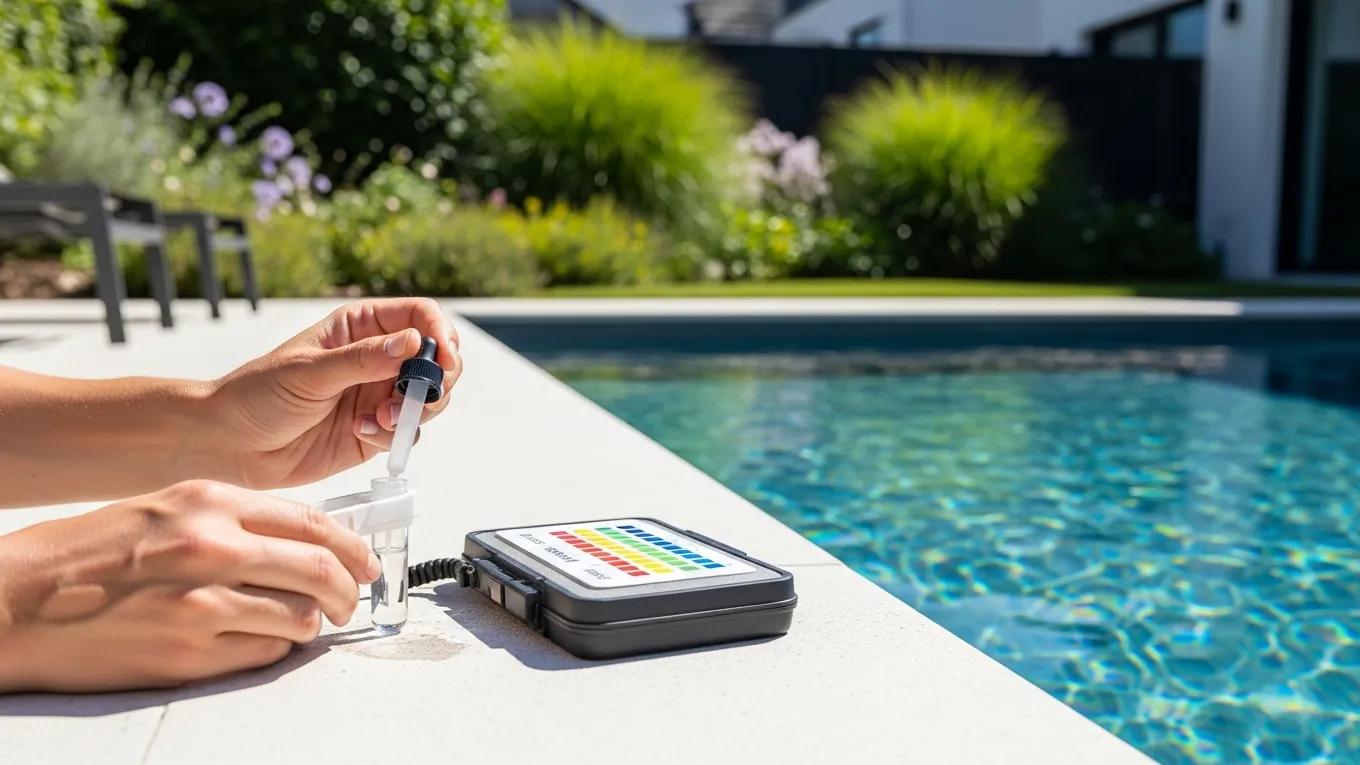
Good water quality is the foundation of a safe pool. Regular testing helps prevent irritation, algae, and bacterial issues.
Real-time Water Quality Monitoring for Swimming Pools
Accurate water-quality monitoring protects public health and improves swimmer comfort. Many systems still rely on manual sampling and delayed lab results. Research aims to create real-time monitoring and control tools — with automated logging, remote access, and quicker microbiological checks — to make pool management more responsive and reliable.
Advances in monitoring are making it easier to track water conditions continuously, which improves accuracy and response time.
- Test pH Levels: Keep pH between 7.2 and 7.8 for swimmer comfort and sanitizer effectiveness.
- Check Chlorine: Maintain free chlorine around 1–3 ppm to keep the water sanitized.
- Balance Other Chemicals: Monitor alkalinity and stabilizer levels and adjust as needed to protect equipment and water clarity.
Chemical Testing Table
Quick reference for safe chemical ranges and how to correct them:
Use this table as a quick guide when testing and adjusting your pool chemistry.
Documentation of Findings
Keep clear records of inspections, test results, and any repairs. This makes ongoing maintenance easier and helps demonstrate compliance if needed.
- Log Issues: Note any problems discovered during inspections, including photos and dates.
- Plan Repairs: Prioritize and schedule fixes so issues are resolved before guests use the pool.
Emergency Procedures Review
Make sure everyone who uses or manages the pool knows what to do in an emergency.
- Train Staff or Family: Confirm that people on site understand emergency roles and basic rescue steps.
- Review Protocols: Run through emergency steps, including how to contact services and where to find first aid supplies.
Equipment Functionality Check
Test mechanical systems to avoid failures during the season.
- Pumps and Filters: Verify pumps and filters run smoothly and are free of debris.
- Other Equipment: Test heaters, lights, timers, and automation to ensure everything works as intended.
Slip and Fall Hazard Assessment
Address surface and drainage issues that increase slip risk.
- Inspect Wet Areas: Identify slippery spots and address them with non-slip treatments or signage.
- Check Drainage: Ensure drains and runoff routes keep decking dry and safe.
Drowning Risk Assessment
Secure the pool perimeter to prevent unsupervised access.
- Fence Inspection: Make sure fencing is intact, gates self-close, and latches work properly.
- Limit Access: Keep gates locked and consider additional protections if children or pets are nearby.
Compliance Verification
Confirm your pool meets local safety and health requirements to avoid fines and keep swimmers safe.
- Check Local Rules: Review municipal codes for fencing, alarms, and equipment requirements.
- Meet Safety Standards: Keep documentation of inspections and maintenance to show compliance.
Regular Maintenance Schedule
Set a predictable routine so the pool stays clean and safe all season long.
- Daily & Weekly Tasks: Schedule daily skimming and weekly chemical testing to stay on top of issues.
- Keep the Area Clean: Regularly tidy the deck and organize equipment so the pool stays inviting and hazard-free.
Follow this checklist to get your pool ready for summer and keep it safe for everyone. If you’d like professional assistance or want to see recent work, view our project portfolio or contact us with any questions.
Frequently Asked Questions
What are the signs that my pool needs maintenance before opening?
Look for cloudy or green water, visible debris, odd smells, or cracks in the pool shell and decking. Also check equipment for obvious damage or strange noises. Any of these signs mean you should test the water and inspect systems before opening.
How often should I test my pool water during the summer?
Test chemistry at least once a week under normal conditions. If the pool sees heavy use, after storms, or during hot spells, test more often — several times per week may be necessary to keep levels steady.
What should I do if I find a safety hazard in my pool area?
Immediately remove or cordon off the hazard, document it, and schedule repairs. For major hazards, keep the pool closed until it’s fixed. Regular inspections help catch problems before they become dangerous.
How can I ensure my pool is compliant with local safety regulations?
Familiarize yourself with local codes for fencing, gates, alarms, and equipment. Keep inspection logs and receipts for repairs and maintenance. When in doubt, consult a licensed pool service to confirm compliance.
What are the best practices for maintaining pool cleanliness throughout the season?
Establish a routine: daily skimming, weekly vacuuming and chemical checks, and regular filter cleaning. Keep the deck clear, maintain proper sanitizer levels, and address issues quickly to prevent algae and cloudy water.
What emergency procedures should I have in place for my pool?
Have a clear emergency plan that includes calling 911, administering first aid/CPR, and using rescue equipment. Make sure everyone who uses or manages the pool knows where the first aid kit is and how to use basic rescue tools.
How can I improve the water quality in my pool?
Regularly test and balance pH, chlorine, and alkalinity. Keep filters clean and run the circulation system long enough each day to filter the entire pool. Use algaecides or clarifiers when needed and address underlying issues like poor circulation or organic buildup.