
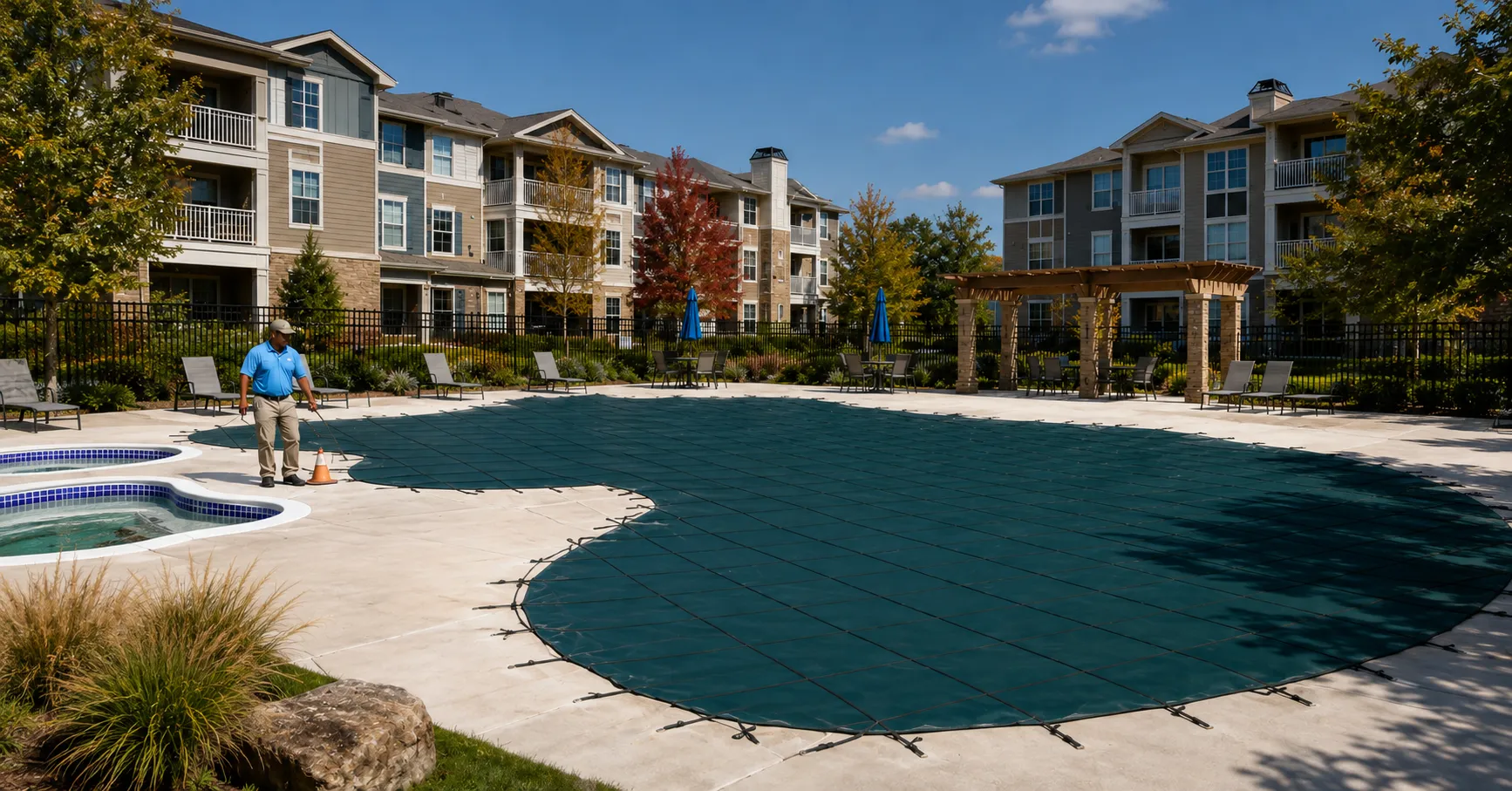
Labor Day weekend is the unofficial finish line of the swim season, and for commercial pool owners, HOAs, municipalities, hotels, and multi-family properties across the Atlanta Metro area, it’s also the starting gun for one of the most important, and most rushed, seasons in aquatic facility management: commercial pool winterization.
But here’s something many facility managers don’t realize: the calendar isn’t actually what should determine your closing date. Water temperature is. This is the moment to lock in your commercial pool winterization schedule for Atlanta Metro facilities and get ahead of any repairs, renovations, or capital improvement projects your facility needs before the 2027 swim season.
At Specialty Aquatics and Consulting, we work with HOAs, municipalities, military housing communities, resorts, hotels, and multi-family properties throughout the Atlanta Metro area every fall, and the facilities that plan early, closing based on water temperature rather than a fixed date, are consistently the ones that open the cleanest, smoothest pools next spring.
There’s No Single “Winterization Date,” and That’s the Point
Unlike residential pools, which almost universally close the week of Labor Day regardless of conditions, commercial pools in the Atlanta Metro area don’t follow a fixed calendar date. Most residential properties close shortly after Labor Day because that’s when usage stops and homeowners want the pool covered for the season.
Commercial facilities operate differently. Because commercial pools often stay open later into September, sometimes into the beginning of October, for residents, guests, or members who are still using the amenity, the right time to winterize is determined by water temperature, not the calendar.
Commercial Pool Winterization Water Temperature: Why It Should Drive Your Closing Date
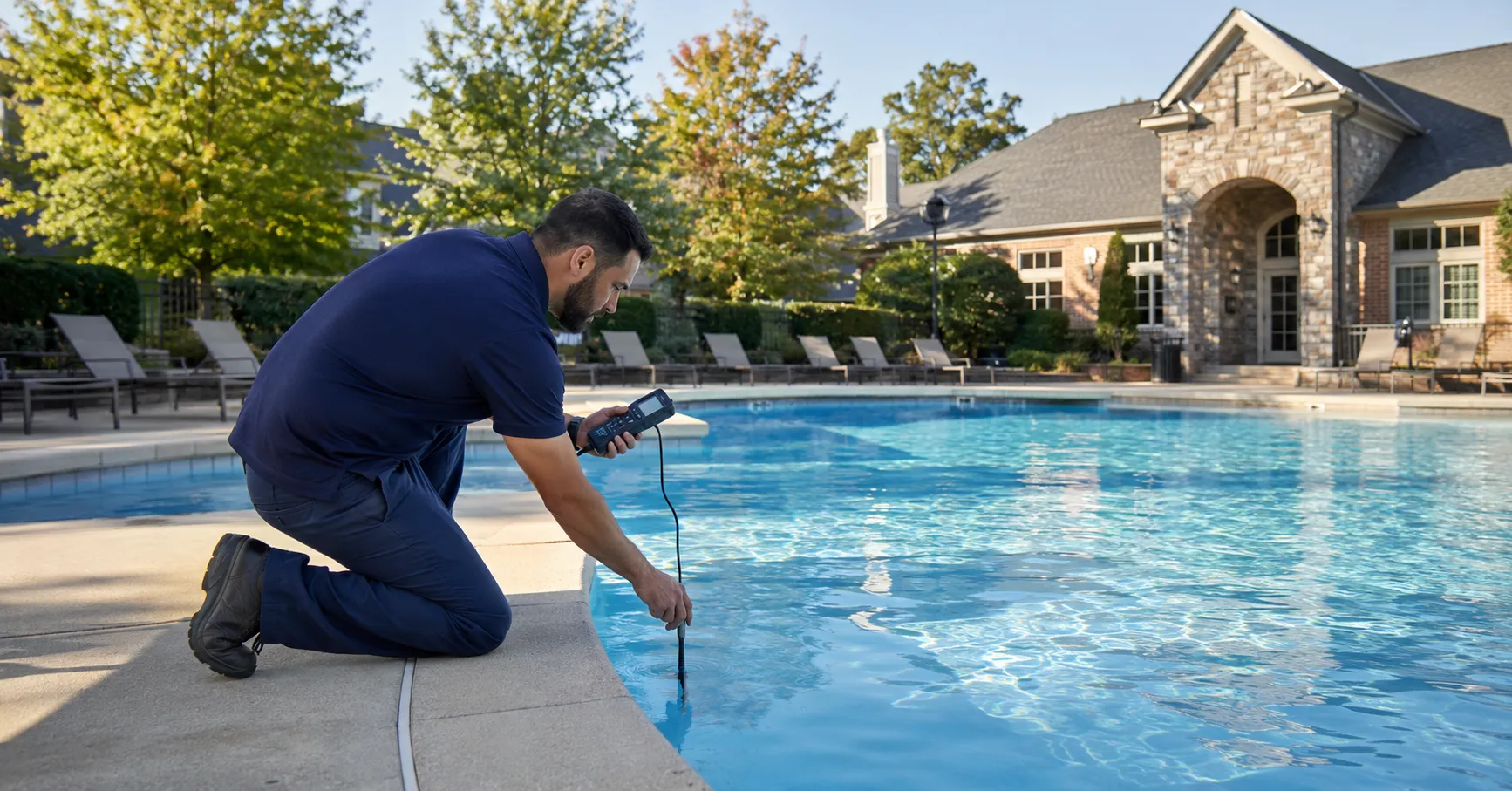
The industry-standard guideline for commercial pool closing temperature is to winterize once water temperature consistently stays at approximately 60–65°F, often closer to 60°F depending on conditions. Here’s the reasoning behind that number:
- Algae growth slows dramatically below 60°F and becomes effectively dormant well below that point. Algae is a living organism that thrives in warm, still, sunlit water, exactly the conditions created when a pool is closed and covered.
- If you close a pool too early, while the water is still warm (65–70°F or higher), you’re sealing a dark, stagnant, nutrient-rich environment under a cover for months. Warm water also burns through residual sanitizer faster, so even a well-balanced pool can lose chemical protection before winter dormancy sets in. The result almost always shows up in spring as a green, cloudy pool that requires expensive shock treatment, extra labor, and a delayed reopening.
- If you close too late and risk a hard freeze, you expose plumbing, pumps, filters, and heaters to freeze damage. Water expands as it freezes and can crack pipes, split filter housings, and destroy equipment that isn’t properly drained beforehand.
- The 60°F threshold threads that needle. Water at or below that point is cold enough to substantially slow algae growth, but timed appropriately relative to typical Atlanta Metro fall temperatures, it still allows winterization to be completed before a hard freeze becomes a serious risk.
This is why Specialty Aquatics and Consulting encourages commercial clients to winterize based on actual water temperature readings rather than a fixed date. In practice, this typically means many Atlanta Metro commercial pools aren’t winterized until late September into the beginning of October, later than the residential pools around them, because their water hasn’t yet reached that critical 60°F threshold. Closing earlier would actually invite a worse outcome: a dirty, algae-covered pool waiting for you next spring instead of a clean, sparkling one.
The practical takeaway: track your pool’s water temperature as Labor Day approaches, and plan your winterization appointment around when it consistently hits between 60-65°F, not around a date on the calendar.
Why HOA Pool Winterization Should Be Done by an Aquatic Industry Professional
It’s tempting to view winterization as a simple “cover and walk away” task. It isn’t, especially for commercial pools, which carry far more liability, equipment complexity, and regulatory exposure than residential pools. A professional winterization from a qualified commercial pool maintenance Atlanta provider protects your facility in several ways:
- Equipment protection — Pumps, filters, heaters, and automation systems (like PoolCop remote monitoring) can suffer catastrophic freeze damage if not properly drained and prepared
- Code and compliance requirements — Commercial facilities are subject to health department and PHTA-related standards that residential winterization doesn’t have to consider
- Warranty protection — Many equipment manufacturers require documented professional service to maintain warranty coverage
- Liability reduction — HOAs, municipalities, and property managers carry significant liability exposure; improperly secured pools and equipment rooms are a common source of insurance claims
- Correct timing judgment — A professional can read water temperature trends, weather forecasts, and usage patterns to time your specific pool’s closing correctly, rather than guessing
- Spring startup reliability — A pool winterized correctly by a professional, at the right temperature, starts up faster, cleaner, and with fewer surprises in the spring
Commercial pool winterization is not a DIY or handyman-level task. It requires trained technicians who understand commercial-grade filtration, chemical feed systems, dehumidification (for indoor pools), and freeze-protection specific to the Atlanta Metro climate.
What Actually Happens During Commercial Pool Winterization?
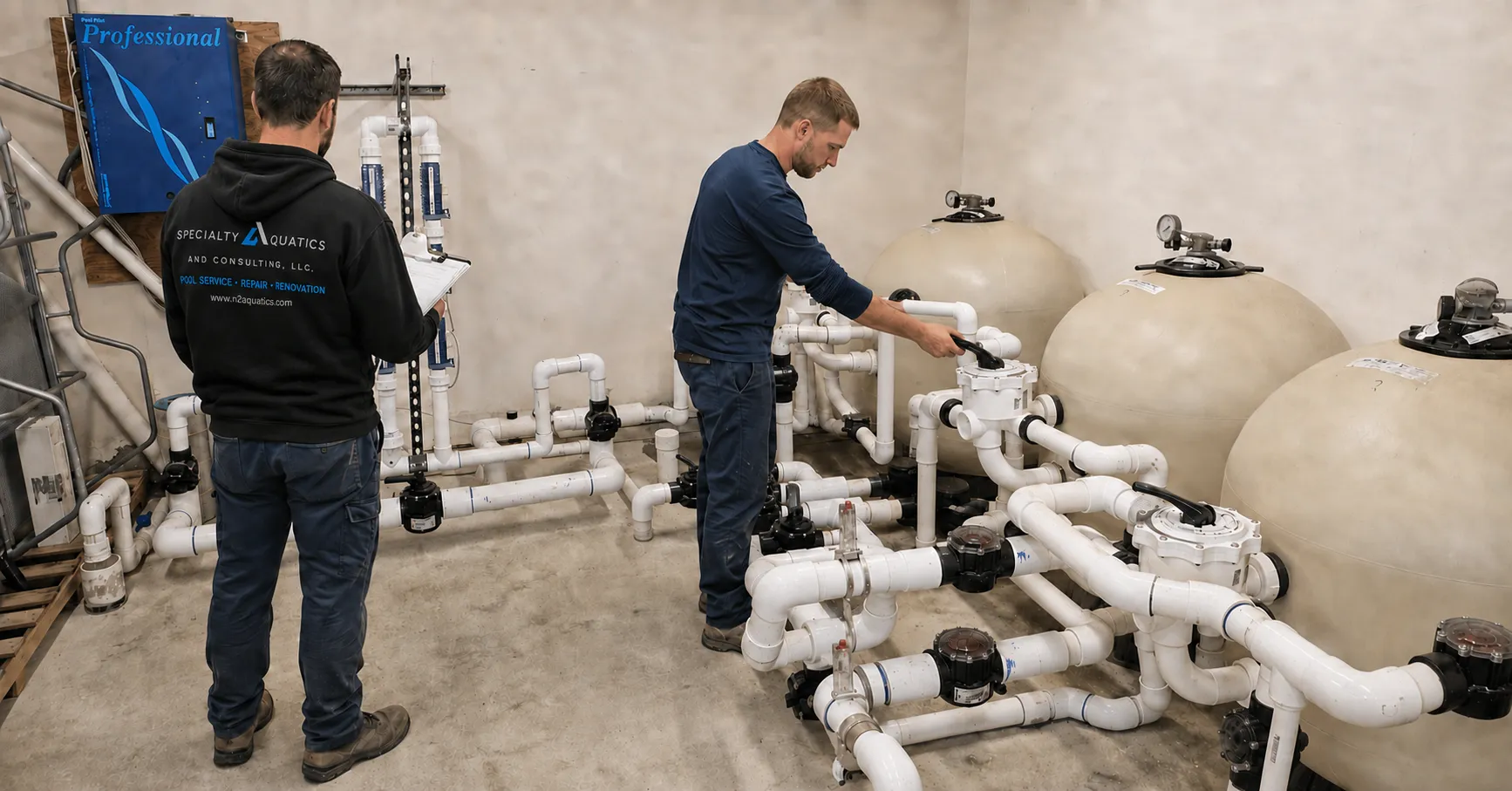
A proper commercial winterization typically includes:
- Water chemistry balancing — Adjusting pH, alkalinity, and sanitizer levels to prevent scaling, corrosion, or staining over the off-season
- Water level adjustment — Lowering water below skimmers and returns
- Equipment draining and blow-out — Removing all water from pumps, filters, heaters, chlorinators, and plumbing lines to prevent freeze damage
- Filter cleaning and storage prep — Backwashing or acid-washing filter media/cartridges and preparing the filtration system for dormancy
- Plumbing line antifreeze/plugging — Using pool-safe antifreeze and winterizing plugs where appropriate
- Safety cover installation — Properly fitting and securing a commercial-grade safety cover to prevent unauthorized access, debris accumulation, and liability exposure
- Deck, gate, and access point securing — Especially important for HOA and multi-family properties where liability and unauthorized after-hours access are ongoing concerns
- Documentation — A professional provider should document the winterization process, water temperature at closing, equipment condition, and any pre-existing issues discovered, which becomes valuable if disputes or insurance questions arise
When these steps are done correctly, at the right water temperature, the pool that comes out from under the cover next spring should be clean and the water sparkling, not green, cloudy, or full of surprises.
What Happens If a Pool Isn’t Winterized Properly (or at the Wrong Temperature)?
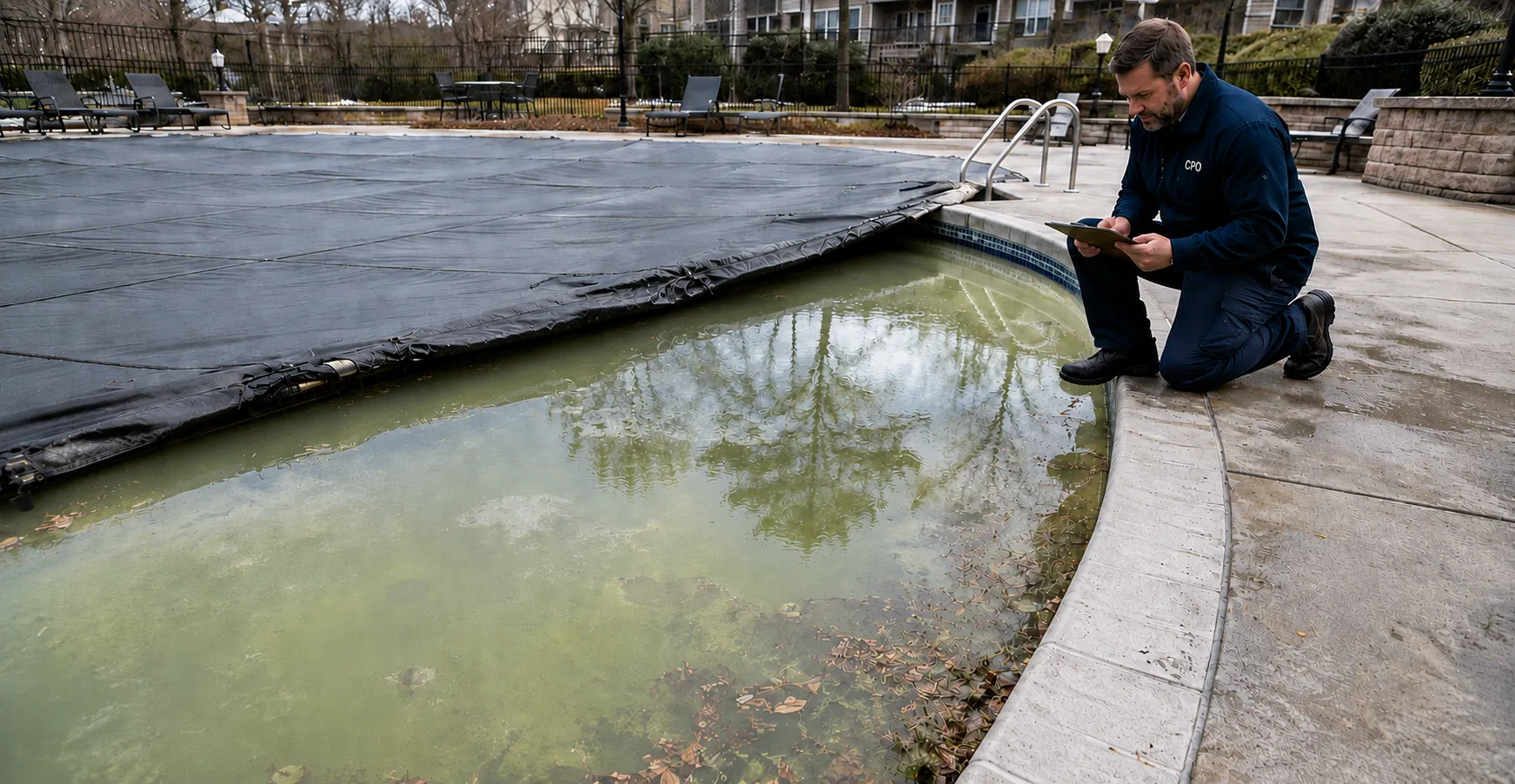
The cost of skipping, rushing, or mistiming winterization almost always shows up in the spring, often at the worst possible time, right before opening weekend. Common consequences include:
- Algae blooms and green pools from closing while the water is still too warm, since the cover creates a dark, undisturbed environment where algae multiplies for months before you ever see it
- Cracked or burst pipes, pumps, filters, and heaters from freeze damage if closing is delayed past a hard freeze without proper draining
- Cover failures from improperly secured or undersized safety covers, leading to debris intrusion, drowning liability, or torn covers requiring full replacement
- Structural damage to the pool shell, tile, or coping from freeze-thaw cycles interacting with unbalanced water
- Compressed spring timelines, since discovering equipment failure or an algae-choked pool in April means competing with every other facility for parts, labor, and startup appointments right when demand peaks
- Increased liability exposure for HOAs and property managers if a poorly secured pool contributes to an incident during the off-season
In short: improper or mistimed winterization doesn’t save money. It defers cost, and usually with interest, into the spring when you can least afford the delay.
Labor Day Is Also Your Deadline for Commercial Pool Capital Improvement Planning
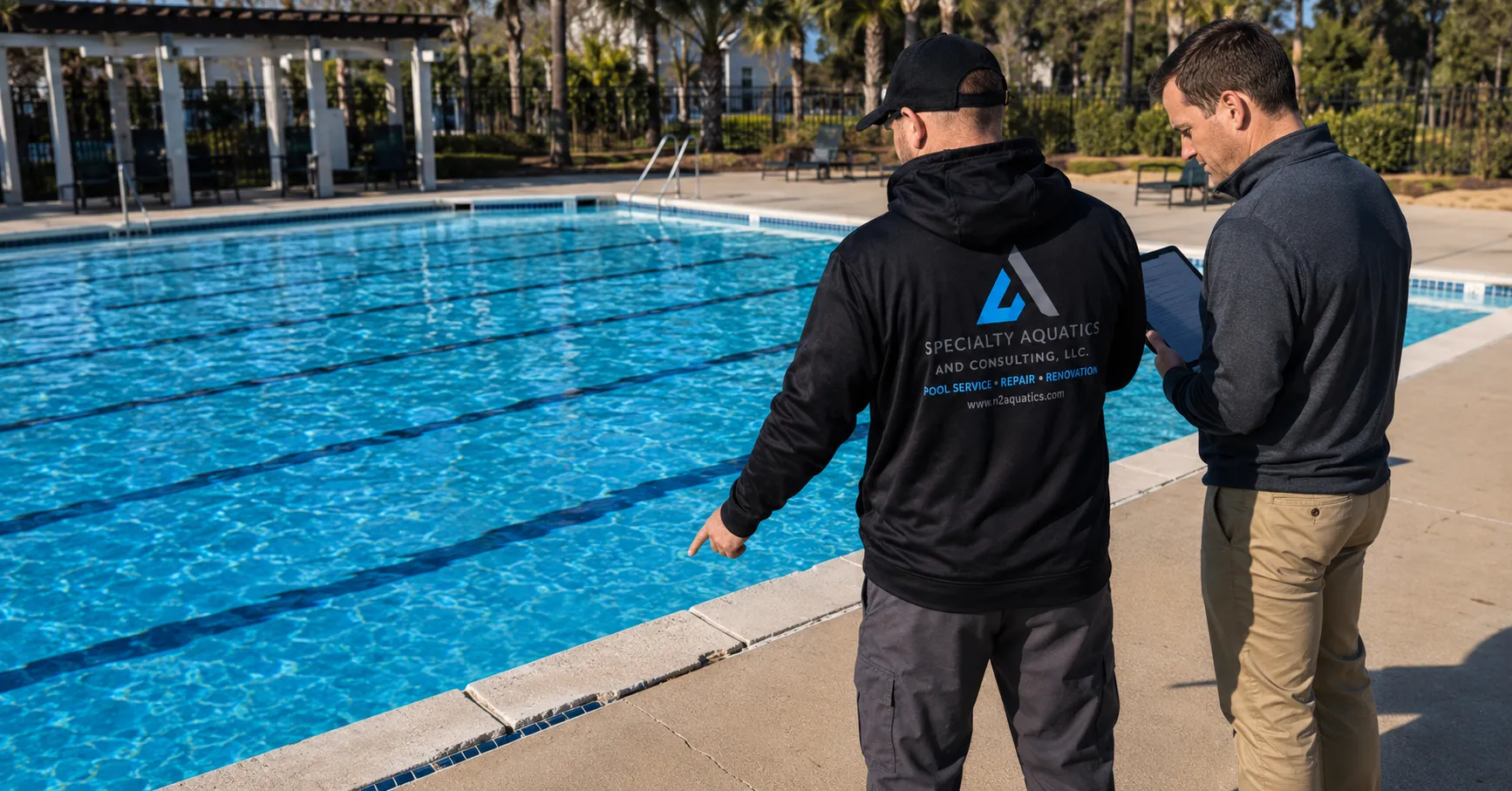
Here’s the part many facility managers, HOA boards, and property owners overlook: Labor Day weekend typically coincides with budget season. If your community, municipality, or property is finalizing 2027 budgets this fall, this is the exact moment to identify:
- Resurfacing needs — plaster, pebble, or fiberglass surfaces showing wear, staining, or roughness
- Equipment replacements — aging pumps, heaters, filters, or controllers nearing end-of-life
- Full or partial pool rebuilds — structural issues, persistent leaks, or outdated designs
- Deck and coping repairs or renovations
- Safety cover replacement
- PoolPak dehumidifier system service for indoor facilities
- Automation upgrades — smart, remote-monitored systems like PoolCop that reduce labor costs and improve chemical accuracy year-round
The off-season is the only window most commercial facilities have to complete major capital work without disrupting swimmers, staff, or revenue. Getting your facility inspected and your project scope defined now, while winterization crews are already on-site, is the most efficient way to move from budget conversation to completed project before Memorial Day.
Explore the full range of commercial pool maintenance, repair, renovation, and consulting services available for HOAs, municipalities, resorts, hotels, military housing, and multi-family communities throughout the Atlanta Metro area, along with the commercial-grade products and equipment used in these projects.
What Happens If You Wait Too Long?
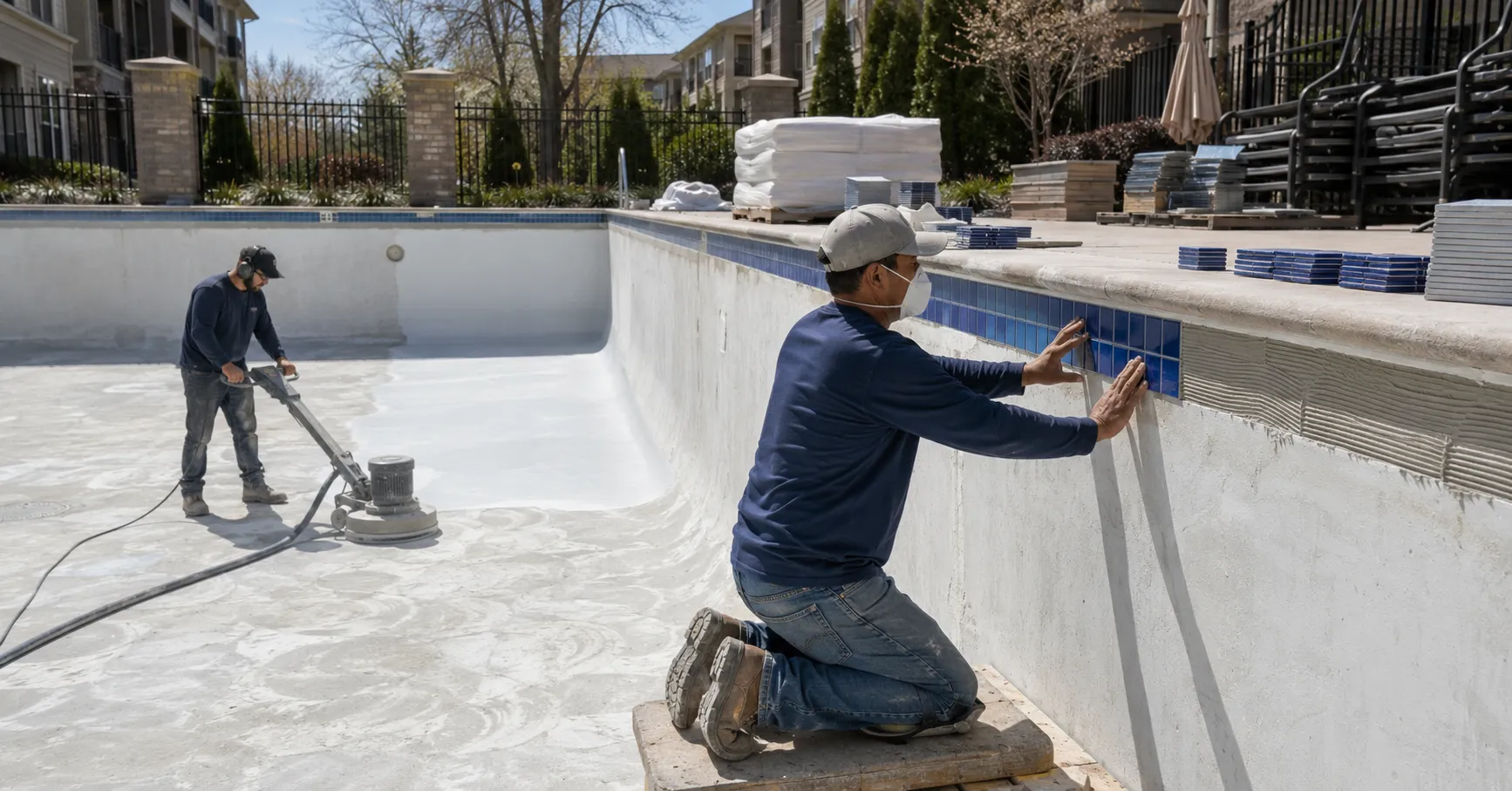
This is the single most common, and most avoidable, mistake commercial facilities make. Here’s what typically happens to properties that delay capital project planning until winter or early spring:
- Contractor calendars fill up fast. Reputable commercial pool companies book renovation, resurfacing, and rebuild projects on a first-come, first-served basis. By November and December, the most experienced crews are often already fully scheduled for late winter and early spring.
- Wait times stretch into the swim season. A project that could have been completed in November if scheduled in September may not get started until March, and if complications or weather delays arise, it can bleed into April or May, jeopardizing your pool opening date.
- Material and equipment lead times compound the problem. Pumps, heaters, tile, coping stone, and specialty parts often have their own manufacturer lead times, sometimes 6–12 weeks or more. Waiting to schedule your contractor also means waiting to order materials.
- Spring “surprises” become common. Facilities that skip fall inspections often discover equipment failures, structural cracks, or code violations only when they attempt to reopen, at the exact moment when every pool company in the region is slammed with startups and every other facility is also discovering their own off-season surprises.
- Higher costs. Rush scheduling, expedited shipping, and emergency repairs almost always cost more than planned, budgeted, off-season work.
The facilities that come out ahead every year are the ones who treat Labor Day weekend as the starting line for fall planning, not an afterthought once the pool is already closed.
The Bottom Line
Labor Day weekend means two things for commercial pool owners and operators in the Atlanta Metro area: it’s time to start tracking your water temperature toward that 60°F winterization threshold, and it’s time to lock in your off-season capital project plan while contractor calendars still have room. Waiting even a few weeks, or closing your pool based on the calendar instead of the thermometer, can mean the difference between a clean, sparkling pool next spring or a green, costly mess.
Contact Specialty Aquatics and Consulting today to schedule your commercial pool winterization and get a professional assessment of any repairs, replacements, or renovation projects your facility should complete this off-season.
Frequently Asked Questions
1. When should Atlanta Metro commercial pools be winterized? Rather than a fixed date, commercial pools in the Atlanta Metro area should be winterized once water temperature consistently stays at or below approximately 60-65°F. Because commercial facilities often stay open later than residential pools, this frequently means winterization doesn’t happen until late September or the beginning of October, later than the Labor Day closings typical of residential properties.
2. Why does water temperature matter more than the calendar for commercial pools? Algae growth slows dramatically and becomes largely dormant once water temperature drops to around 60°F or below. Closing a pool while the water is still warm traps a dark, stagnant, algae-friendly environment under the cover for months, which is the most common cause of a green, cloudy pool at spring opening. Winterizing based on temperature, rather than a fixed date, helps ensure the pool stays clean throughout the off-season.
3. Can a commercial pool be winterized too late? Yes. While closing too early risks algae growth, waiting too long risks exposure to a hard freeze. Water expands as it freezes and can crack pipes, split filters, and damage pumps and heaters if the system isn’t properly drained beforehand. This is why timing winterization around the 60-65°F threshold, rather than either extreme, is the recommended approach, ideally guided by a professional monitoring both water temperature and the forecast.
4. Why can’t our maintenance staff just winterize the pool ourselves? Commercial pools involve more complex filtration, chemical feed, and automation systems than residential pools, along with compliance, warranty, and liability considerations that untrained staff typically aren’t equipped to manage. Improper timing or technique is one of the leading causes of costly spring algae blooms and equipment failures.
5. What’s the best time to plan capital projects like resurfacing or equipment replacement? Immediately after closing, during fall budget season, is the ideal window. Off-season timing allows repairs, renovations, and rebuilds to be completed without disrupting swimmers or revenue, and it avoids the scheduling backlogs and material lead-time issues that arise when projects are delayed until winter or early spring.
6. How does Specialty Aquatics and Consulting help Atlanta Metro facilities plan for the off-season? Specialty Aquatics and Consulting monitors water temperature trends and site-specific conditions to help commercial clients throughout the Atlanta Metro area time their winterization correctly, closing early enough to avoid freeze risk, but late enough to keep algae from taking hold. During winterization, our team can also identify repair, replacement, resurfacing, and rebuild needs early, helping facilities budget accurately and get on a contractor’s schedule before calendars fill up. Visit our services page to see the full range of maintenance, repair, and consulting solutions we offer, or contact us today to schedule your facility’s winterization and off-season capital project assessment.