
By Michael Scheetz, Specialty Aquatics and Consulting, LLC
Fourth of July gatherings often center around backyard pools, so safety should be part of the plan. This guide offers practical, easy-to-follow tips to keep your celebration fun, safe and secure, covering supervision, barriers, maintenance, and chemical handling. We also address holiday-specific hazards—like fireworks near water—and how to reduce risk so everyone goes home safe. For a deeper look at our safety-first approach, see how we approach aquatic safety.
What Are the Essential Pool Safety Rules for Fourth of July?
Set and enforce a few nonnegotiable rules: assign continuous supervision, keep rescue gear within reach, and post visible pool rules. These steps prevent accidents and let guests relax and enjoy the day.
How Does Proper Supervision Prevent Pool Accidents?
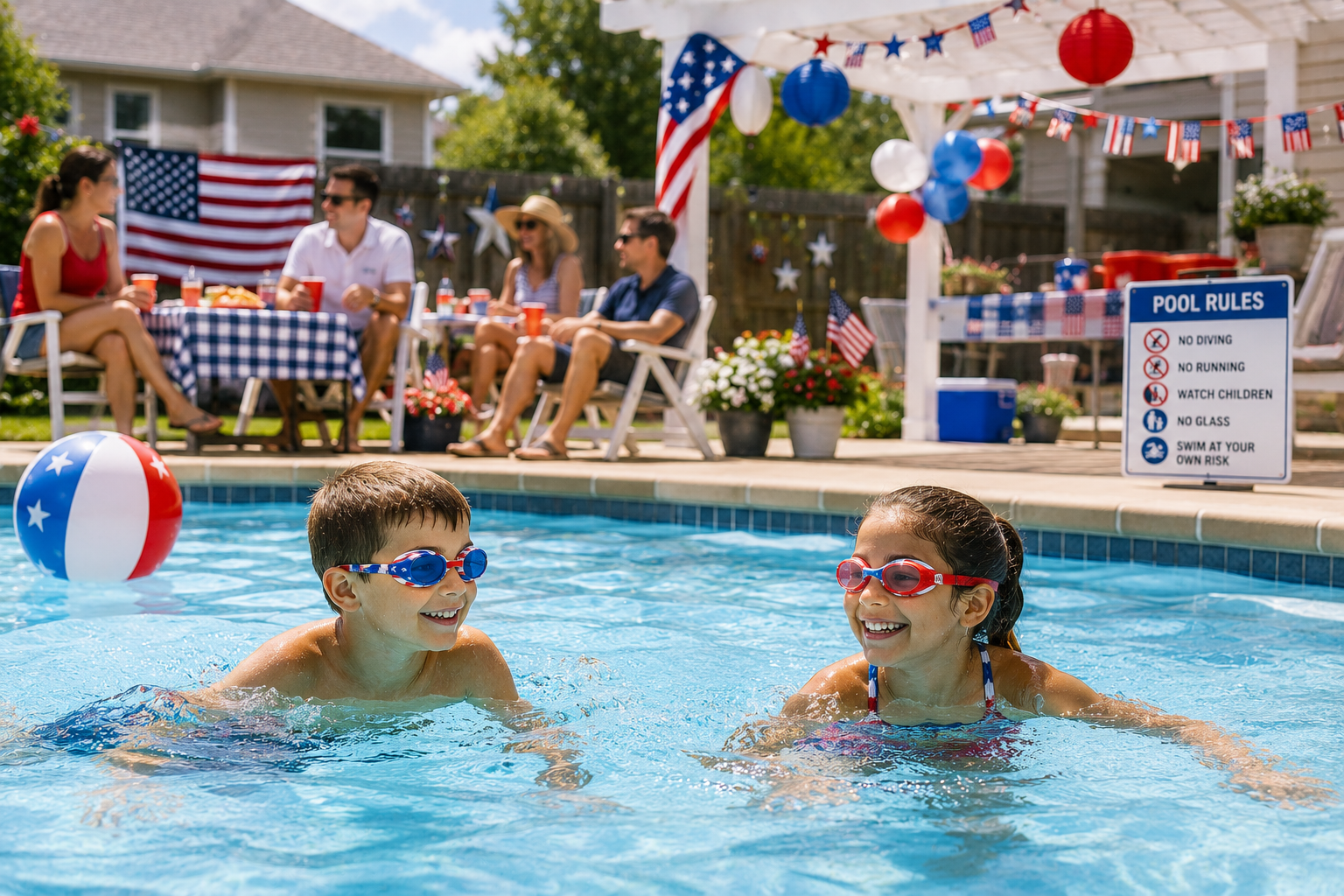
Active supervision greatly reduces accidents. Adults and caregivers should stay attentive and keep children within sight—or within arm’s reach for young or inexperienced swimmers. A sober, designated watcher can spot trouble early and respond immediately.
What Are Recommended Pool Fencing and Barriers?
Reliable fencing and barriers are essential—especially at busy gatherings. Most codes call for a minimum four-foot barrier with a self-closing, self-latching gate. Options range from mesh safety fences to decorative ironwork; follow local regulations to keep guests secure.
How Can Water Safety for Kids Be Ensured During Independence Day?
Protecting kids requires preparation: combine active supervision with properly fitted U.S. Coast Guard-approved life jackets and flotation aids. Note: Water wings, inflatable rings, and pool noodles are not substitutes for life jackets. Also, use clear signage, and consider swim lessons or staggered swim times to reduce overcrowding. For professional support, explore our safety and training services.
Which Drowning Prevention Techniques Are Effective for Children?
Proven strategies include formal swim lessons, consistent use of properly fitted, U.S. Coast Guard-approved life jackets, and a clear emergency action plan. Practicing basic water-safety skills and drills with adults present builds preparedness and confidence.
What Role Do Lifeguards and Adult Supervision Play?
Lifeguards provide trained oversight for spotting hazards and responding quickly. Even with lifeguards, responsible adults should stay engaged—enforcing rules and watching for unsafe behavior—so professional oversight and proactive adult supervision work together.
What Holiday Hazards Should Be Managed Near Pools on the Fourth of July?
Holiday events add risks: fireworks can cause burns or drop debris into the water, food and drink near edges raise slip hazards, and crowds make supervision harder. Designate safe zones, manage guest flow, and keep fireworks well away from the pool to reduce incidents.
How Do Fireworks Pose Risks Around Swimming Pools?
Fireworks can cause burns, start fires, and produce falling debris that injures swimmers or contaminates water. Keep ignition points far from the pool and supervise any permitted displays carefully. For design ideas that prioritize safety, review our project portfolio.
What Are Safe Practices for Fireworks Use Near Water?
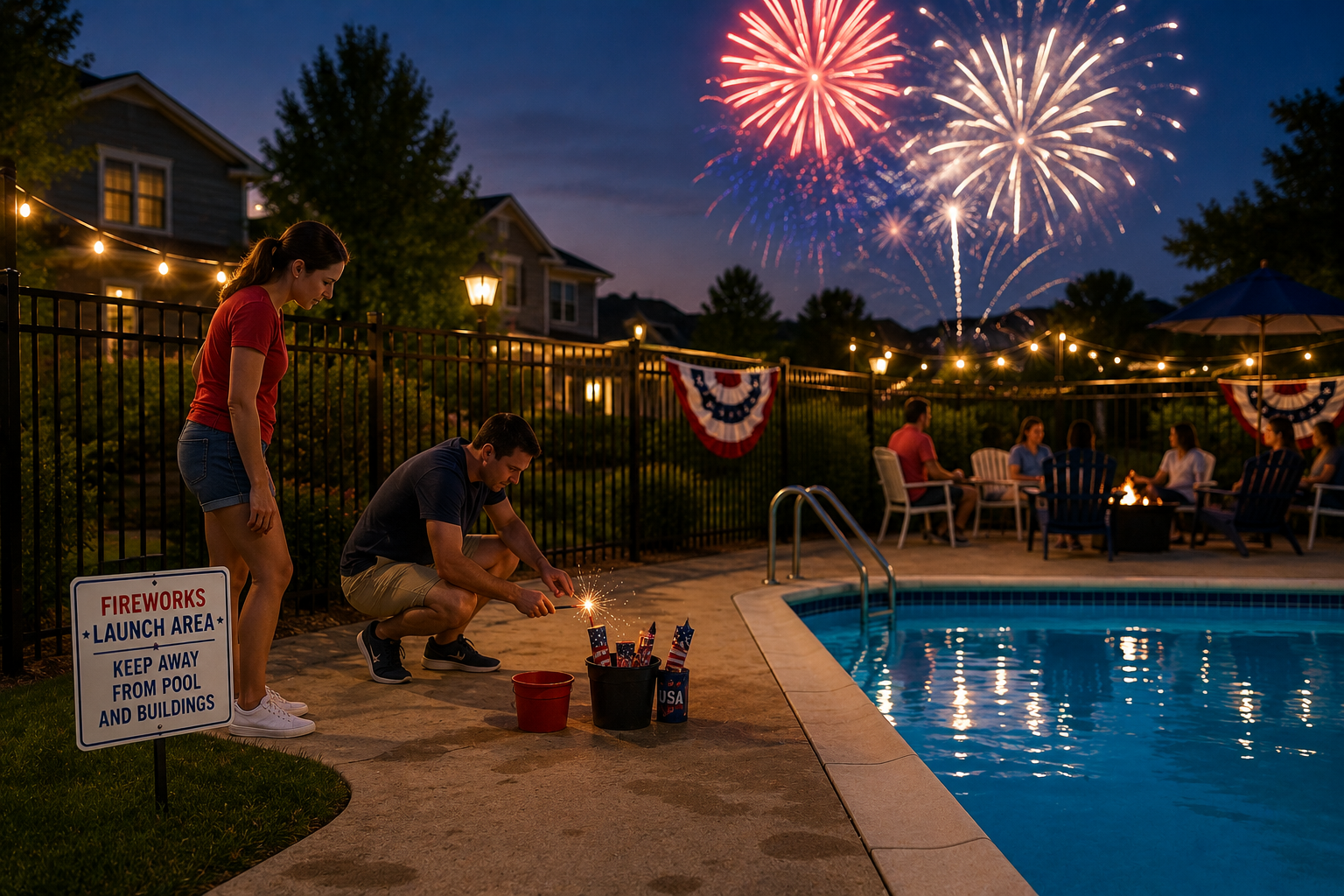
If fireworks are part of your plans, take strict precautions: mark clear zones away from the pool, prefer ground-level or non-aerial displays, and require adult supervision. Keep extinguishing tools (water buckets or a hose) nearby and make the safety perimeter obvious.
Preventing Slip and Fall Accidents Around the Pool Deck
Wet pool decks, spilled drinks, pool toys, and increased foot traffic can create slip-and-fall hazards during holiday gatherings. Encourage guests to walk rather than run, clean spills promptly, and keep walkways free of toys, towels, and other obstacles. Commercial pool operators should inspect deck surfaces regularly and ensure adequate lighting for evening celebrations. Taking a few preventive measures can significantly reduce injuries and improve overall pool safety during busy holiday events.
How Can Pool Maintenance Ensure Chemical Safety During Summer Celebrations?
Good pool chemistry protects swimmers. Test chlorine and pH regularly, follow manufacturer guidance when adding chemicals, and keep a consistent cleaning routine. Proper balance prevents eye and skin irritation and reduces the risk of recreational water illnesses—especially important on busy holiday weekends.
Why Is Maintaining Proper Chemical Levels Critical on Holiday Weekends?
High bather loads raise contaminant levels and strain sanitizers. If chemistry slips, swimmers may develop skin or respiratory irritation or infections. Regular testing and prompt adjustments keep conditions safe so guests can swim with confidence.
Which Summer Pool Safety Guidelines Help Prevent Water-Related Illnesses?
Minimize waterborne illness by keeping the pool clean, discouraging swimming when ill, and enforcing pre-swim showers. Maintain disinfection protocols and monitor water clarity and chemistry during high-use periods to protect everyone.
The table shows practical maintenance steps to keep your pool safe and healthy—especially when usage rises during holidays like Independence Day.
Holiday Pool Safety for Commercial Pools: Multi-Family Communities and HOAs
While residential pool safety is crucial, commercial pools—like those in multi-family communities and HOAs—present unique challenges during holiday celebrations. These settings involve higher swimmer volumes, diverse user groups, and shared responsibility, demanding enhanced safety protocols to minimize risks.
Unique Supervision Strategies for Commercial Pools on the Fourth of July
Continuous active supervision by trained lifeguards is essential in communal pools, especially during peak holiday periods. Unlike private pools, commercial facilities often rely on posted rules and lifeguard staff; however, additional strategies can further enhance safety. Increasing lifeguard-to-swimmer ratios during peak hours, assigning dedicated deck attendants to monitor pool perimeters, and utilizing technology such as underwater cameras or remote monitoring systems can improve hazard detection and response times.
Some facilities also designate staff members to conduct periodic safety walkthroughs, monitor pool occupancy levels, and ensure compliance with posted rules. These layered supervision strategies help reduce risks associated with overcrowding, distracted guests, and increased holiday activity while creating a safer environment for residents and visitors.
Advanced Barriers and Access Controls
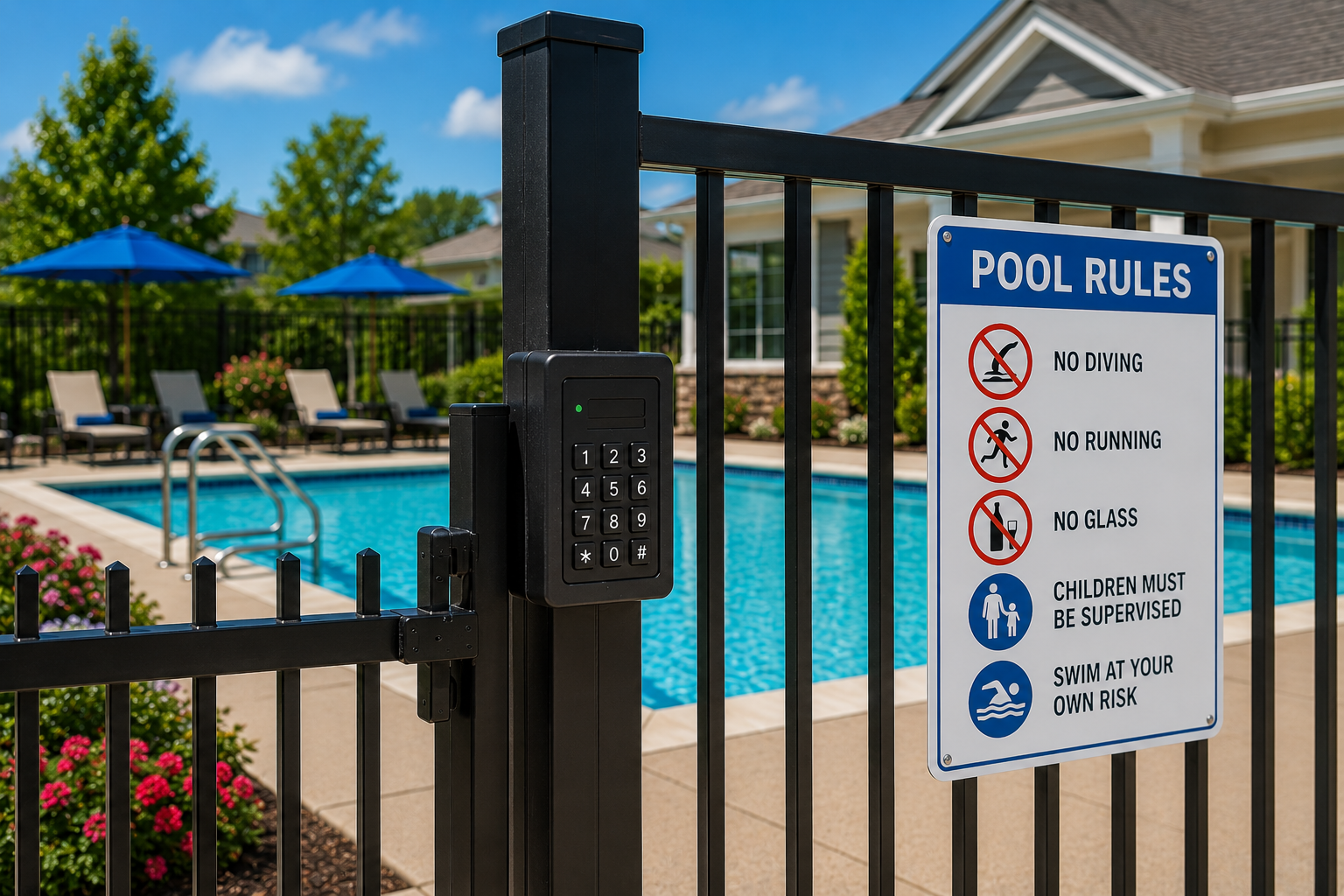
Commercial pools benefit from layered access controls beyond standard fencing. Electronic gate locks activated by resident access cards can prevent unauthorized entry, reducing unsupervised swimming risks during holidays. Installing clear signage outlining occupancy limits and rules — visible at multiple points — fosters awareness and compliance.
Managing High Bather Loads with Novel Water Quality Monitoring
Unlike residential pools, commercial pools during holidays face elevated bather loads that challenge water quality. Implementing continuous automated water chemistry sensors coupled with AI-driven alert systems like PoolCop, can detect harmful shifts instantly, enabling timely chemical adjustments that minimize illness spread.
Holiday Event Management and Risk Mitigation
Communal pools often host large Independence Day events. Novel approaches include crowd flow modeling to prevent overcrowded pool decks and designated zones for activities, reducing slip and drowning hazards. Collaboration with local fire authorities ensures fireworks displays are safely separated from aquatic areas, leveraging environmental data to choose ideal display locations and timings.
Community Engagement and Education Innovations
Multi-family communities and HOAs offer unique opportunities to strengthen pool safety through resident education and digital engagement. Interactive safety apps and resident communication platforms can provide real-time pool rule reminders, emergency alerts, pool occupancy updates, and holiday safety notifications before major events such as Fourth of July celebrations. These tools help improve awareness while encouraging compliance with established pool safety guidelines.
Some communities are also incorporating gamification into water safety education by using quizzes, safety challenges, and interactive learning activities that reward participation and reinforce safe swimming practices. These innovative approaches help increase awareness of drowning prevention, emergency preparedness, supervision responsibilities, and other critical pool safety topics.
In addition to digital tools, property managers can further promote safety by distributing pre-holiday communications, posting highly visible pool signage, and reminding residents about pool capacity limits, fireworks restrictions, and emergency procedures. Combining technology, communication, and education helps create a stronger culture of safety while enhancing the overall experience for residents and guests during busy holiday weekends.
Emergency Preparedness for Commercial Pool Settings
Establishing comprehensive, regularly drilled emergency action plans that consider the large and diverse community populations is a best practice. Incorporating multilingual signage and staff training ensures rapid, clear communication during incidents, reducing response times and confusion.
Integrating these innovative research-backed measures elevates holiday pool safety in commercial settings, protecting larger communities and distinct risk profiles from incidents and enhancing enjoyment for all residents and guests.
Simple precautions make poolside celebrations safer and more enjoyable. These tips give hosts clear actions to reduce risk while preserving the fun. If you’d like professional help planning or auditing pool safety for your event, please contact us.
Frequently Asked Questions
What are the key safety actions to take in case of a pool emergency at both residential and commercial pools?
Whether at a residential pool party or a commercial facility, stay calm and act quickly. Call 911 if someone is in distress. Use a reaching tool or flotation device to assist rather than entering the water yourself unless trained. Maintain a stocked first-aid kit and ensure that designated individuals know CPR. Regularly review emergency plans with all relevant parties, including family members or facility staff and guests, to ensure prompt and effective responses.
What are the signs of heat exhaustion during a pool party?
Common signs of heat exhaustion include heavy sweating, dizziness, headache, nausea, muscle cramps, fatigue, and cool, clammy skin. If someone begins experiencing these symptoms, move them to a shaded area, encourage hydration, and allow them to rest. Seek immediate medical attention if symptoms worsen or signs of heat stroke develop.
Are there specific regulations or restrictions for fireworks use near pools in residential and commercial settings?
Yes. Local laws often restrict certain types of fireworks—especially aerial displays—near homes, waterways, and public spaces, including private and commercial pools. Compliance with ordinances and guidelines on safe distances is essential. Use proper supervision, keep ignition points well away from all pools, and coordinate with local authorities when planning fireworks at commercial facilities to ensure safety for all participants.
How can pool safety education be effectively delivered to children in private and community pool environments?
Education should be consistent and age-appropriate in all settings. Teach children with short, clear lessons covering pool rules and safe behaviors, such as no running or diving in shallow water and always asking permission before entering the pool area. Use supervised swim lessons and engaging activities like drills or games to make learning fun and memorable. Supplement lessons with visible signage and reminders in both residential and communal pool areas to reinforce safety messages continuously.
How can property managers prepare community pools for increased holiday traffic?
Property managers can prepare for increased holiday pool traffic by inspecting safety equipment, verifying proper water chemistry, reviewing pool rules and occupancy limits, and ensuring clear signage is in place. Additional measures such as access controls, increased supervision, and proactive resident communication can help create a safer and more enjoyable environment for residents and guests.
What specialized safety and consulting services does Specialty Aquatics and Consulting provide to enhance pool safety for homes and commercial properties?
Specialty Aquatics and Consulting offers tailored safety audits, training programs, and water quality management solutions for both residential and commercial pools. Services include customized safety protocol development, staff and lifeguard training, emergency preparedness planning, and advanced water chemistry monitoring support. Our expertise ensures that pools meet or exceed local regulations and best practices, promoting safer aquatic environments.
How does Specialty Aquatics and Consulting assist with pool maintenance and chemical safety during high-use holiday periods?
We provide guidance on maintaining optimal chemical balances, recommend testing schedules, and offer hands-on support in managing pool sanitation to prevent recreational water illnesses. Our services cater to the increased demands during holidays for both private and commercial pools by implementing robust maintenance routines and real-time monitoring techniques to ensure swimmer safety and comfort.
Can Specialty Aquatics and Consulting help with emergency preparedness and regulation compliance for multi-family community pools?
Absolutely. We develop and regularly update comprehensive emergency action plans tailored to the complexities of multi-family and HOA pool environments, considering diverse community needs. Our team trains staff and residents, implements multilingual signage, and ensures compliance with regulatory requirements. These measures enhance safety, streamline incident responses, and foster a culture of vigilance at commercial pool facilities.