
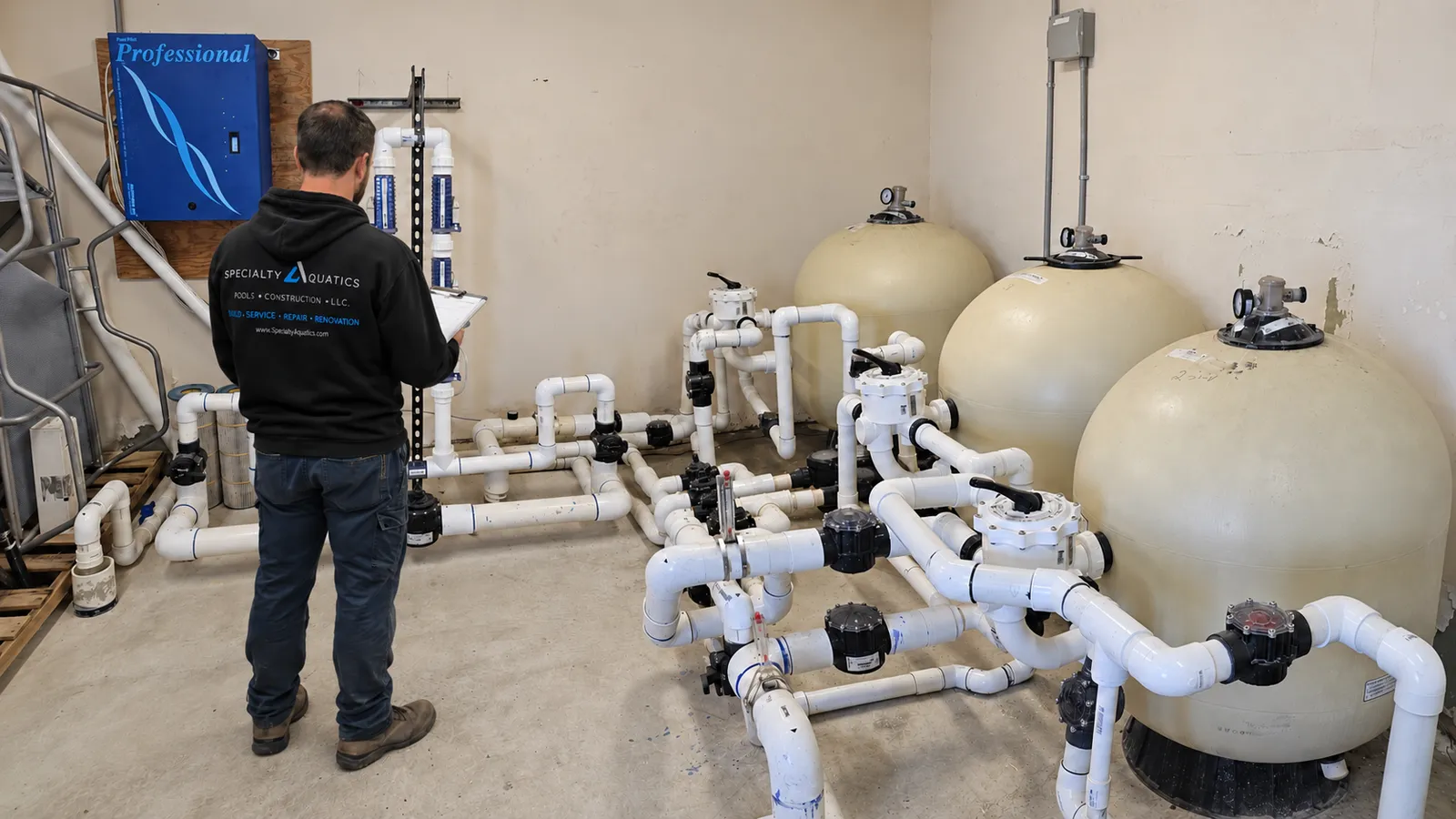
As October arrives and temperatures begin to drop across the Atlanta Metro area, most commercial pool owners, HOAs, municipalities, hotels, and multi-family properties are focused on one question: when do we close? But there’s a second question that deserves just as much attention: is the equipment that keeps this pool running actually ready for colder weather, and for next season?
Three pieces of equipment in particular tend to reveal their problems in the fall: salt cells, pool covers, and pool heaters. Each one either works quietly in the background or fails at the worst possible moment. And each one is far easier, and far less expensive, to evaluate, service, or replace now than in the middle of winter or the rush of spring startup.
At Specialty Aquatics and Consulting, we inspect, diagnose, service, repair, and replace salt-chlorination equipment, commercial pool covers, and pool heaters for HOAs, municipalities, military housing communities, resorts, hotels, and multi-family properties throughout the Atlanta Metro area and the Florida Panhandle. We service and support all major commercial and residential pool equipment brands, including Hayward, Jandy, and Pentair, and we’re proud to serve as an authorized warranty service representative for those brands. The facilities that evaluate their equipment before colder weather are consistently the ones that avoid mid-winter emergencies and spring surprises.
Why Fall Is the Right Time for a Commercial Pool Equipment Inspection
A full swim season is the best stress test your equipment will ever get. By the end of September, your salt system, cover, and heater have either performed reliably or given you warning signs, and those warning signs are still fresh in the minds of your maintenance staff and residents.
Fall inspection matters for three practical reasons:
- Problems are easier to diagnose while the season’s performance history is recent. Repeated alarms, inconsistent chlorine readings, or slow heat-up times are easier to trace now than months later.
- Replacement parts and custom products have lead times. Salt cells, heater components, and especially custom-fitted safety covers often cannot be sourced overnight.
- It aligns with budget season. Many HOAs, municipalities, and property managers are finalizing 2027 budgets right now, which makes this the ideal window to identify equipment needs before the numbers are locked in.
This evaluation pairs naturally with your commercial pool winterization timing. As we covered in our Labor Day winterization guide, Atlanta Metro commercial pools should close based on water temperature (consistently at or below approximately 60°F), not the calendar. The weeks leading up to that threshold are the perfect time to have a professional evaluate the equipment you’ll depend on through the off-season and into next spring. And with hurricane season continuing through November, any facility whose equipment room saw heavy rain, flooding, or power surges this year should have its salt system, heater, and electrical components checked as part of its storm preparedness plan.
Salt Cells: Did Your Chlorine Production Stay Consistent?
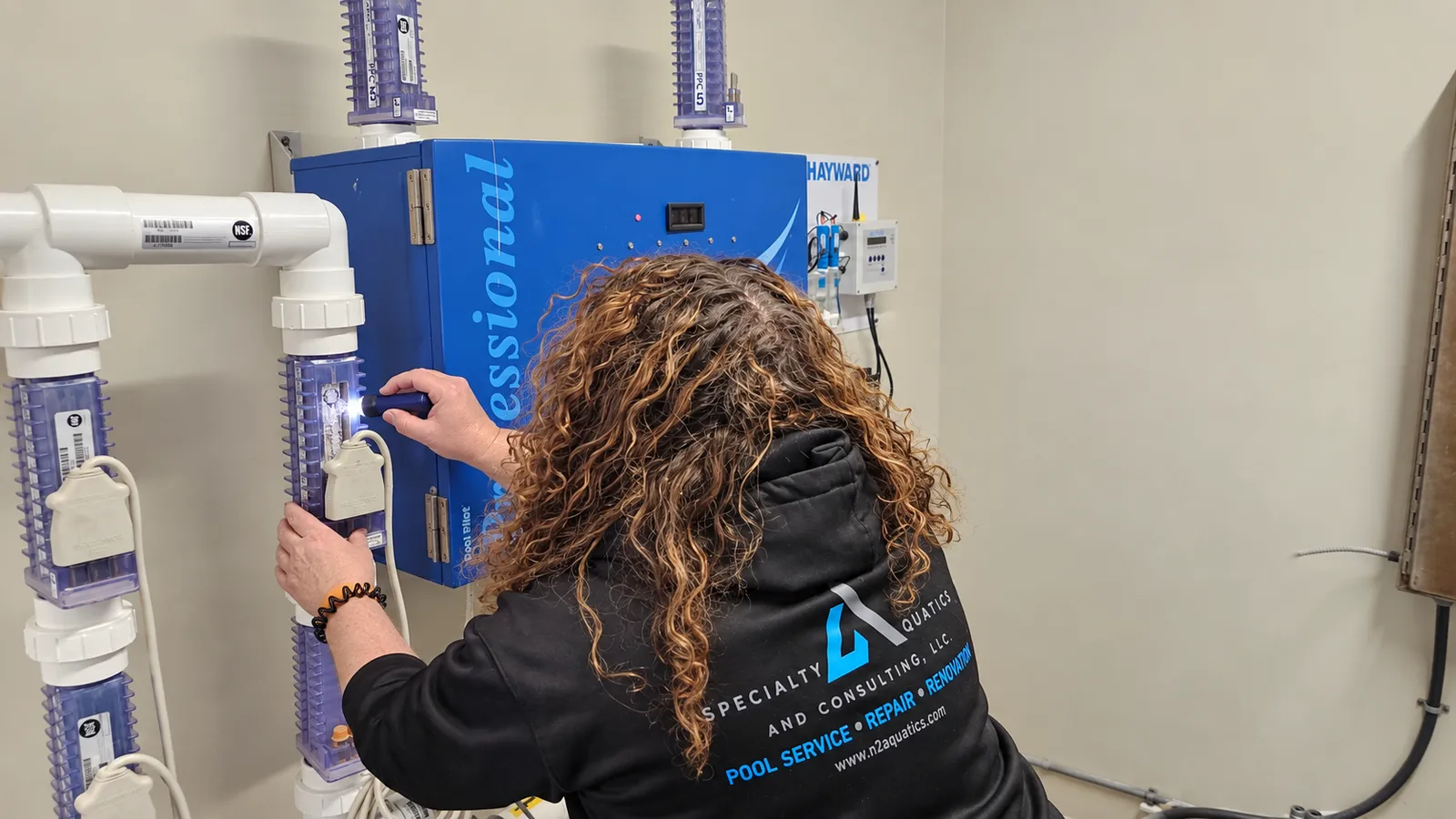
Salt chlorine generators have become a popular choice for commercial and HOA pools because they produce chlorine on-site and can reduce the handling of stored chemicals. But the salt cell, the component that actually converts salt into chlorine, is a wear item. It has a finite service life, and its performance gradually declines over time.
The key question to ask after a full season is simple: did chlorine production remain consistent, or did the system require repeated attention?
Warning Signs Your Salt Cell Needs Service or Replacement
- Recurring warning or error messages such as low salt, high salt, low flow, or “check cell” alerts, especially when salt levels test correctly
- Reduced chlorine output that requires your team to raise the output percentage, run the system longer, or supplement with liquid or tablet chlorine to maintain sanitizer levels
- Visible scale or calcium buildup on the cell plates, which reduces efficiency and can shorten cell life
- Worn or damaged plate coatings, which indicate the cell is nearing the end of its usable life
- An aging cell that has accumulated significant operating hours, even if it hasn’t failed yet
Why Salt Cells Matter More as Water Cools
Many salt chlorine generators reduce output or stop producing chlorine altogether when water temperature drops below a manufacturer-specified threshold, commonly somewhere in the 50–60°F range. For pools that stay open later into the fall, or heated pools operating through colder months, that means a cell that was already underperforming can leave the pool without adequate sanitizer right when your team is least expecting it.
A professional salt system evaluation typically includes testing salt levels and chlorine output, inspecting and cleaning the cell according to manufacturer guidelines, checking flow sensors and control boards, and determining whether service, repair, or replacement is the most cost-effective option. Because cold-water shutoff thresholds and cleaning procedures vary by manufacturer and model, working with a technician familiar with Hayward, Jandy, and Pentair salt systems means your equipment is evaluated to its own specifications, not a generic checklist. For pools being winterized, the evaluation also includes proper cell removal, cleaning, and storage so the cell is protected through the off-season.
Pool Covers: Service, Replace, or Install for the First Time?
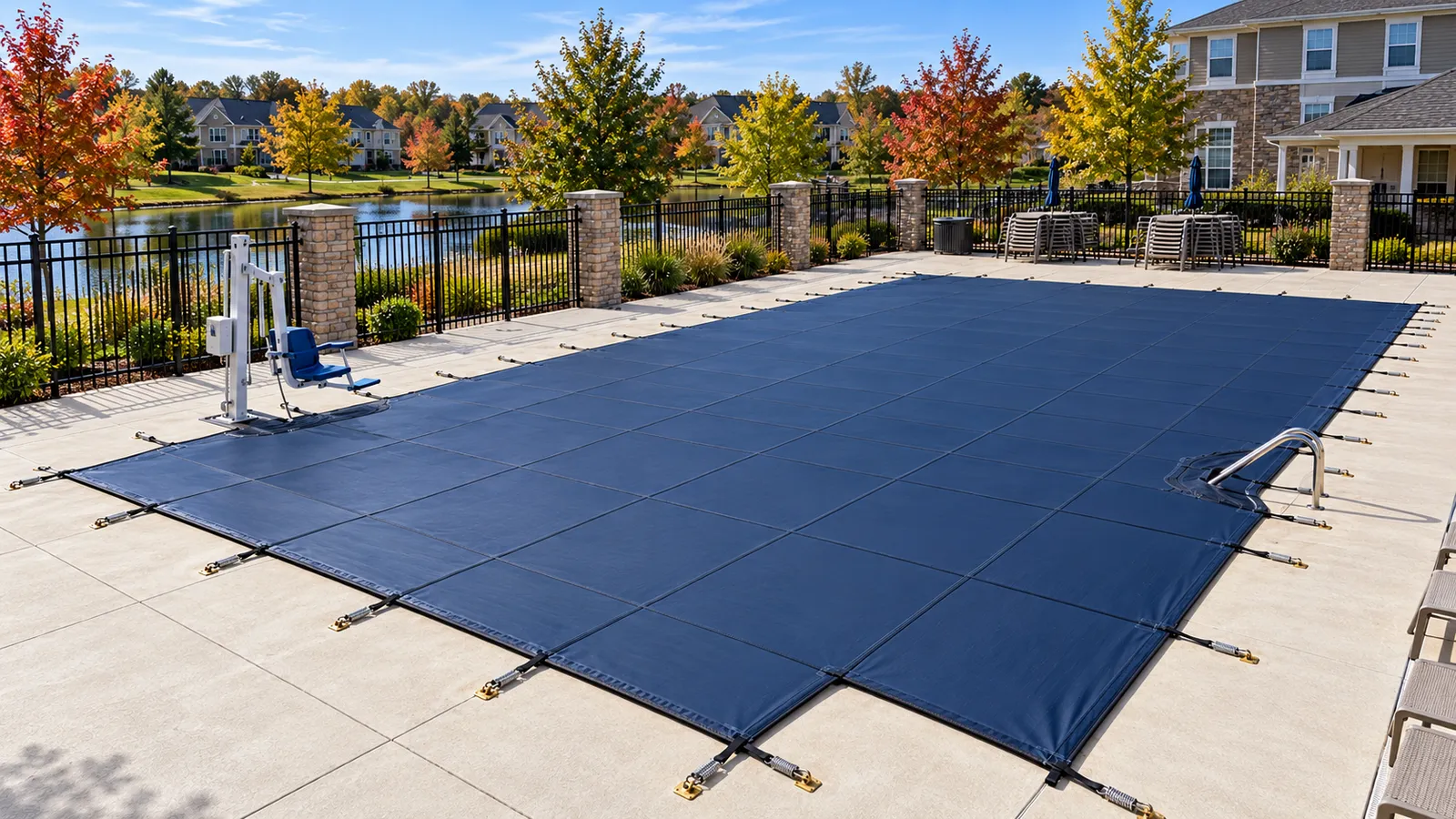
For commercial facilities, a pool cover isn’t just about keeping leaves out of the water. A properly fitted commercial safety cover protects against unauthorized access, reduces debris accumulation, supports cleaner spring openings, and plays a meaningful role in managing liability for HOAs, multi-family properties, and municipalities.
The question every property should be asking now: does the existing cover need to be serviced or replaced, or does the property need a properly fitted cover installed for the first time?
Signs Your Existing Cover Needs Service or Replacement
- Tears, fraying, or UV degradation in mesh or solid cover material
- Missing, loose, or damaged anchors and deck hardware
- Worn or broken springs and straps that no longer hold proper tension
- Sagging or poor fit, which can allow debris, water, or even people to get under the cover
- Changes to the pool or deck since the cover was originally made, such as new features, deck repairs, or coping renovations
Why Fit Is Everything
A commercial safety cover is not a one-size-fits-all product. The pool’s exact dimensions, features, surrounding deck, and anchor placement all affect the correct fit. Steps, benches, raised walls, rock features, diving stands, handrails, and irregular pool shapes all need to be accounted for. The deck material and its condition affect where and how anchors can be installed. Even small measurement errors can result in a cover that doesn’t seal properly or doesn’t provide the protection it was purchased for.
That’s why professional measurement matters. A cover that is precisely measured, manufactured to the pool’s actual layout, and professionally installed will perform far better, and last far longer, than one that is estimated or adapted from another pool.
Because custom safety covers are manufactured to order, timing is critical. Properties that want a new or replacement cover in place for this winter’s closing should begin the measurement and ordering process as early as possible.
Pool Heaters: Is the Complete System Actually Performing?
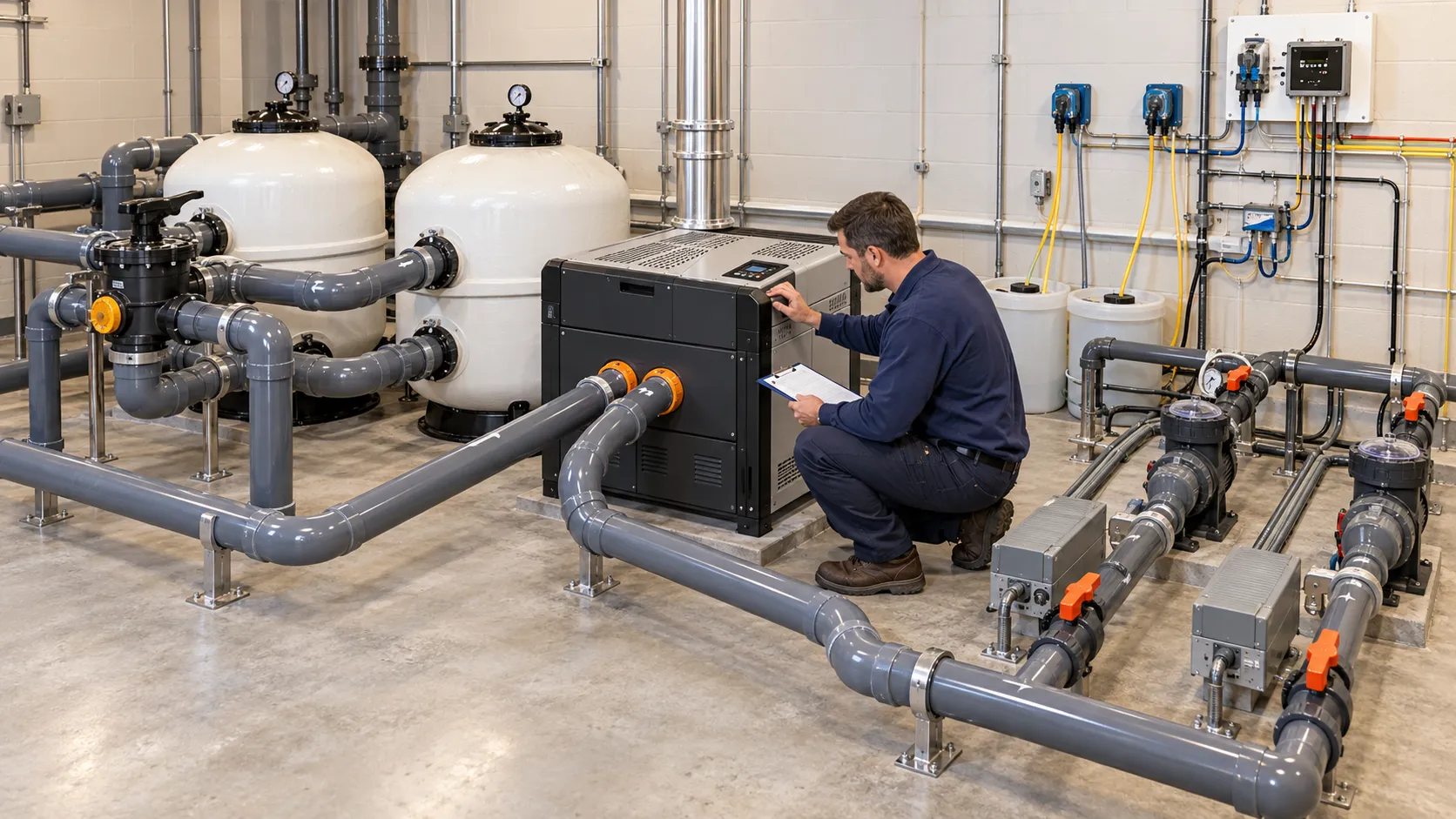
For facilities that extend their season into the fall, operate heated pools, or run indoor or year-round aquatic programs, the pool heater becomes one of the most important pieces of equipment on the property as temperatures drop.
Here’s the misconception many facility managers run into: a heater turning on does not always mean it is performing reliably or ready for continued colder-weather use. A heater can fire up and still fail to reach or maintain set temperature, operate inefficiently, cycle erratically, or be developing a problem that won’t show up until demand increases.
What a Complete Heater System Check Should Include
- Temperature performance testing to confirm the heater can reach and hold the set temperature under real operating conditions
- Ignition and safety control inspection, including pressure switches, flow switches, high-limit switches, and thermostats
- Heat exchanger inspection for scale buildup or corrosion, often caused by unbalanced water chemistry over the season
- Gas supply, venting, and combustion inspection for gas-fired units, which is critical for both performance and safety, particularly in enclosed equipment rooms
- Heat pump evaluation, including refrigerant system performance, fan and coil condition, and realistic output expectations as air temperatures drop
- Electrical and control board review, including connections, wiring, and automation integration
- Water flow verification, since restricted flow from dirty filters or plumbing issues is one of the most common causes of heater faults
Whether your facility runs a Hayward, Jandy, or Pentair gas heater or heat pump, each manufacturer has its own diagnostic codes, service requirements, and warranty terms. A technician who works with these brands routinely can pinpoint issues faster and service the unit in a way that keeps it compliant with manufacturer requirements.
Why Colder Weather Exposes Heater Problems
As air and water temperatures fall, a heater has to work harder and longer to maintain the same pool temperature. Heat pumps in particular lose efficiency as ambient air temperatures drop, which can reveal an undersized or underperforming unit. Components that were marginal in September can fail under sustained November demand, and a heater failure in cold weather often means an unplanned closure, frustrated residents or members, and emergency repair pricing.
For facilities that plan to winterize, a heater inspection before closing also helps confirm the unit is properly drained and protected against freeze damage, and flags any repairs or replacements that should be budgeted before next season.
What Happens If You Wait Until Spring?
Deferring salt cell, cover, and heater evaluations until spring almost always costs more than addressing them now. Common consequences include:
- Sanitizer gaps and algae problems from underperforming salt cells that were never evaluated before cooler weather reduced their output
- Unsecured or poorly covered pools through the winter, increasing debris, spring cleanup costs, and liability exposure
- Mid-winter heater failures at heated or year-round facilities, leading to unplanned closures
- Compressed spring timelines, since discovering equipment failures at startup means competing with every other facility for parts, technicians, and appointments
- Higher costs from rush orders, expedited shipping, and emergency service calls
In short, equipment problems don’t go away over the winter. They wait, and they usually get more expensive.
Why Commercial Pool Equipment Should Be Evaluated by a Professional
Commercial salt systems, safety covers, and heaters are more complex than their residential counterparts, and they carry greater liability, compliance, and warranty implications. A qualified commercial pool service provider brings:
- Accurate diagnosis that separates a simple service issue from a true end-of-life replacement need
- Brand-specific expertise across all major commercial and residential equipment brands, including Hayward, Jandy, and Pentair
- Authorized warranty service, since Specialty Aquatics and Consulting serves as an authorized warranty service representative for Hayward, Jandy, and Pentair, which helps protect coverage and can simplify warranty claims on eligible equipment
- Precise cover measurement and installation for proper fit and protection
- Safety-focused heater inspection, including gas, venting, and combustion checks
- Documentation of equipment condition that supports budgeting, insurance, and board decision-making
- Coordination with winterization, so equipment evaluation, service, and closing happen efficiently in one plan
The Bottom Line
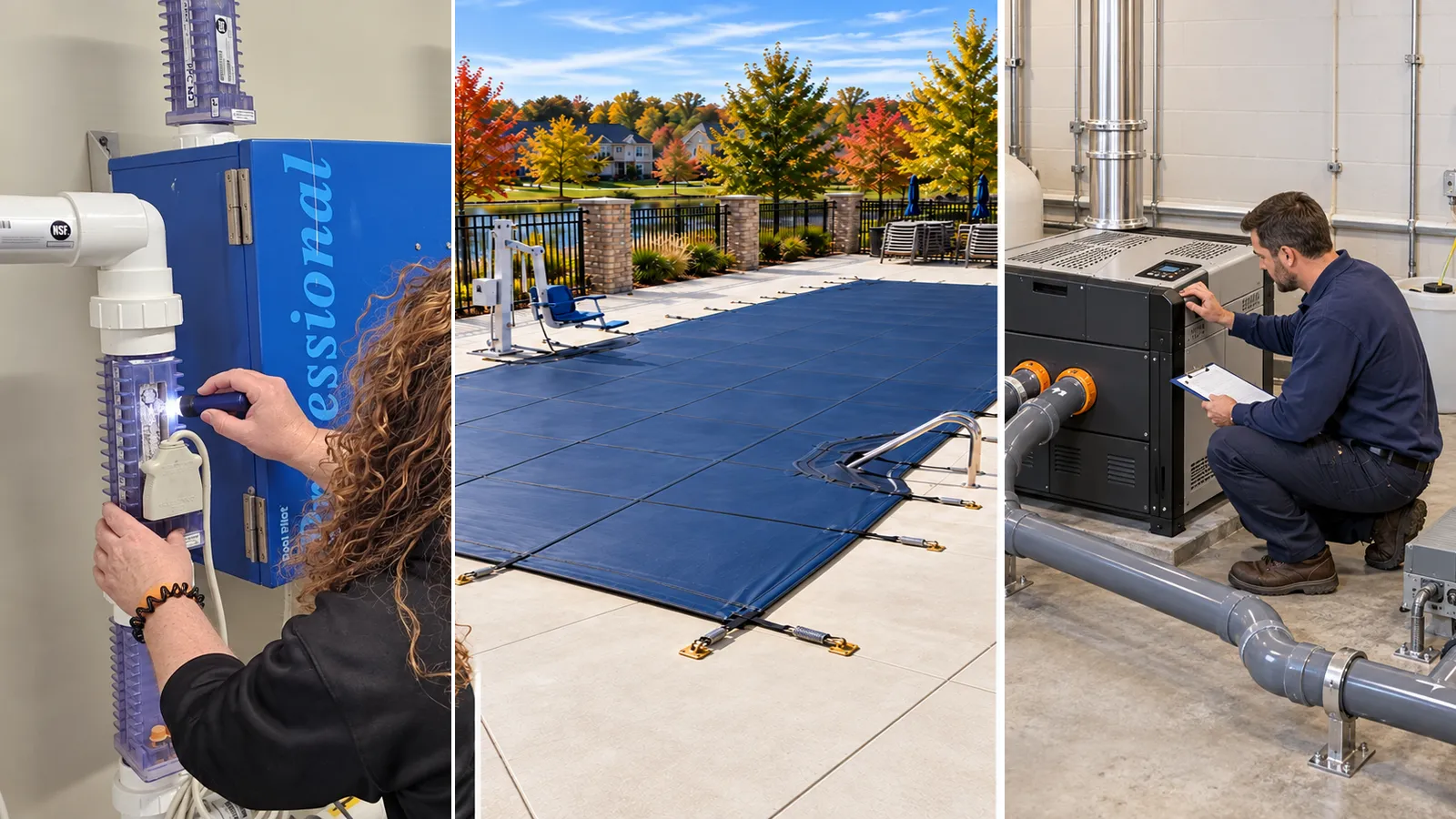
Before colder weather arrives, commercial pool owners and operators in the Atlanta Metro area should take a hard look at three pieces of equipment: salt cells, pool covers, and pool heaters. Did your salt system keep chlorine production consistent? Does your cover still fit and protect the way it should, or does your property need one for the first time? Is your heater actually performing, or just turning on?
Answering those questions now, while there’s still time to service, repair, order, or replace, is the difference between a smooth off-season and a costly spring.
Specialty Aquatics and Consulting can inspect, diagnose, service, repair, or replace salt-chlorination equipment, commercial pool covers, and pool heaters. The sooner your facility is evaluated, the more time you’ll have to schedule service, order replacement parts, or have a custom cover measured and made before temperatures drop further. Contact us today to schedule your fall equipment evaluation, or visit our services page to see everything we offer for commercial aquatic facilities.
Frequently Asked Questions
1. What pool equipment should commercial properties evaluate before cold weather? Commercial pool owners should evaluate their salt cells, pool covers, and pool heaters before colder weather arrives. These three components are the most likely to reveal performance problems in the fall, and they are easier and less expensive to service, repair, or replace before winter than during spring startup.
2. How do I know if my commercial pool’s salt cell needs to be replaced? Common signs include recurring warning messages, reduced chlorine output, the need to supplement with additional chlorine, visible scale buildup on the cell plates, and a cell with a high number of operating hours. A professional can test output, inspect the cell, and determine whether cleaning, service, or replacement is the best option.
3. Do salt chlorine generators work in cold water? Many salt chlorine generators reduce output or stop producing chlorine when water temperature drops below a manufacturer-specified threshold, commonly in the 50–60°F range. Pools that stay open into the fall or operate heated through colder months should confirm their salt system and backup sanitation plan are ready for cooler water.
4. How is a commercial pool safety cover measured and fitted? A commercial safety cover is custom-made based on the pool’s exact dimensions, shape, features such as steps and raised walls, the surrounding deck, and anchor placement. Professional measurement and installation help ensure the cover fits securely, protects against unauthorized access, and keeps debris out through the off-season.
5. If my pool heater turns on, does that mean it’s working properly? Not necessarily. A heater can turn on and still fail to reach or maintain set temperature, operate inefficiently, or be developing a problem that appears under heavier cold-weather demand. A complete heater inspection checks temperature performance, safety controls, the heat exchanger, gas and venting or heat pump performance, electrical components, and water flow.
6. Does Specialty Aquatics and Consulting service salt systems, pool covers, and heaters? Yes. Specialty Aquatics and Consulting inspects, diagnoses, services, repairs, and replaces salt-chlorination equipment, commercial pool covers, and pool heaters for HOAs, multi-family communities, hotels, resorts, municipalities, military housing, and recreation centers throughout the Atlanta Metro area and the Florida Panhandle. The team services and supports all major commercial and residential pool equipment brands, including Hayward, Jandy, and Pentair.
7. Is Specialty Aquatics and Consulting an authorized warranty service provider? Yes. Specialty Aquatics and Consulting serves as an authorized warranty service representative for major pool equipment brands including Hayward, Jandy, and Pentair. Facilities with eligible salt systems, heaters, or other equipment from these brands can have warranty service handled by the same team that maintains their pool.