
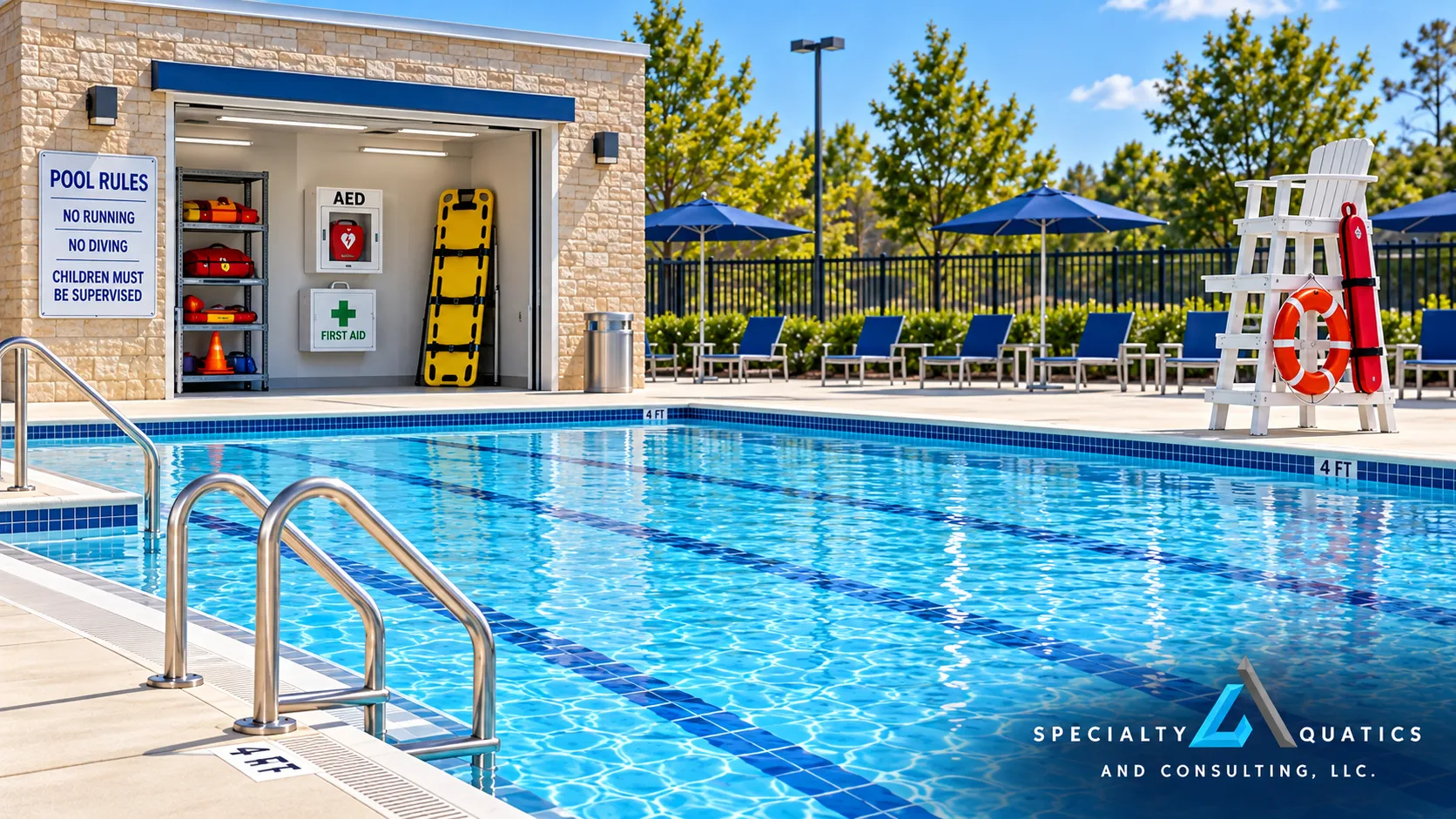
Commercial pool risk management requires structured, documented protocols that address negligence, duty of care, and standard of care to prevent injuries and reduce legal liability. Based in Canton, GA, our 10-person team works directly with facility operators to identify common lapses, such as inadequate supervision or improper chemical levels, before they escalate into accidents or lawsuits.
Specialty Aquatics and Consulting, LLC supports that effort with PHTA-aligned CPO training, SOP and EAP development, and objective on-site inspections, paired with 24/7 remote monitoring through PoolCop automation. These services give operators the documentation and oversight they need to meet their duty of care and stand on firm legal ground if an incident is ever questioned.
Key Takeaways
- Risk management prevents patron and staff injuries while protecting facility assets and minimizing legal liability.
- Structured, organized, and documented protocols form the foundation for avoiding aquatic facility liability claims.
- Improper chemical levels, broken equipment, and inadequate supervision create constant safety and legal exposure.
- Certified Pool Operators must balance chemical management with comprehensive hazard prevention and risk documentation.
What Is Aquatic Facility Risk Management?
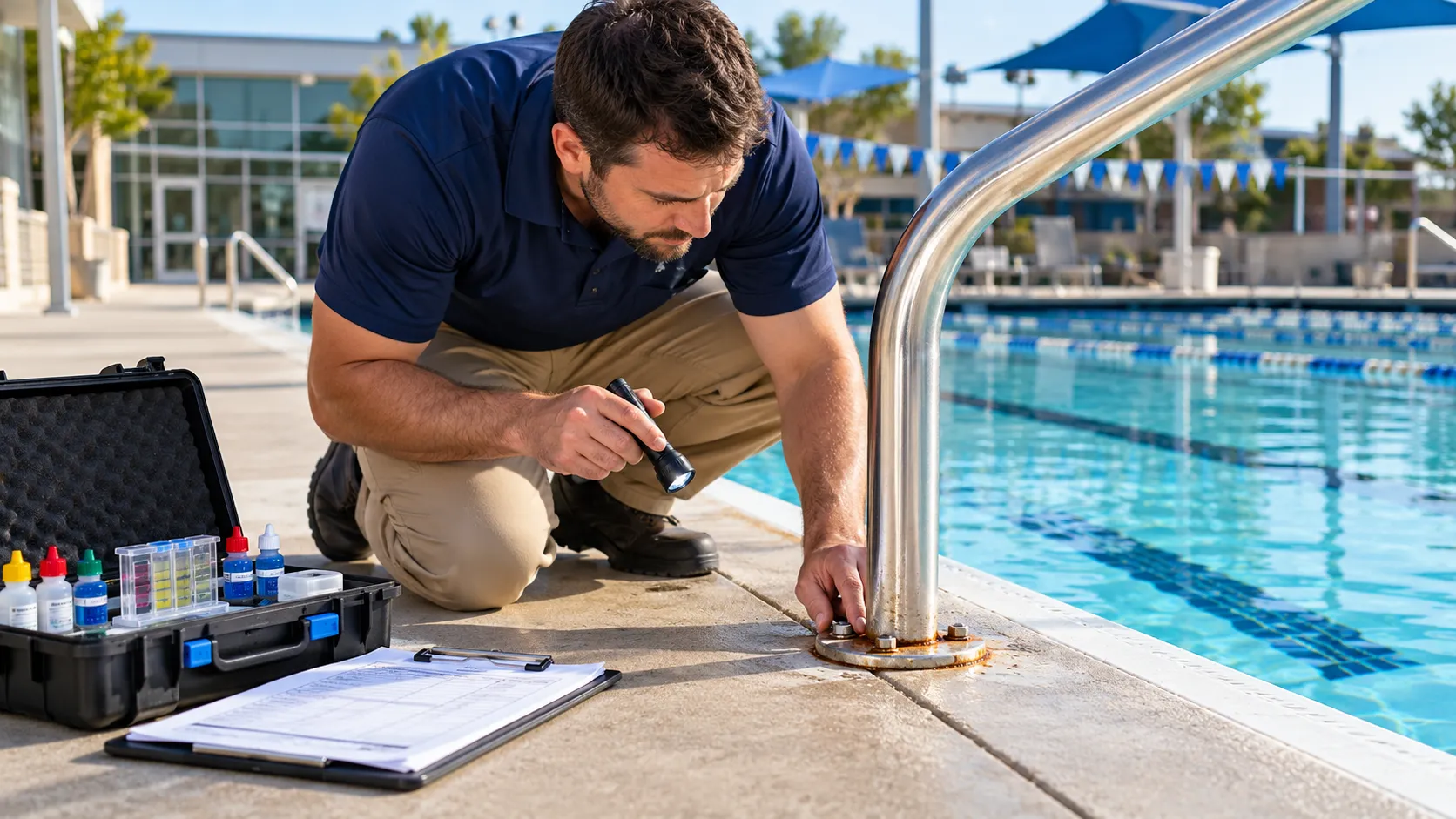
Aquatic facility risk management means preventing injuries to patrons and staff, protecting physical assets, and limiting legal exposure at a pool or water feature. The practice goes beyond routine upkeep. Commercial pool risk management requires identifying hazards before they cause harm, then building strategies to address each one systematically.
Neglected equipment and poor water quality create real danger for swimmers. Corroded rails, malfunctioning pumps, or unbalanced chemistry can injure a guest in minutes. Proper maintenance protects patron safety directly and extends the working life of the facility itself, which is why routine care and formal risk planning function as two sides of the same responsibility.
Why Does Aquatic Facility Liability Matter So Much?
Aquatic facility liability exposes owners to lawsuits, regulatory penalties, and reputational damage when hazards go unaddressed. A single incident tied to equipment failure or contaminated water can trigger claims that outlast the season in which they occurred. Facilities that document hazard identification and response steps stand on firmer legal ground than those relying on informal practices.
What Does a Pool Safety Risk Assessment Involve?
A pool safety risk assessment evaluates conditions across three areas:
- Equipment condition — pumps, filters, drains, and safety devices
- Water chemistry — sanitizer levels, pH balance, and clarity
- Supervision and signage — lifeguard coverage and posted rules
Each area gets evaluated, then paired with corrective strategies before problems reach patrons.
What Causes Liability At Aquatic Facilities?

Unintentional carelessness is behind most legal claims. Aquatic facility liability usually traces back to negligence: an unintended lapse that leads directly to injury,, according to guidance from the Certified Pool Operator program. Negligence rarely involves malice. It stems from missed steps, distracted supervision, or overlooked hazards that would have been caught with proper attention.
Most pool-related accidents fall into this preventable category. Certified Pool Operator training materials note that a large share of these incidents could have been avoided with the right precautions in place. That distinction matters for facility owners: an accident labeled “unavoidable” invites far less scrutiny than one traced to a skipped inspection or an ignored warning sign.
What Reduces Liability Exposure At A Pool?
Cleanliness and visible upkeep carry more legal weight than owners often assume. A clean, well-maintained pool is one of the most visible signals of responsible operation, and it directly lowers liability exposure. Neglected water quality or deferred equipment repairs, by contrast, create the kind of conditions that turn a minor incident into a lawsuit.
Does Compliance Actually Lower Risk?
Meeting local safety standards forms the foundation of sound commercial pool risk management. Facilities that follow routine maintenance schedules and regional compliance requirements build a documented record of care. The same record that supports a defensible pool safety risk assessment when an incident does occur.
How Do Facilities Conduct A Risk Assessment?
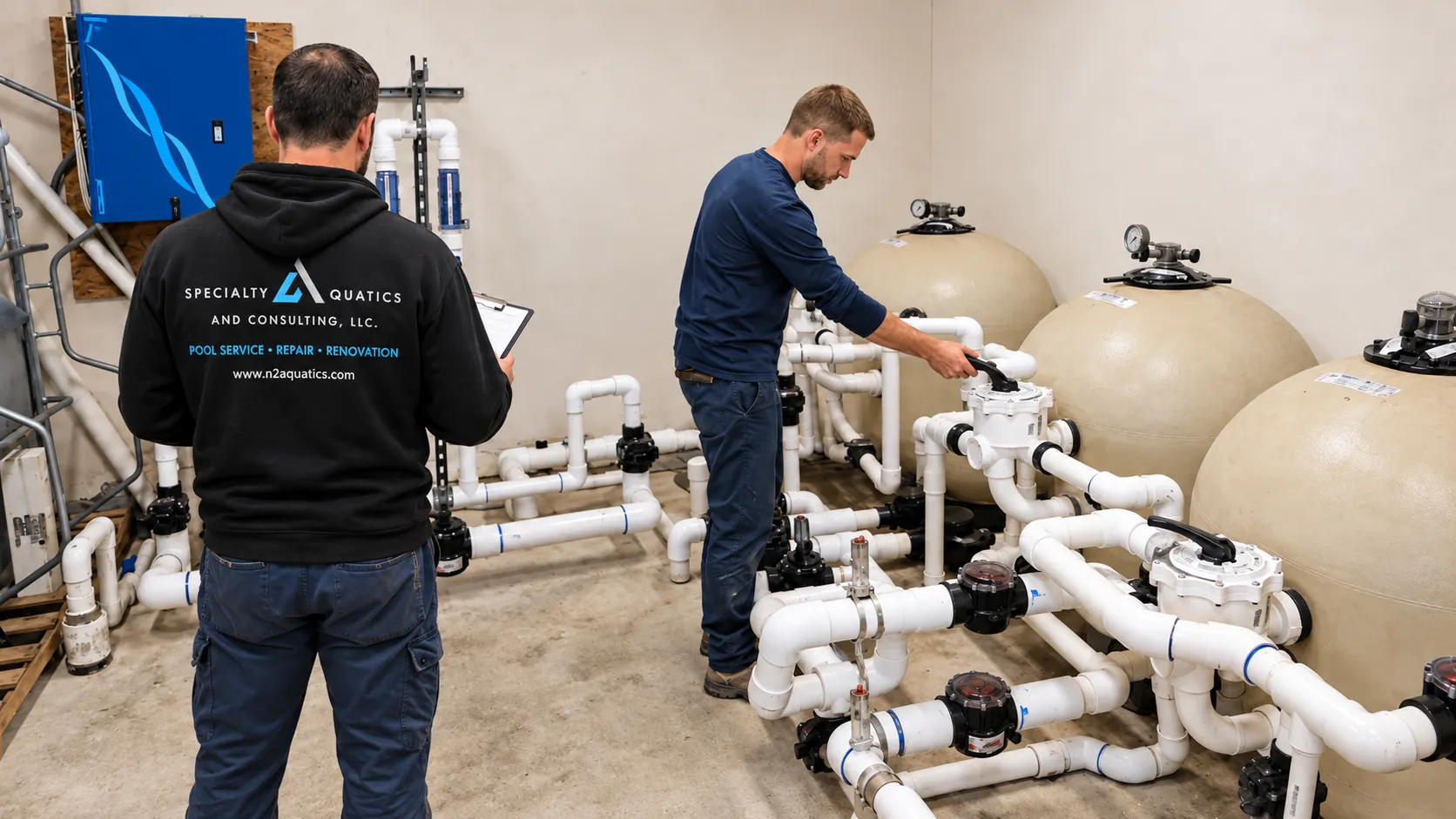
Facilities conduct a pool safety risk assessment by breaking maintenance into daily, weekly, and monthly workstreams that mirror actual pool use and environmental conditions. Skipping this structure carries real cost: unnoticed equipment failures and gradual water quality decline expose guests to injury and expose owners to legal exposure. A disciplined schedule closes those gaps before they become incidents.
Daily oversight limits contaminants and debris, keeping the pool environment attractive and genuinely safe rather than just presentable. Weekly inspections go deeper, checking pumps, filters, and other visible mechanical equipment for wear or malfunction before small issues become costly failures. Monthly reviews often extend to physical infrastructure, since resurfacing and restoration needs recur as pools age and surfaces degrade under constant use.
What Legal Factors Shape A Risk Assessment?
Aquatic facility liability hinges on four interconnected factors: negligence, standard of care, duty of care, and record keeping. Negligence claims typically arise when a facility fails to meet an expected standard of care for patron safety. Duty of care establishes what operators owe guests, while thorough record keeping documents that those obligations were met.
A sound assessment framework weaves these elements together:
- Physical checks — cleaning, equipment inspection, resurfacing evaluation
- Legal accountability — duty of care, standard of care, negligence prevention
- Documentation — records proving consistent, compliant practices
Together, these layers form the backbone of effective commercial pool risk management.
FAQ
What is aquatic facility risk management?
Aquatic facility risk management means preventing injuries to patrons and staff, protecting physical assets, and limiting legal exposure at a pool. It requires identifying hazards before they cause harm and building systematic strategies to address each one.
What does a pool safety risk assessment involve?
A pool safety risk assessment evaluates equipment condition, water chemistry, and supervision and signage. Specialty Aquatics and Consulting, LLC pairs each area with corrective strategies before problems reach patrons.
What causes liability at aquatic facilities?
Aquatic facility liability usually traces back to negligence, an unintended lapse leading directly to injury. It stems from missed steps, distracted supervision, or overlooked hazards like inadequate supervision or improper chemical levels.
How can Specialty Aquatics and Consulting help with risk management?
Specialty Aquatics and Consulting, LLC supports facility operators with PHTA-aligned CPO training, SOP and EAP development, and objective on-site inspections, paired with 24/7 remote monitoring through PoolCop automation. This combination gives operators the documentation and oversight needed to meet their duty of care and defend their practices if an incident is ever questioned.
Conclusion
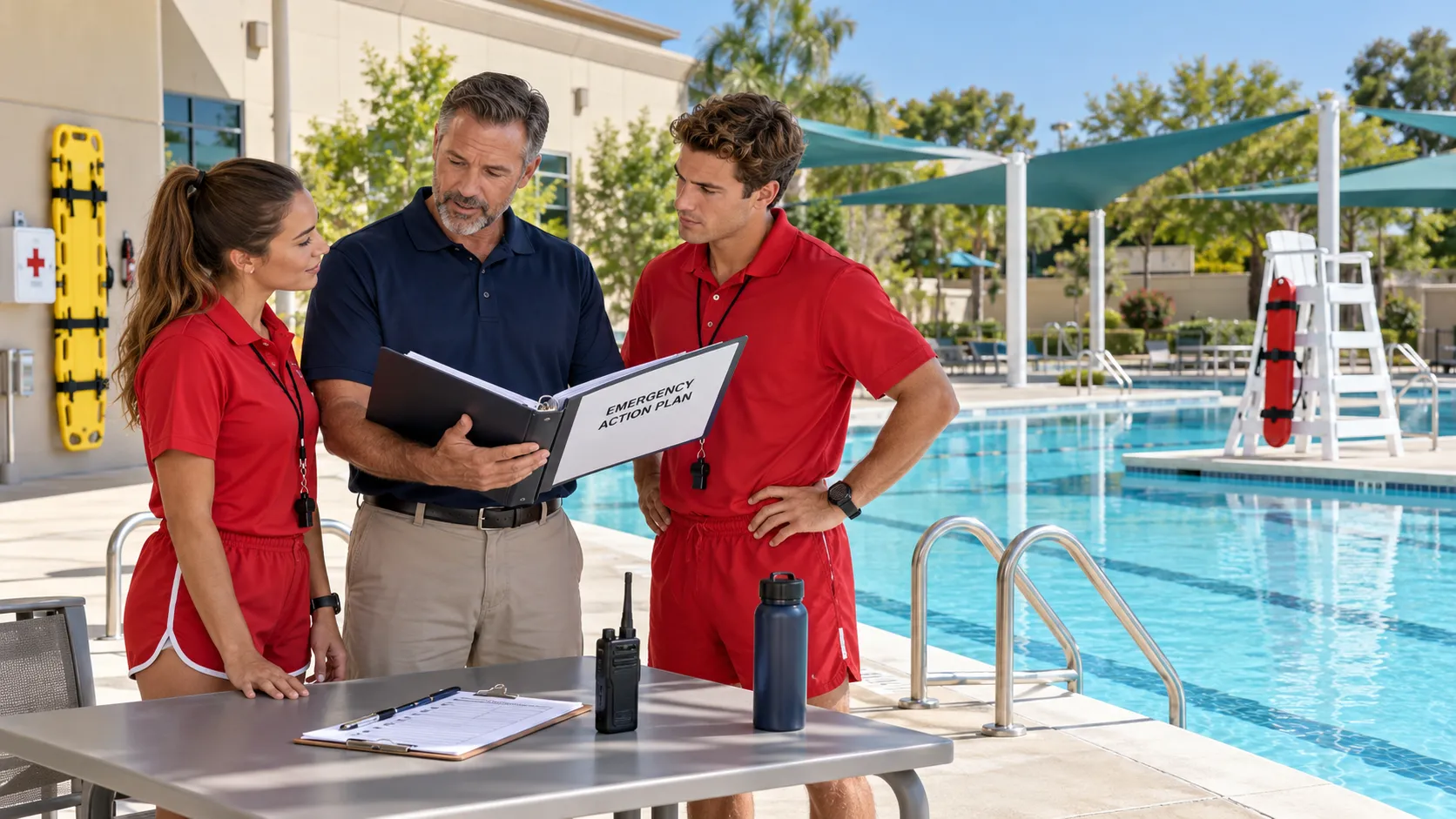
In closing, effective risk management and liability mitigation demand a comprehensive, documented approach grounded in regulatory compliance, operational discipline, and continuous safety oversight. Facilities that prioritize systematic inspections, staff training, clear emergency protocols, and proactive maintenance establish the foundation for protecting guests, reducing exposure, and sustaining long-term operational success. The investment in deliberate safety practices and professional guidance yields measurable returns through reduced incidents, stronger compliance posture, and enhanced stakeholder confidence in your aquatic environment.
Ready to strengthen your facility’s risk management and compliance posture? Contact Specialty Aquatics and Consulting, LLC today to schedule an on-site inspection or discuss PHTA-aligned training for your team.