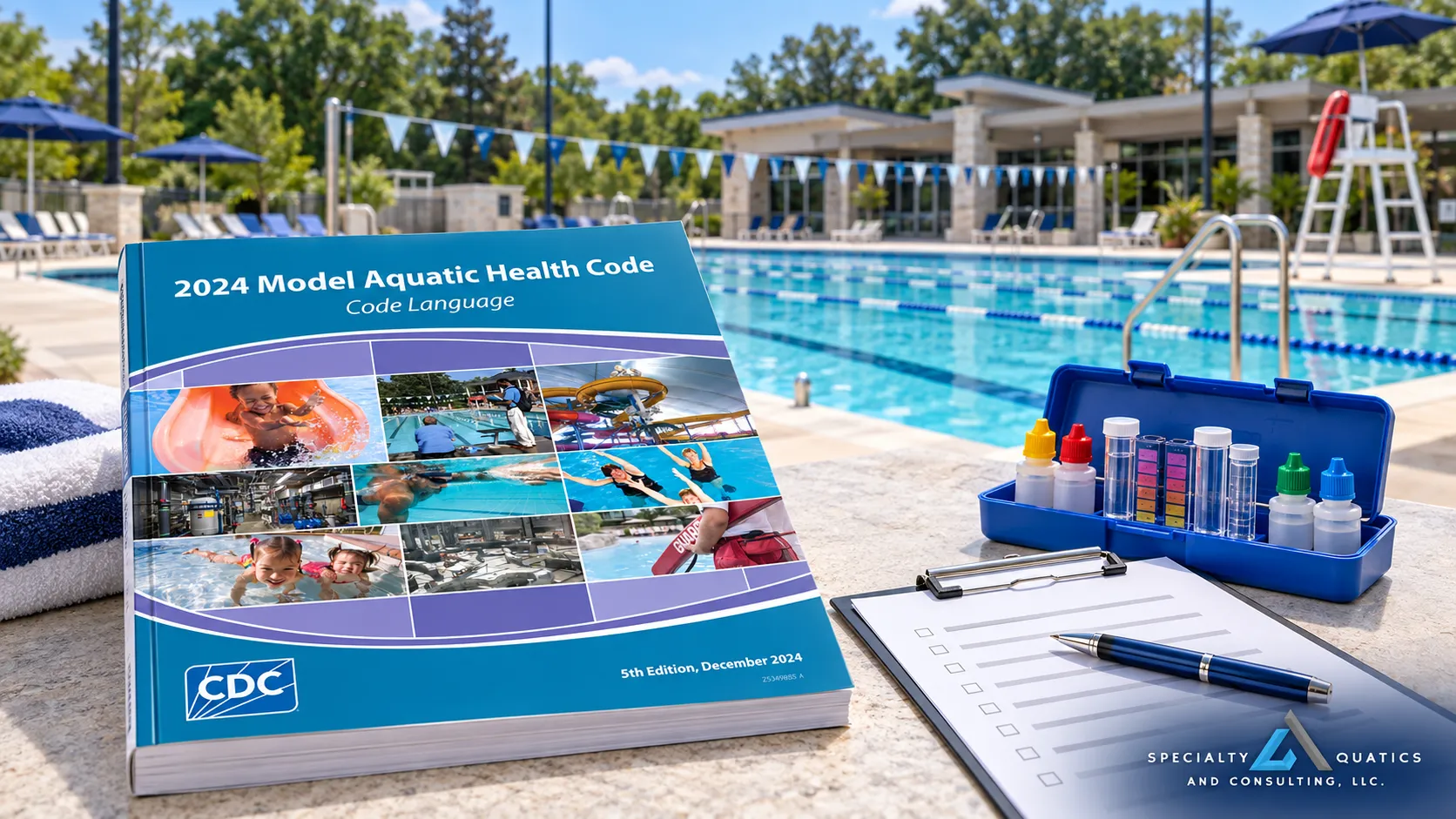
For facilities pursuing MAHC compliance, the CDC’s Model Aquatic Health Code, now in its 5th edition released December 16, 2024, provides science-based guidance for preventing injury and illness at public pools, spas, and splash pads, covering facility design, water treatment, and lifeguard training. Specialty Aquatics and Consulting, LLC, our 10-employee Canton, GA team, applies these standards through safety audits, SOP development, and PHTA-aligned CPO and CPI training that helps facilities meet compliance requirements.
It’s worth being clear on one point: the MAHC itself isn’t a federal law, it’s a set of national recommendations. States and local health departments decide what to do with it: some adopt it exactly as written, some adopt only certain parts, and others use it as a reference point when updating their own pool codes. Because the rules that actually apply to your facility depend on where you’re located, it’s a good idea to contact your local health department directly to find out which code governs your pool or spa. Even in places that haven’t formally adopted the MAHC, it still reflects the current best practices for keeping swimmers safe.
Key Takeaways
CDC’s Model Aquatic Health Code combines latest science and best practices for public aquatic venue safety.
MAHC guidance prevents injury and illness at swimming pools and spas open to the public.
Environmental Public Health Practice Gateway provides evidence-informed practices for local aquatic health practitioners and jurisdictions.
Specialty Aquatics and Consulting helps facilities implement MAHC standards to protect public health effectively.
What Is the Model Aquatic Health Code?
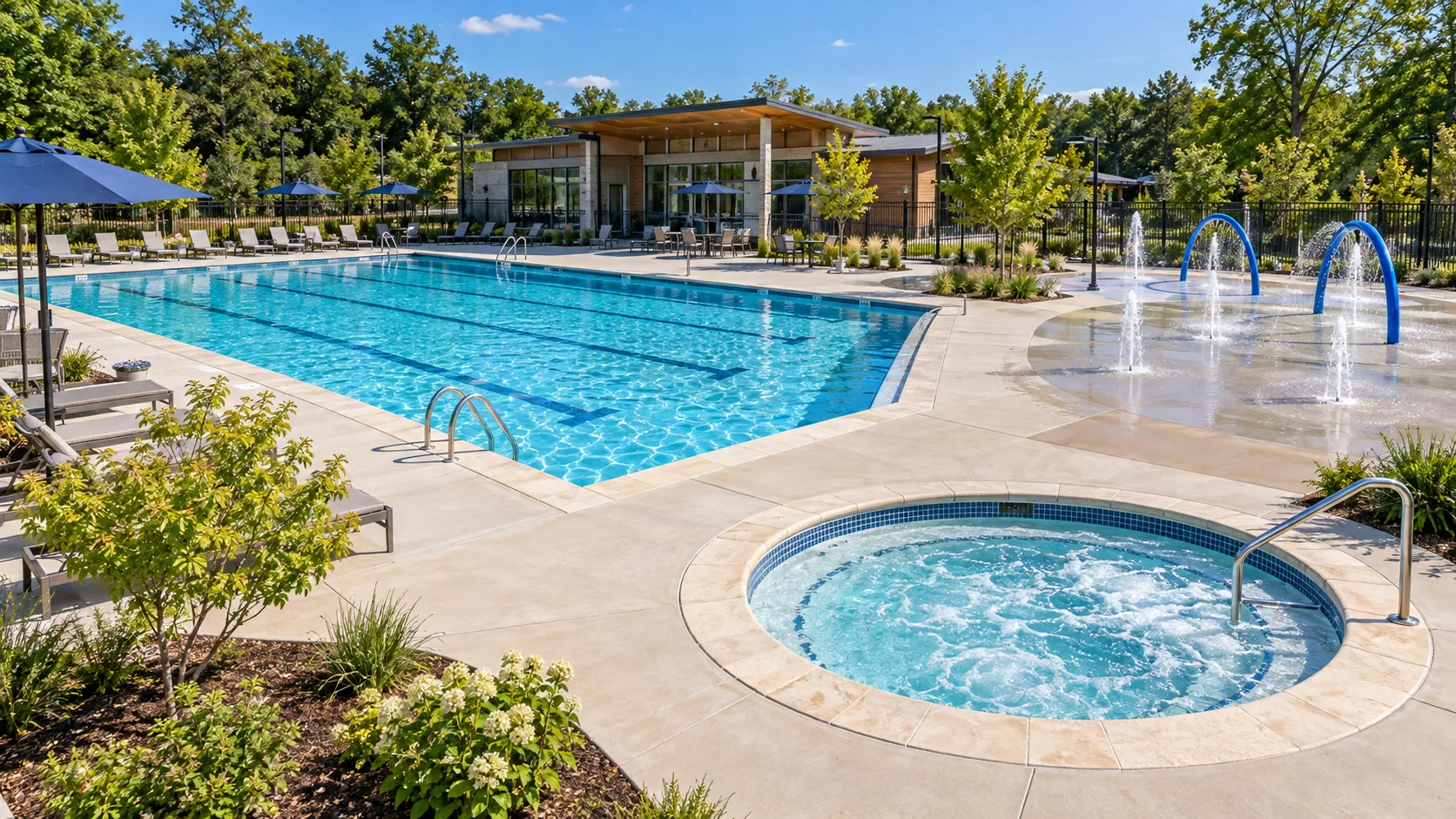
The Centers for Disease Control and Prevention’s Model Aquatic Health Code delivers guidance built to prevent injury and illness at public aquatic venues, including pools, hot tubs, and splash pads. This resource serves as a model aquatic health code guide for jurisdictions that need a science-based starting point rather than a patchwork of outdated rules. Facilities without current guidance risk uneven inspections, inconsistent enforcement, and preventable incidents that erode public trust.
MAHC brings together current scientific research and established best practices, giving state and local health departments a faster path to updating aging pool codes. Instead of starting from scratch, jurisdictions save time and resources while addressing complex topics like facility design, construction standards, and lifeguard training requirements. This shared foundation is what supports consistent commercial pool health codes across different regions, reducing the gap between facilities that follow rigorous standards and those that lag behind.
Who Uses MAHC Guidance in the Aquatics Industry?
MAHC guidance reaches a wide range of practitioners across the industry. State and local health departments use it to write or update their own pool codes, environmental health inspectors reference it to standardize inspections, and facility operators, from municipal park systems to military installations, build their daily SOPs around it. Lifeguards, equipment manufacturers, and aquatics consultants also draw on MAHC when evaluating safety equipment, training protocols, and facility design.
Specialty Aquatics and Consulting, headquartered in Canton, GA, applies these principles across the commercial, municipal, and residential facilities it serves. The firm is led by Michael Scheetz, President and Owner, whose career in the aquatics industry spans more than 28 years, including leadership roles across university aquatics, private clubs, municipal parks and recreation, military facilities, and large-scale privatized pool operations. Michael holds Certified Pool Operator (CPO), Certified Pool Inspector (CPI), Certified Service Technician, and Certified Park and Recreation Professional (CPRP) credentials, along with instructor certifications through the Pool & Hot Tub Alliance, and he serves as a Lifeguard Instructor Trainer for both the American Red Cross and Ellis & Associates.
He previously served on the Model Aquatic Health Code CYA Council, experience that, combined with his technical qualifications and hands-on leadership, informs the company’s approach to safety reviews, staff training, and MAHC compliance support.
What Changed in the Latest MAHC Edition?
The current edition, published in 2024 as the 5th edition, replaced the version many jurisdictions had relied on for years. This update matters for any facility working toward MAHC compliance, since outdated code language creates gaps between what inspectors expect and what operators actually deliver.
For the 2024 edition, industry groups and health officials submitted 202 requests to change the code. Of those, 122 were approved and are now part of the official guidance.
What are the key technical updates in the 2024 MAHC?
Several changes stand out, and most are aimed at closing safety gaps that earlier editions left open.
Single-pass splash pads. The revised code created a formal definition for single-pass splash pads, splash pads where the water runs through once and drains away instead of being recirculated, closing a gap that had left this feature type loosely regulated in prior editions.
Outdated references removed. The code eliminated references to foreign standards and removed citations to an outdated Consumer Product Safety Commission (CPSC) standard, tightening its technical accuracy.
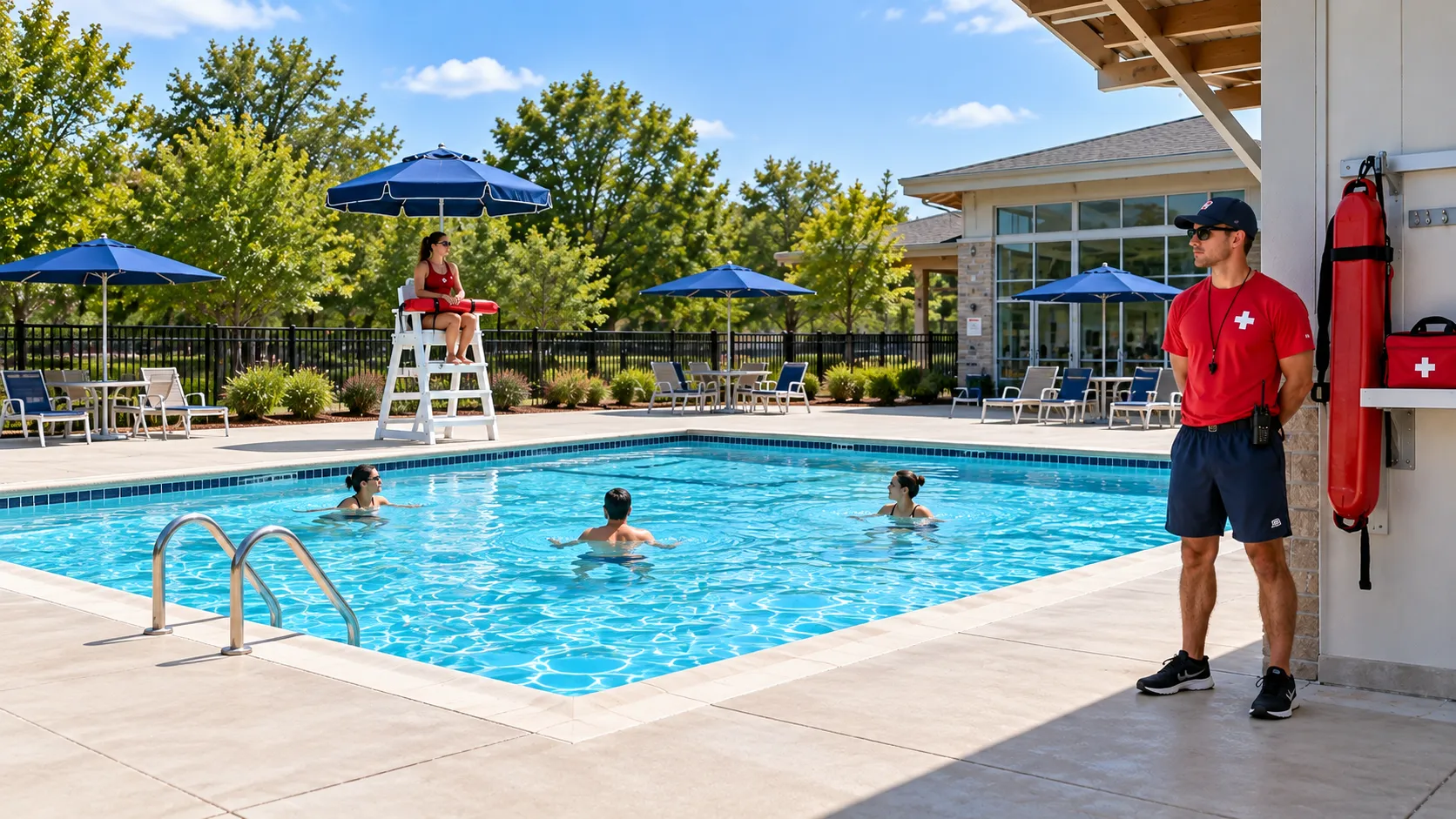
A second lifeguard is required. Facilities with a single zone of patron surveillance, meaning one pool area watched by one lifeguard, must now have a second qualified lifeguard present and available to respond to an emergency. This does not mean two lifeguards watching the same zone at the same time; it means a second trained lifeguard has to be on-site, ready to help if something goes wrong.
Three new reasons a pool must close immediately. A pool now has to close right away if: its chemical feed safety controls are missing, broken, disabled, or bypassed (these controls, called interlocks, flow meters, flow switches, or pressure switches, are automatic safety shutoffs that stop chemicals from pumping into the pool when the water isn’t flowing properly); the facility fails to keep unauthorized people out of chemical storage areas; or the free chlorine level rises above 10 parts per million (ppm) while swimmers are in the water.
Chlorine’s upper limit now follows the product label. Instead of a fixed number written into the code itself, the upper limit for chlorine now follows the manufacturer’s EPA label instructions for that specific product. The CDC approved this change even though the membership of the Council for the Model Aquatic Health Code (CMAHC) had voted against it.
A stricter limit on stabilizer. Cyanuric acid, commonly called “stabilizer,” helps protect chlorine from breaking down in sunlight, but too much of it makes chlorine less effective at killing germs. Under the new edition, stabilizer levels of 300 ppm or higher require immediate correction.
Dilution credit for a specific type of contamination response. When a pool that uses stabilizer has a diarrheal contamination incident, the cleanup response now gives credit for draining and refilling water to bring stabilizer levels down. This applies specifically to that contamination response, not as a general, everyday way to manage stabilizer.
Hot tubs need a visible clock. Spas and hot tubs must now have a clock that bathers can see, so they can keep track of how long they’ve been soaking.
Portable slides are no longer allowed. Because a portable slide isn’t fixed in one place, operators can’t guarantee the correct water depth, landing area, and clearance underneath it, so portable slides are now prohibited.
Artificial swimming lagoons are now addressed. The code now includes guidance for large, man-made swimming lagoons, a feature type that previous editions didn’t specifically cover.
These refinements matter beyond paperwork. Facilities in markets like Atlanta already face demands for meticulous attention to safety, cleanliness, and local regulatory compliance, and the updated language gives operators clearer benchmarks to follow. A model aquatic health code guide built around the current edition helps translate these technical shifts into daily operational practice.
How should operators respond to these updates?
Reviewing commercial pool health codes against the 2024 changes is the logical first step. Consulting support that includes operational audits, staff training, and safety inspections helps align daily procedures with the refreshed requirements, rather than leaving compliance to guesswork.
Why Does MAHC Compliance Matter for Operators?
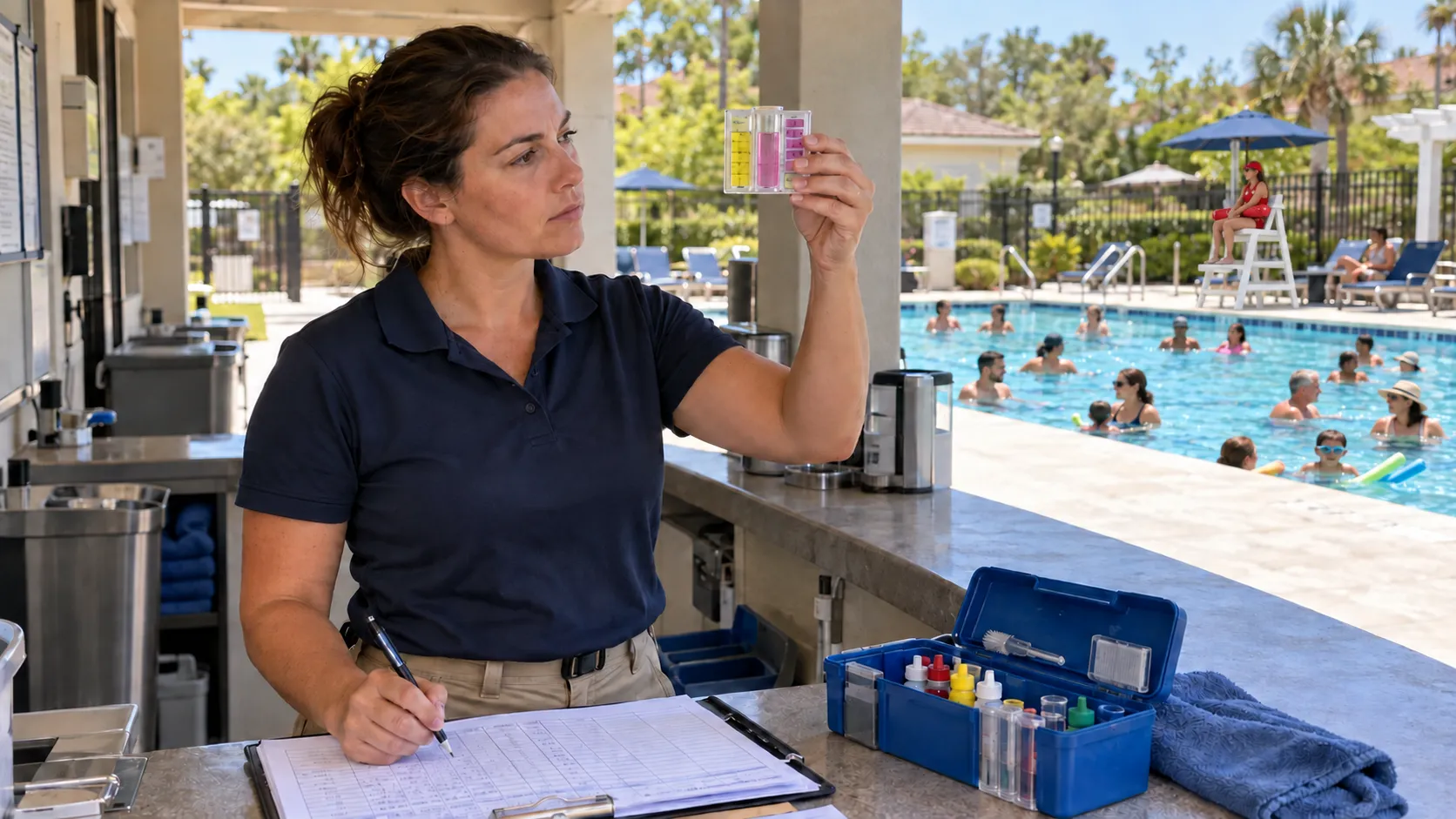
Operators face rising liability and regulatory scrutiny without a structured approach to commercial pool health codes. Lapses in code adherence expose facilities to closures, fines, and — worse — preventable illness or injury among guests. The stakes extend beyond paperwork: outdated protocols create real safety gaps that surface during peak season, when pools see heaviest use.
The Council for the Model Aquatic Health Code (CMAHC) is the group that keeps the MAHC up to date. It collects suggested changes from health departments, pool operators, lifeguards, equipment manufacturers, and other people working in the aquatics industry, reviews and votes on them, and then recommends the approved changes to the CDC for inclusion in the code. That process is how real-world experience from the field, like the issues operators run into with chemical safety equipment or splash pad design, ends up shaping the guidance facilities are expected to follow.
What does a model aquatic health code guide actually cover?
A model aquatic health code guide typically addresses water chemistry limits, filtration standards, lifeguard training benchmarks, and outbreak prevention protocols. Facilities use these guides to translate broad code language into daily operating procedures.
How do compliance services support operators?
Safety audits, compliance consulting, and operator training exist specifically to keep facilities aligned with current codes. These services typically include:
Documented safety audits identifying code gaps
Compliance consulting tailored to facility type
Operator training on updated protocols
Seasonal transitions matter too. As many commercial facilities shift toward winterization, storm cleanup, and budget planning once the season winds down, those activities intersect directly with maintaining compliance year-round. A ten-person team with decades of combined experience supports consistency across commercial, municipal, and military facilities alike.
What Operators Should Do Now
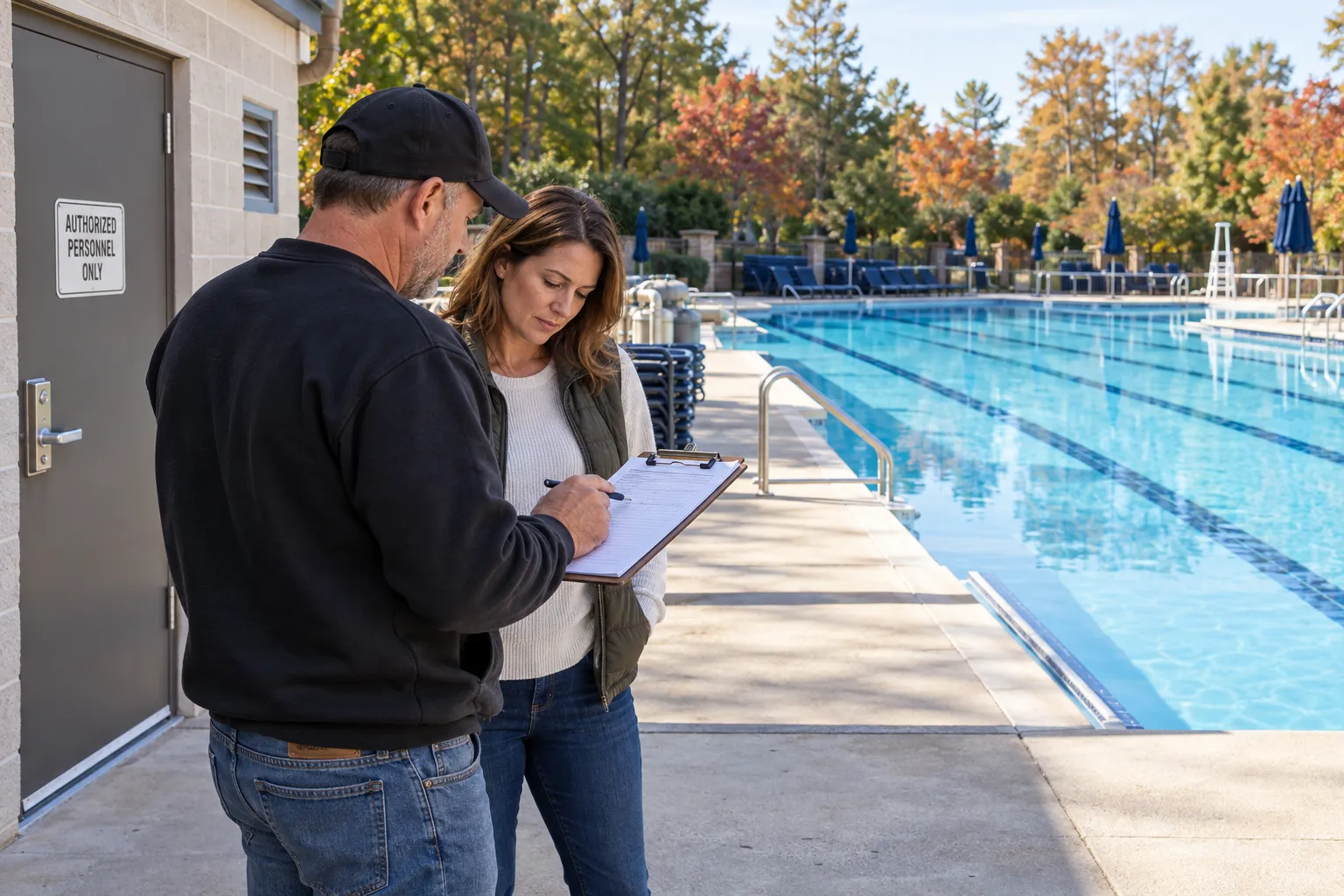
End-of-season is a good time for boards and operators to check their facility against the new requirements before next season starts. A simple checklist:
Make sure chemical storage rooms are locked and secured so unauthorized people can’t get in.
Confirm the safety shutoffs on chemical feeders (the interlocks, flow meters, flow switches, and pressure switches mentioned above) are working and haven’t been disabled or bypassed.
Test stabilizer (cyanuric acid) levels to make sure they’re well under the new 300 ppm threshold.
Remove and retire any portable pool slides, since they’re no longer allowed.
Make sure every hot tub and spa has a clock that bathers can actually see.
Review lifeguard staffing, and budget for a second qualified lifeguard if your facility has a single surveillance zone.
Working through this list now, while the pool is closed for the season, is far easier than scrambling to fix a compliance gap after reopening.
Conclusion
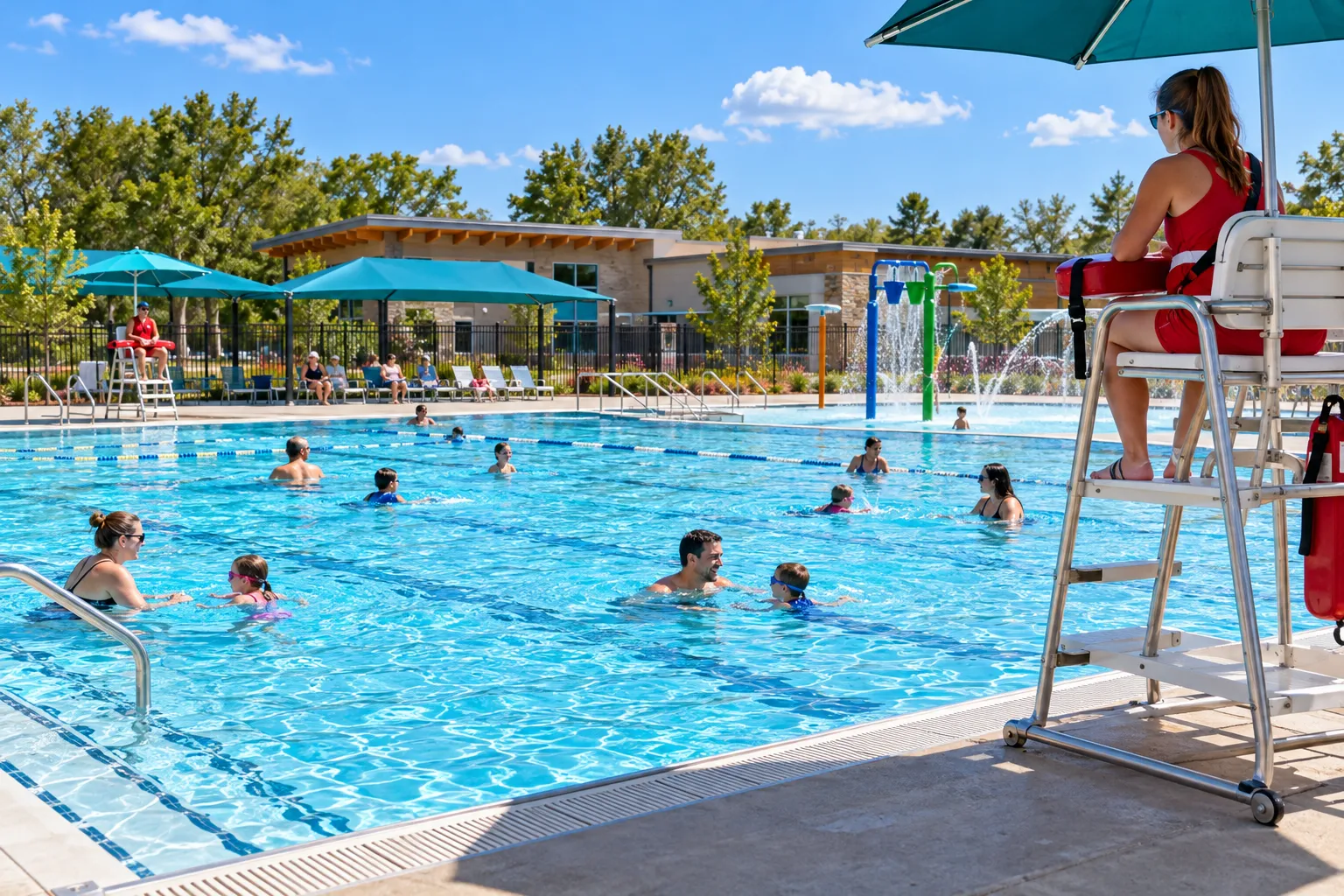
In closing, adherence to Model Aquatic Health Code guidelines represents a foundational commitment to guest safety, operational accountability, and regulatory compliance. Facilities that embrace MAHC standards demonstrate professional stewardship of their aquatic environments. Establish the protocols necessary to prevent drowning and waterborne illness. Whether you operate a municipal pool, hospitality venue, or residential community, integrating MAHC principles into your daily operations protects lives and strengthens your facility’s long-term viability. Expert guidance and structured implementation transform compliance from obligation into operational excellence.
FAQ
What is the Model Aquatic Health Code?
The CDC’s Model Aquatic Health Code delivers science-based guidance to prevent injury and illness at public aquatic venues like pools, hot tubs, and splash pads, covering facility design, water treatment, and lifeguard training standards.
What changed in the 2024 MAHC edition?
The 5th edition, released December 16, 2024, approved 122 of 202 submitted change requests. Major updates include requiring a second qualified lifeguard at facilities with a single surveillance zone, three new conditions that require immediate pool closure (chemical safety shutoffs that are missing or bypassed, unsecured chemical storage, and free chlorine above 10 ppm with swimmers present), a chlorine upper limit that now follows the product’s EPA label instead of a fixed number, a stricter 300 ppm correction threshold for stabilizer, dilution credit for stabilizer as part of the diarrheal contamination response, a visible-clock requirement for hot tubs and spas, a ban on portable pool slides, new coverage for artificial swimming lagoons, a formal definition for single-pass splash pads, and the removal of outdated foreign-standard and CPSC references.
How does Specialty Aquatics and Consulting help facilities with MAHC compliance?
The Canton, GA team applies MAHC standards through safety audits, SOP development, and PHTA-aligned CPO and CPI training, holding CDC MAHC, PHTA, NRPA, and GRPA certifications for compliance support.
Is the Model Aquatic Health Code required by law?
No. The MAHC is a set of voluntary national recommendations, not a federal law. It only carries legal weight where a state or local health department has formally adopted it, in whole or in part, as part of its own pool code.
Do pools need two lifeguards under the 2024 MAHC?
Only in a specific case: facilities with a single zone of patron surveillance, meaning one pool area watched by one lifeguard, must now have a second qualified lifeguard present and available to respond to an emergency. It doesn’t mean two lifeguards have to watch the same zone at the same time, just that a second trained lifeguard is on-site and ready to help.
What conditions require a pool to close immediately under the 2024 MAHC?
Three conditions now trigger immediate closure: chemical feed safety shutoffs (interlocks, flow meters, flow switches, or pressure switches) that are missing, broken, disabled, or bypassed; a failure to keep unauthorized people out of chemical storage areas; and free chlorine above 10 ppm while swimmers are in the water.
Get Ahead of Next Season
The clearest way to know where your facility stands against the 2024 MAHC changes is a safety and compliance audit with Specialty Aquatics and Consulting. Our team reviews the facility itself, your operating procedures, and your staff training, then hands you a clear, prioritized list of what needs fixing now and what to budget for before the pool reopens. Explore our aquatics services or contact Specialty Aquatics and Consulting to schedule an audit before next season.