
Cloudy pool water isn’t just a cosmetic problem. For commercial pools, it can signal water chemistry issues, inadequate filtration, increased health risks, and even force unexpected pool closures during the busiest part of the season.
In Atlanta and throughout the Florida Panhandle, mid-season water clarity problems often develop quickly as intense summer heat, heavy bather loads, afternoon storms, and relentless UV exposure place additional stress on pool systems. Understanding what’s causing cloudy water is the first step toward correcting the problem before it impacts guests or creates a compliance issue.
In this article, we’ll explain the most common causes of mid-season pool water clarity problems, how to diagnose them, and what commercial pool operators can do to maintain consistently clear, healthy water throughout the summer.
What Causes Mid-Season Pool Clarity Problems?
Crystal-clear water doesn’t become cloudy overnight without a reason. In most commercial pools, water clarity problems can be traced to one or more underlying issues affecting water chemistry, filtration, or sanitation. Identifying the root cause before adding chemicals or making equipment adjustments is essential, as treating the wrong problem can waste time, increase operating costs, and prolong pool downtime.
The most common causes of cloudy pool water include:
Poor filtration – A filter that is dirty, undersized, or not operating long enough allows fine particles to remain suspended in the water instead of being removed.
Water chemistry imbalance – High pH, improper total alkalinity, low sanitizer levels, or poor water balance reduce chlorine effectiveness and contribute to cloudy conditions.
Organic contamination – Heavy swimmer loads, sunscreen, body oils, debris, bacteria, and early-stage algae all increase the demand on your pool’s sanitizing system.
In many cases, cloudy water is the result of multiple factors occurring at the same time rather than a single isolated issue.
Why Summer Weather Makes Pool Clarity More Challenging
Commercial pools throughout Atlanta and the Florida Panhandle face unique environmental conditions during the summer months. Intense UV exposure rapidly breaks down free chlorine, reducing sanitizer levels faster than many operators anticipate. At the same time, elevated water temperatures create an ideal environment for bacteria and algae to develop if water chemistry is not maintained consistently.
Summer also places additional stress on circulation and filtration systems. Higher temperatures, longer operating hours, and increased swimmer activity mean equipment must work harder to maintain proper water quality throughout the day.
How Storms and Heavy Bather Loads Impact Water Quality
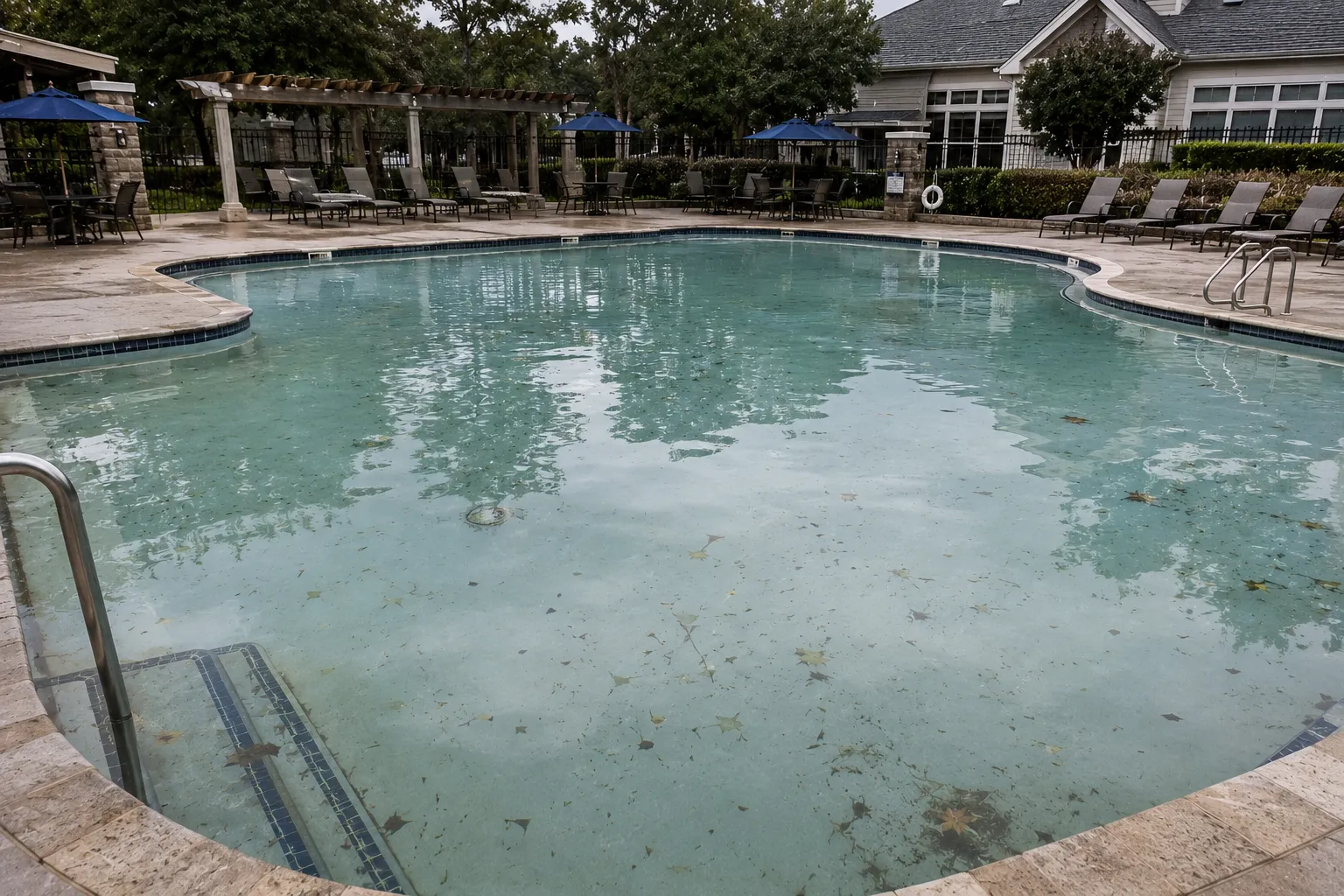
Afternoon thunderstorms in Atlanta and frequent rain events along Florida’s Gulf Coast introduce contaminants, dilute chemical levels, and wash debris into commercial pools. While rain alone may not create cloudy water, it often disrupts carefully balanced water chemistry and increases the workload on filtration systems.
Heavy bather loads present an even greater challenge. Resorts, hotels, HOA communities, municipal pools, and military housing facilities often experience peak occupancy during the hottest weeks of the year. Every swimmer introduces sunscreen, cosmetics, body oils, perspiration, and other organic contaminants that increase chlorine demand. Without prompt adjustments to water chemistry and filtration, water clarity can decline quickly.
Facilities managing these seasonal demands often benefit from implementing the preventative strategies discussed in 5 Pool Maintenance Challenges Multi-Family Properties Face, particularly during periods of sustained heavy pool usage.
How to Diagnose and Correct Cloudy Pool Water
Successfully restoring water clarity begins with identifying the actual cause of the problem rather than treating symptoms alone. Adding additional chemicals without understanding why the water became cloudy often delays recovery and increases operating expenses.
Start with the Filtration System
Before making chemical adjustments, inspect the filtration system. Dirty filters, clogged baskets, restricted flow, or equipment operating below design capacity can all allow microscopic particles to remain suspended in the water.
Verify that:
Filters have been cleaned or backwashed as needed.
Pumps are operating correctly.
Water circulation is consistent throughout the pool.
Equipment run times are adequate for current bather loads.
Test Water Chemistry
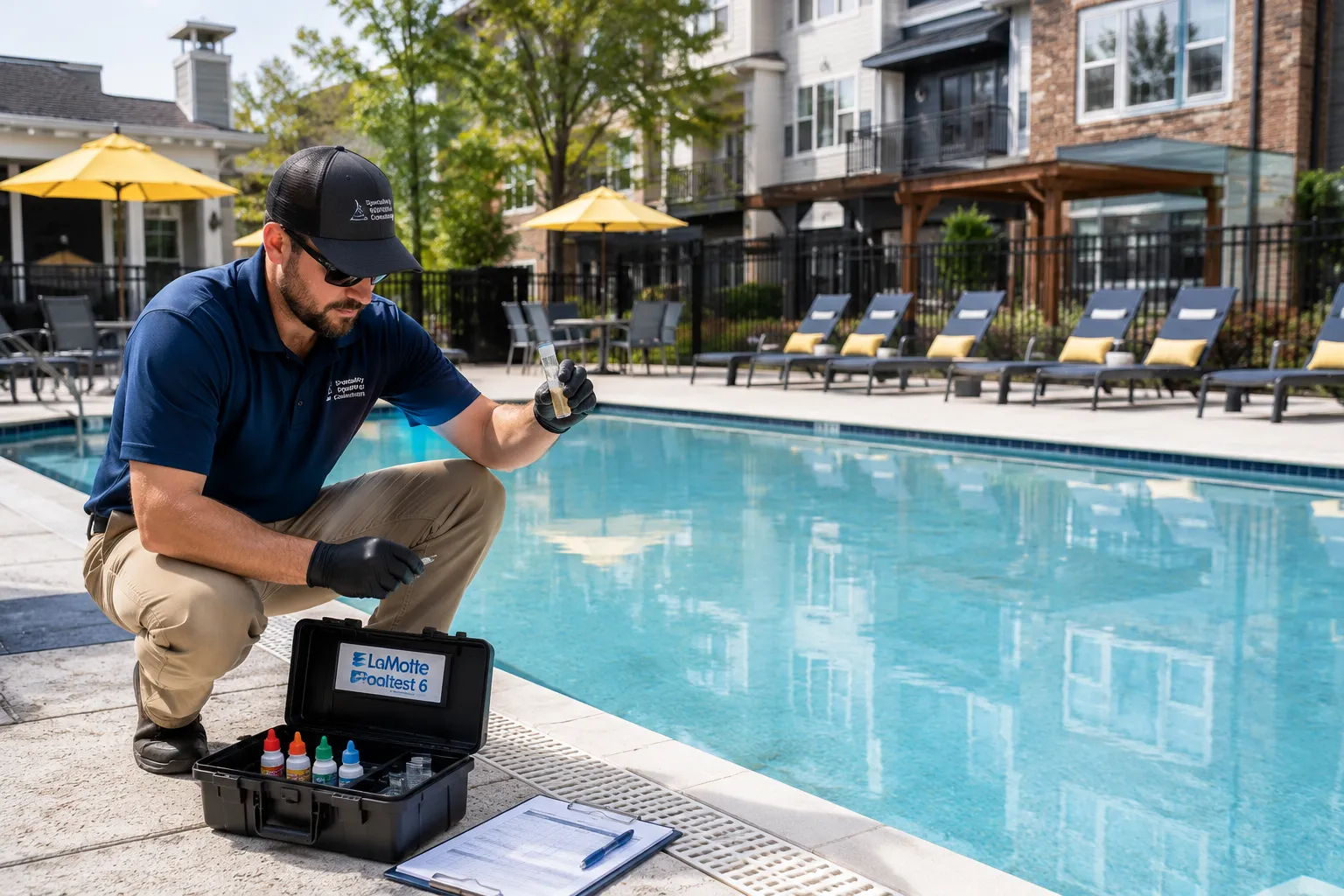
Once filtration has been evaluated, perform a complete water chemistry analysis. While chlorine and pH are the first priorities, commercial pool operators should also verify total alkalinity, stabilizer (cyanuric acid), and other water balance factors that influence sanitizer performance.
Even slight changes in pH can significantly reduce chlorine’s effectiveness, making balanced water chemistry one of the most important factors in maintaining clear, healthy water.
Identify the Root Cause Before Treating
Not all cloudy water requires the same solution. Dead algae, early algae growth, inadequate filtration, poor circulation, and chemistry imbalances may produce similar appearances but require different corrective actions.
Treating the wrong problem can result in unnecessary chemical use, extended closures, and higher maintenance costs. Following a systematic diagnostic process helps operators restore water clarity more efficiently while preventing recurring issues.
For additional guidance on maintaining balanced water chemistry, read our article Spring Pool Water Chemistry Made Easy: Balance Tips.
Recommended Diagnostic Process
When cloudy water develops, follow these steps:
Inspect and clean the filtration system.
Test chlorine, pH, alkalinity, and stabilizer levels.
Determine whether the issue is caused by filtration, chemistry, or algae.
Apply the appropriate treatment based on the confirmed cause.
Continue monitoring water clarity and chemistry until normal operating conditions are restored.
Preventing Future Pool Water Clarity Issues with Automation
The most effective way to avoid recurring water clarity problems is to identify changes in water chemistry before guests ever notice them. That’s where automation has become an increasingly valuable tool for commercial aquatic facilities.
The Benefits of Continuous Water Monitoring
PoolCop provides 24/7 remote monitoring of water chemistry and equipment, helping commercial pool operators identify potential issues before they impact water quality.
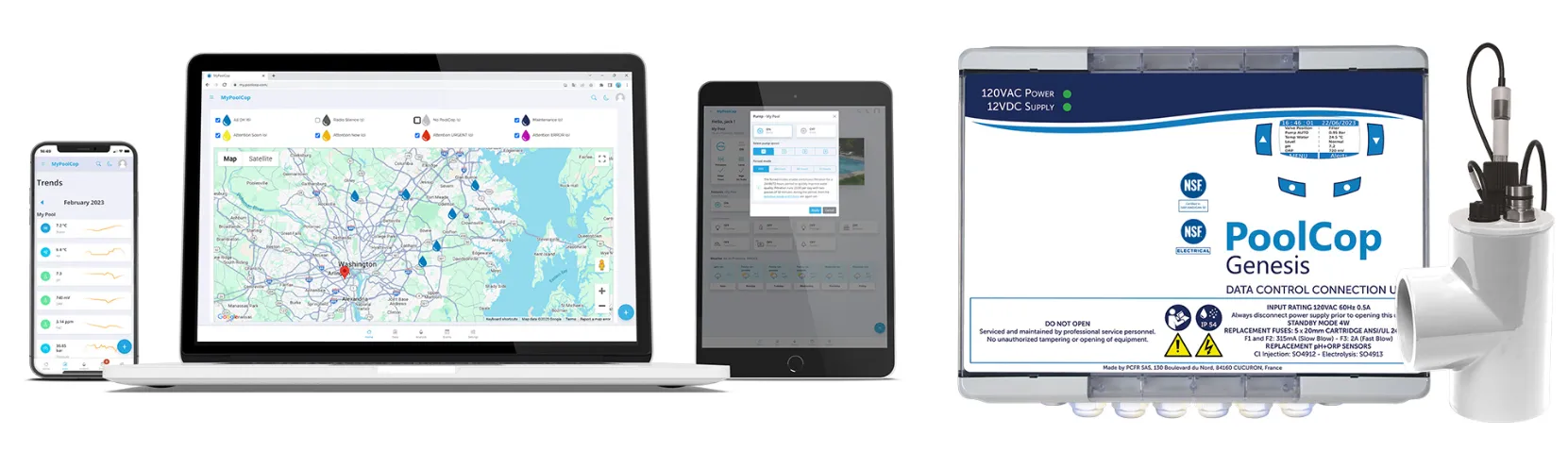
Traditional manual testing provides only periodic snapshots of water conditions. Between inspections,
sanitizer levels, pH, and circulation conditions can change dramatically, particularly during periods of heavy use or severe weather.
Automated monitoring systems like PoolCop continuously track critical water quality parameters and alert operators whenever readings move outside acceptable ranges. This allows maintenance teams to respond quickly before minor chemistry fluctuations become cloudy water, algae growth, or facility closures.
Who Benefits Most from Pool Automation?
Continuous monitoring is especially valuable for facilities that experience significant seasonal demand, including:
HOA and condominium communities
Multi-family apartment communities
Hotels and resorts
Municipal aquatic facilities
Parks and recreation departments
Military housing communities
College and university recreation centers
For facilities managing multiple pools or limited maintenance staff, automation provides greater visibility into water quality while helping reduce emergency service calls and unexpected downtime.
Best Practices for Implementing Automated Monitoring
To maximize the benefits of a water monitoring system:
Evaluate existing pumps, filters, and chemical feed equipment.
Install a continuous monitoring system such as PoolCop.
Configure alert thresholds for sanitizer levels, pH, temperature, and circulation.
Designate staff members to respond promptly to alerts.
Review performance data regularly to identify trends and optimize water quality management.
Mid-season water clarity problems don’t have to become recurring operational challenges. By maintaining balanced water chemistry, ensuring filtration systems are operating efficiently, and responding quickly to changing conditions, commercial pool operators can keep their facilities safe, inviting, and ready for peak summer use.
For facilities throughout Atlanta and the Florida Panhandle, proactive maintenance and ongoing monitoring help reduce unexpected downtime, extend equipment life, and improve the overall guest experience. Whether managing a single commercial pool or multiple aquatic facilities, addressing small issues before they become major problems is one of the most effective ways to maintain consistently clear, healthy water throughout the season.
If your commercial pool is experiencing recurring water clarity problems, Specialty Aquatics & Consulting is here to help. Our team can identify the root cause of the issue and recommend practical solutions that improve water quality, reduce downtime, and keep your facility operating at its best. Contact us today to learn more about our commercial pool maintenance and aquatic consulting services.
Frequently Asked Questions
What causes mid-season pool water clarity problems in Atlanta and the Florida Panhandle?
Cloudy water typically results from unbalanced chemistry, failing filtration. Heavy organic load from summer heat. Bather traffic, with two or more of these factors often combining to worsen the issue.
How does summer weather worsen pool clarity in these regions?
Prolonged UV exposure breaks down chlorine, driving sanitizer levels below the safe 1–3 ppm range. Elevated water temperatures encourage bacterial growth and compound existing chemistry imbalances.
How do storms and heavy bather loads affect commercial pool clarity?
Storms dilute chemical balance and suspend fine particles. High bather loads introduce organic contaminants faster than standard dosing schedules neutralize them, leaving maintenance teams with a compounding problem.
Can Specialty Aquatics & Consulting help identify the cause of recurring cloudy pool water?
Yes. Specialty Aquatics & Consulting provides professional aquatic consulting, operational assessments, and commercial pool maintenance services to identify the root causes of recurring water clarity issues. Rather than treating symptoms alone, our team evaluates filtration systems, water chemistry, circulation, equipment performance, and operational practices to develop long-term solutions.
Does Specialty Aquatics & Consulting install and support PoolCop water monitoring systems?
Yes. Specialty Aquatics & Consulting provides PoolCop automated water monitoring solutions for commercial aquatic facilities. PoolCop continuously monitors critical water quality parameters, allowing operators to detect chemical imbalances, equipment issues, and changing water conditions before they affect pool clarity, safety, or guest experience.
What types of commercial pools does Specialty Aquatics & Consulting serve?
Specialty Aquatics & Consulting works with HOAs, condominium communities, multi-family apartment properties, hotels, resorts, municipal aquatic facilities, parks and recreation departments, colleges and universities, military housing communities, and other commercial aquatic facilities throughout the Atlanta metropolitan area, the Florida Panhandle, and surrounding service areas.