
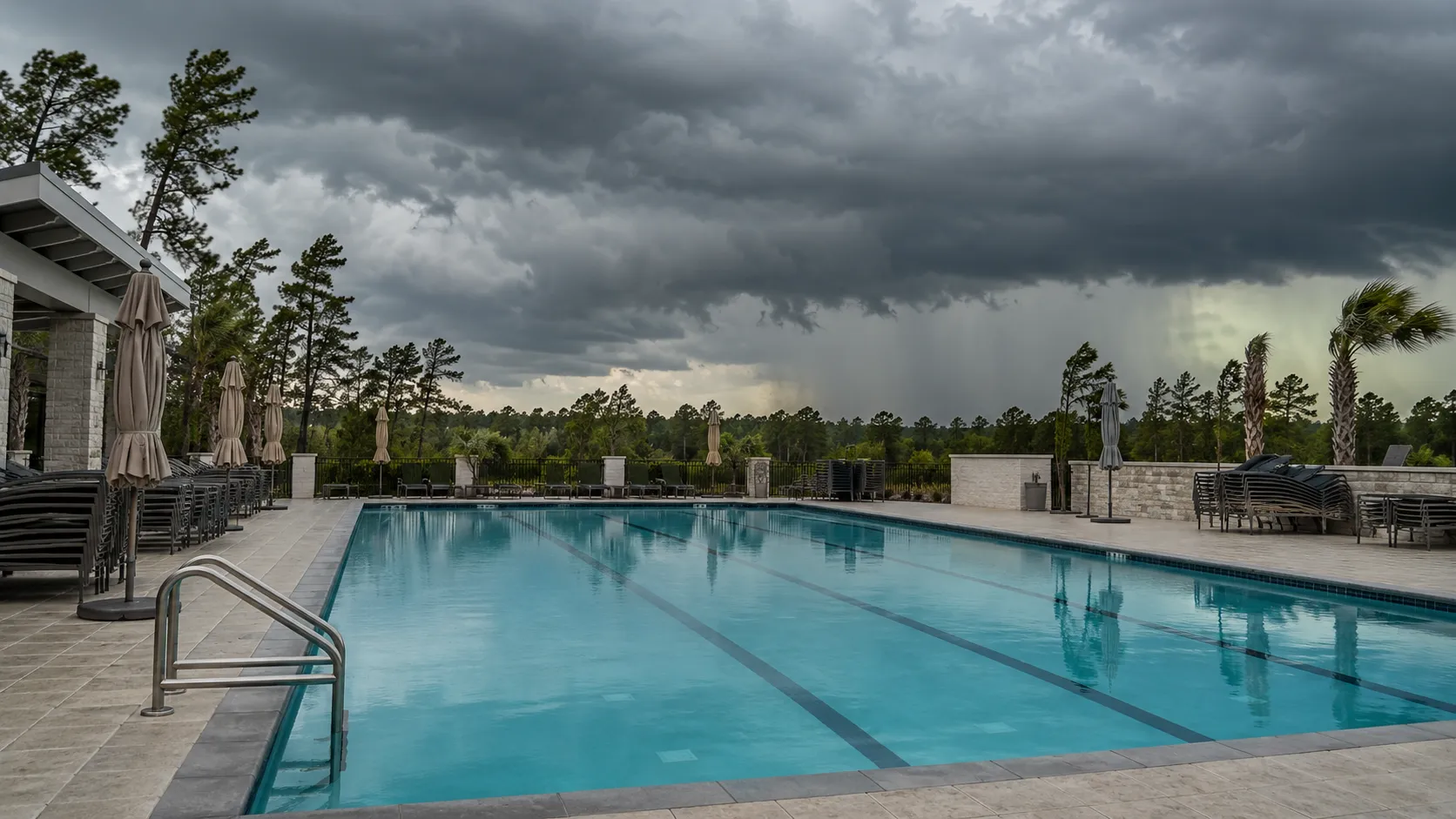
Mid-September marks the historical peak of the Atlantic hurricane season, and it also falls squarely within **National Preparedness Month**, observed every September to encourage individuals, businesses, and communities to plan ahead for emergencies. For commercial pool owners, HOAs, hotels, resorts, municipalities, and military housing communities across Atlanta and the Florida Panhandle, that timing brings a very different kind of “off-season” checklist than winterization does. While winterizing shuts a pool down for the year, storm preparedness is about protecting a facility that may still be open, still generating revenue, and still legally responsible for the safety of every guest who walks through the gate — right up until (and immediately after) a named storm hits.
Every year, aquatic facilities in this region face two very different but overlapping storm risks. The Florida Panhandle sits directly in the Gulf Coast’s hurricane corridor, where facilities face the possibility of direct landfall, storm surge, and sustained hurricane-force winds. Atlanta and the greater metro area, meanwhile, absorb the inland remnants of these same systems — torrential rainfall, flash flooding, downed trees, and multi-day power outages that can just as easily disable a commercial pool’s pump room as a coastal storm can. Storm readiness is an extension of good Atlanta commercial pool maintenance year-round — facilities that stay on top of routine upkeep tend to weather storm season with far less disruption.
For facility managers, HOA boards, and property owners, the difference between a pool that reopens within days of a storm and one that sits closed for weeks (or fails a health department reinspection) almost always comes down to preparation.
Why Commercial Pools Need Storm Preparedness
Unlike a backyard pool, commercial aquatic facilities carry equipment, liability, and compliance obligations that amplify storm risk:
- Equipment rooms and electrical systems. Pumps, heaters, salt systems, and automation controllers are often housed in structures vulnerable to wind-driven rain, flooding, and power surges.
- Water contamination. Heavy rain, storm surge, and floodwater intrusion can introduce bacteria, debris, chemicals, and runoff into pool water, creating a public health hazard that must be resolved before reopening.
- Structural and deck damage. Wind-loaded fencing, damaged pool covers, cracked decking, and dislodged safety equipment (life rings, rescue poles, signage) create liability exposure the moment a facility reopens.
- Regulatory shutdowns. Local health departments can and do require documented re-inspection, water testing, and chemical rebalancing before a commercial pool is cleared to reopen post-storm — a process that catches many under-prepared operators off guard.
- Staffing gaps. Lifeguards and pool monitors may be displaced or unavailable in the days following a storm, leaving facilities unable to reopen safely even once the water is clear.
Storm-Ready Pool Checklist for Commercial Facilities
- Secure or remove loose deck furniture, umbrellas, and signage that can become projectiles in high winds.
- Lower water chemistry buffers — many operators intentionally run slightly elevated free chlorine and stabilized pH before a known storm event to offset dilution from incoming rainfall.
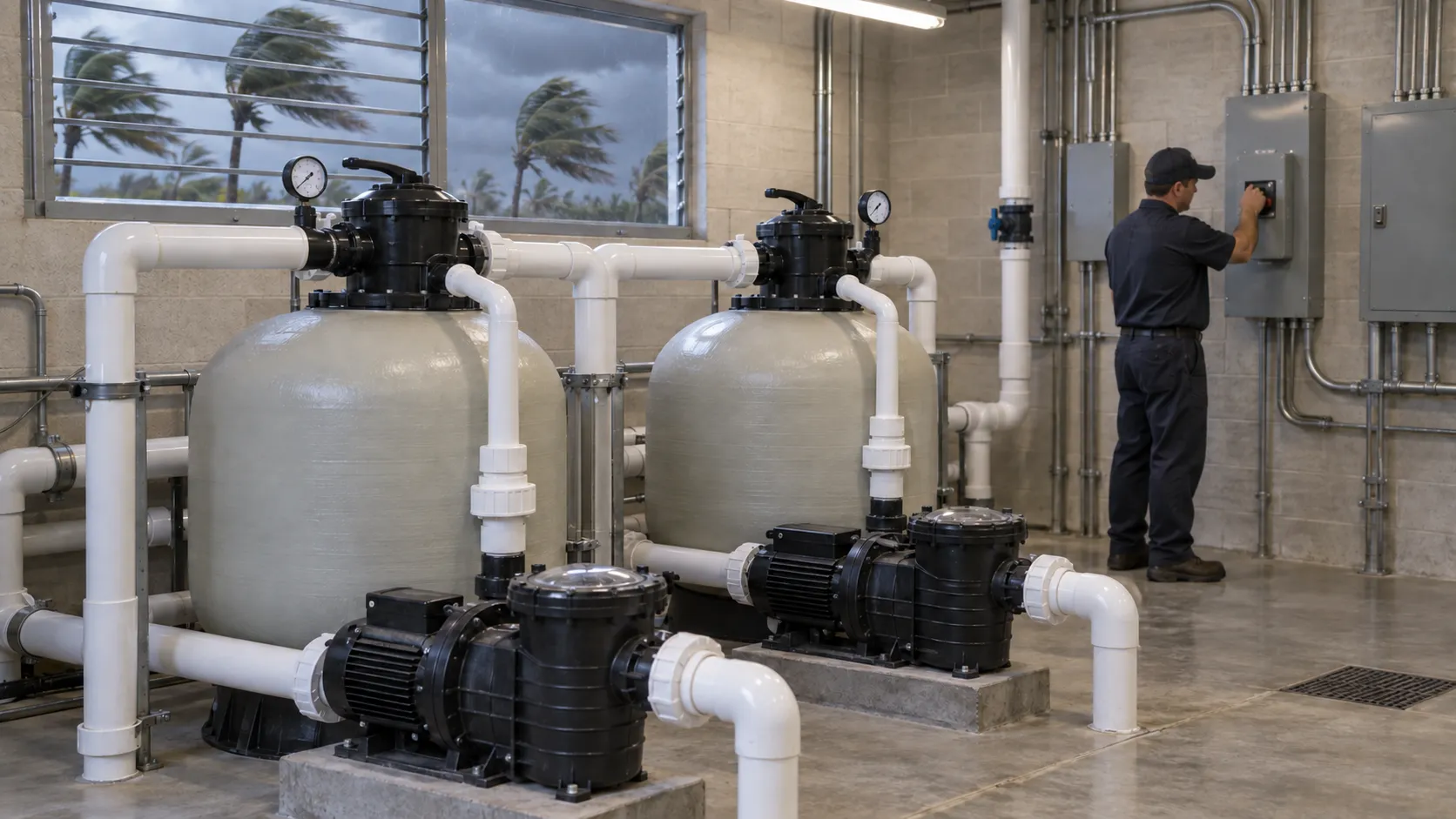
- Shut down and protect electrical equipment — breakers, pump motors, salt cells, and automation panels should be powered down and, where possible, elevated or covered ahead of flooding risk.
- Photograph and document existing equipment, decking, and enclosure conditions for insurance purposes before the storm arrives.
- Review and distribute your facility’s Emergency Action Plan (EAP) so lifeguards, monitors, and management understand closure triggers, communication protocols, and reopening authority.
- Confirm your service contract’s storm-response terms — does your current maintenance provider have a documented storm plan, or are you on your own the moment the storm passes?
Reopening a Pool After a Hurricane
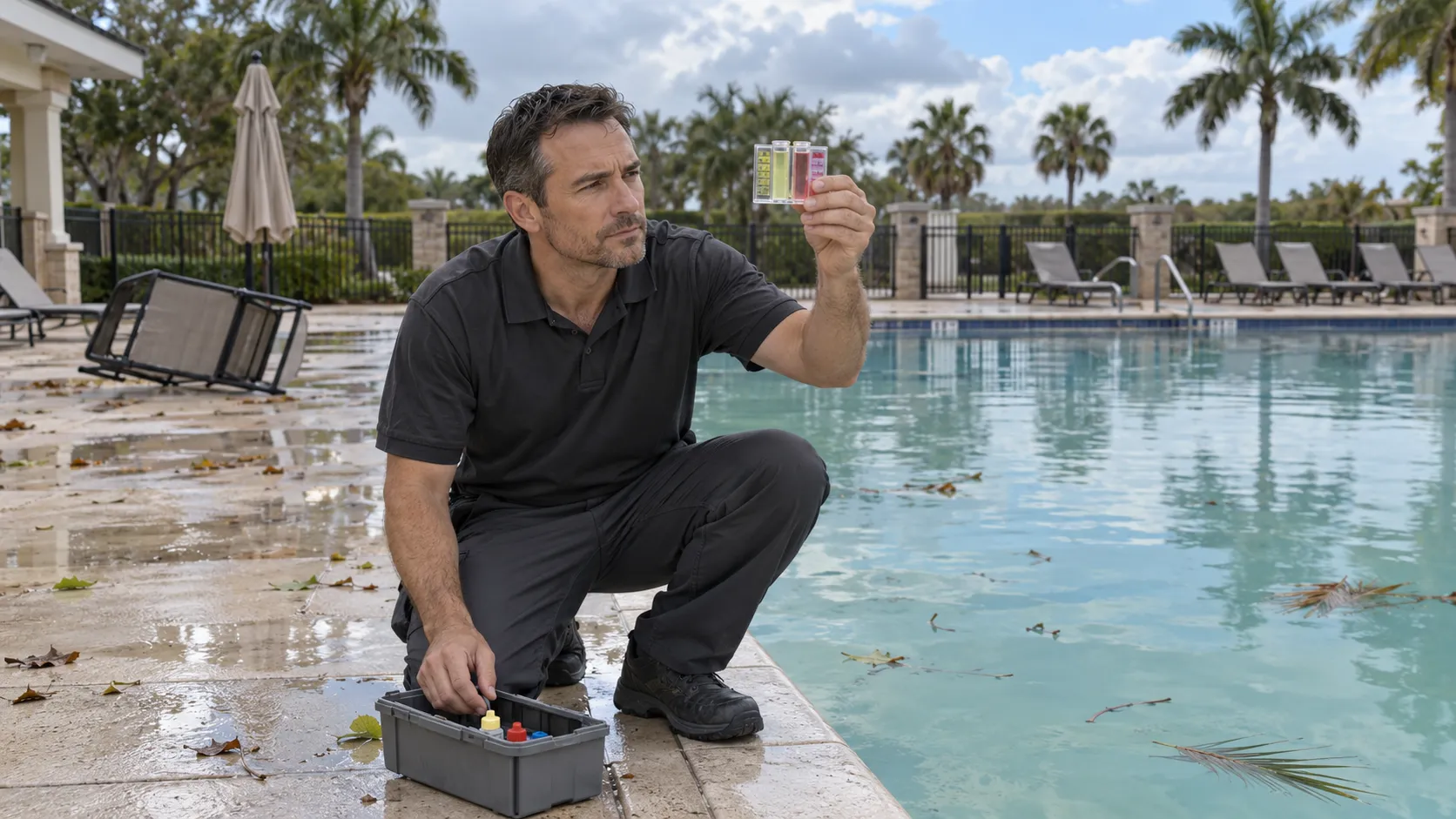
Reopening too quickly is one of the most common (and costly) mistakes facility managers make. A defensible reopening process typically includes:
- A full structural inspection of decking, fencing, drain covers, and entrapment-prevention equipment
- Water chemistry testing and full rebalancing, particularly for pools exposed to storm surge, floodwater, or heavy debris
- Electrical and equipment inspection before restoring power to pumps, heaters, and automation systems
- Documentation of the entire inspection and reopening process to satisfy local health department requirements and support any insurance claims
- Confirmation that lifeguard or pool monitor staffing meets your facility’s operating requirements before welcoming guests back
Atlanta vs. Florida Panhandle: Two Regions, One Season
While the storm systems that impact these two markets are often the same, the risks they pose look different on the ground. Panhandle facilities need to plan for direct wind and surge exposure, evacuation timing, and coastal debris. Atlanta-area facilities — HOAs, apartment communities, hotels, and recreation centers — need to plan for inland flooding, extended power outages, and the surprising volume of storm-driven debris and runoff that can overwhelm a pool’s filtration system even hundreds of miles from where a storm made landfall.
A facility-specific storm plan, rather than a generic one pulled from a national franchise playbook, is what actually protects a pool operator’s budget, compliance standing, and reputation once storm season peaks. Facilities looking for ongoing support beyond storm season can also explore our dedicated Florida Panhandle pool services for year-round consulting and compliance guidance.
How Specialty Aquatics and Consulting Helps Facilities Prepare
Specialty Aquatics and Consulting works with HOAs, hotels, resorts, municipalities, military housing communities, and recreation centers throughout Atlanta and the Florida Panhandle to build storm-ready aquatic operations before hurricane season peaks — not after a facility is already closed. Our aquatic consulting and facility maintenance planning services include Emergency Action Plan (EAP) design, safety and compliance audits, and equipment protection guidance tailored to each property’s storm exposure. If your equipment room, pumps, or filtration system need repair or replacement after storm damage, our team also offers flexible financing options to get your facility back online quickly. Contact us today to schedule a pre-storm facility assessment.
FREQUENTLY ASKED QUESTIONS
1. How far in advance should a commercial pool begin hurricane preparations? Facility managers should begin storm preparations as soon as a system is identified as a potential regional threat — typically 3 to 5 days out. This allows enough time to secure loose equipment, adjust water chemistry, document existing conditions for insurance, and communicate closure plans to staff and residents.
2. Can a commercial pool reopen immediately after a hurricane or tropical storm passes? No. Commercial pools should not reopen until water chemistry has been fully tested and rebalanced, electrical and pump equipment has been inspected, and structural elements like decking, fencing, and drain covers have been confirmed safe. Many local health departments require documented reinspection before authorizing reopening.
3. What is the biggest storm-related risk for pools in Atlanta versus the Florida Panhandle? Florida Panhandle facilities face direct wind, storm surge, and evacuation-timing risks tied to hurricane landfall. Atlanta-area facilities more commonly face inland flooding, extended power outages, and heavy debris or runoff contamination from a storm’s remnant rainfall — even when the storm never makes direct landfall nearby.
4. Does storm or flood damage to a commercial pool typically get covered by insurance? Coverage varies significantly by policy, and many commercial property policies treat pool equipment, decking, and enclosures differently than the pool structure itself. Facility managers should review their specific policy language and maintain thorough pre- and post-storm documentation, since insurers generally require proof of condition and timely reporting to process claims.
5. Does Specialty Aquatics and Consulting help facilities create a hurricane or storm Emergency Action Plan? Yes. Specialty Aquatics and Consulting provides SOP and EAP design services for recreation and aquatic facilities, helping HOAs, hotels, municipalities, and military housing communities build documented, storm-specific emergency protocols that meet compliance expectations and protect staff and guests.
6. Who does Specialty Aquatics and Consulting serve across Atlanta and the Florida Panhandle? Specialty Aquatics and Consulting serves HOA and multifamily communities, hotels and resorts, municipal pools, military housing, and recreation centers throughout Georgia and the Florida Panhandle, offering maintenance, safety audits, consulting, and storm-readiness planning. Contact Specialty Aquatics and Consulting to schedule a pre-storm assessment for your facility.