
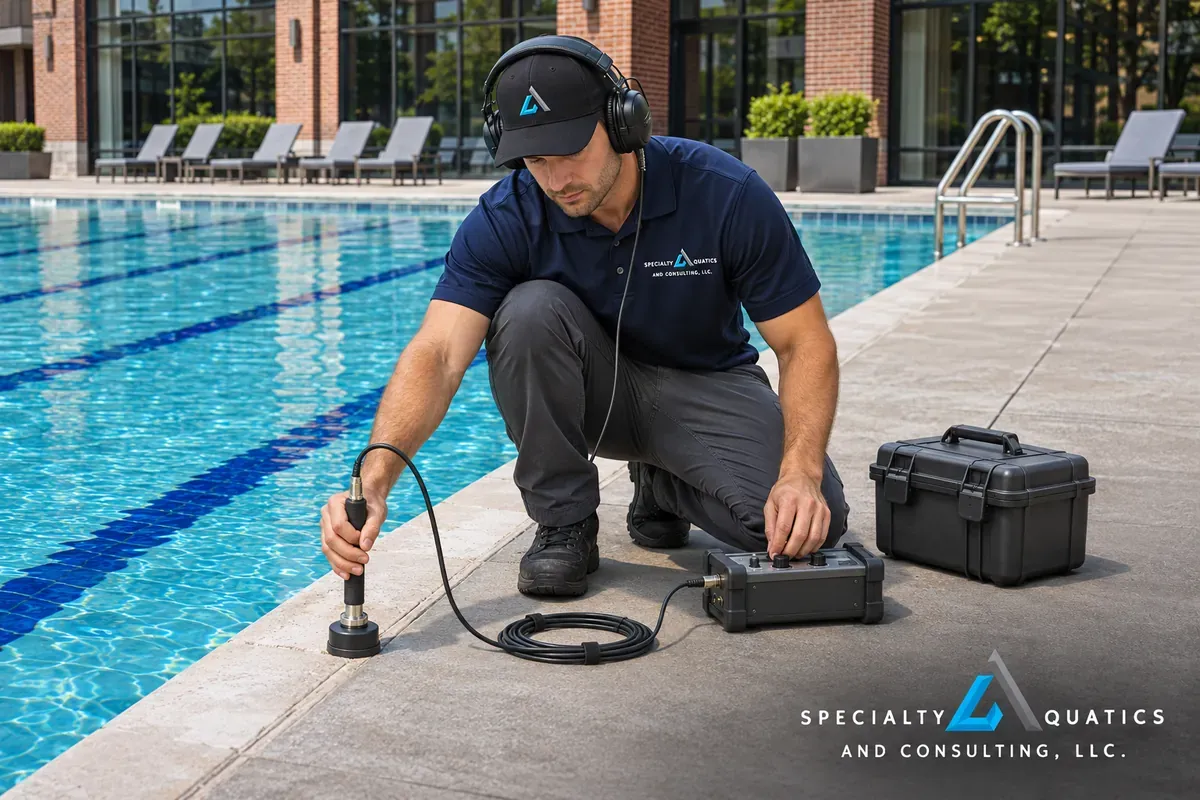
Commercial pool leak detection starts with one question: is your pool losing more water than evaporation can explain? A pool that drops more than about a quarter inch per day beyond normal evaporation may have a leak. The next steps are a bucket test to separate evaporation from real water loss, an inspection of the equipment room, and a dye test to pinpoint the source. Leaks in underground plumbing call for professional pressure testing and acoustic listening equipment.
For HOAs, apartment communities, hotels, municipalities, and military housing, a leak is more than a higher water bill. It affects chemical costs, water balance, equipment, and the soil and structure around the pool. This guide walks through how to spot a leak, how to confirm it, and when to bring in a professional.
Key Takeaways
A drop of more than about a quarter inch per day beyond evaporation is a warning sign worth investigating.
Automatic fill devices can hide a leak for months, so tracking water meter readings is one of the best early warnings a commercial facility has.
A bucket test run twice, once with the pump on and once with it off, helps show whether a leak is in the plumbing or the pool structure.
Check the equipment room before testing the pool itself; many leaks start at pumps, filters, valves, and fittings.
Leaks in underground plumbing require professional pressure testing and acoustic leak detection.
What Are the Warning Signs of a Commercial Pool Leak?
Most leaks give early signals. The challenge on a commercial pool is that busy staff, automatic fill devices, and high bather loads can make those signals easy to miss.
Watch for:
Most leaks give early signals. The challenge on a commercial pool is that busy staff, automatic fill devices, and high bather loads can make those signals easy to miss.
Watch for:
Water loss beyond evaporation. A drop of more than about a quarter inch per day, especially on cool, calm, or humid days when evaporation is low.
Rising water meter readings. A sudden increase in water use, or an auto-fill that runs more often than it used to.
Higher chemical consumption. Every gallon of new fill water dilutes your chemistry, so a leak often shows up first as a pool that suddenly needs more sanitizer, acid, or stabilizer.
Wet or soft ground. Soggy soil, erosion, or standing water near the pool, deck, or equipment pad, especially when it hasn’t rained.
Air in the system. Bubbles in the pump basket or air coming out of the return jets can point to a leak on the suction side of the plumbing.
Structural changes. Cracks in the shell or deck, loose or missing tiles, separating coping, or deck sections that have settled.
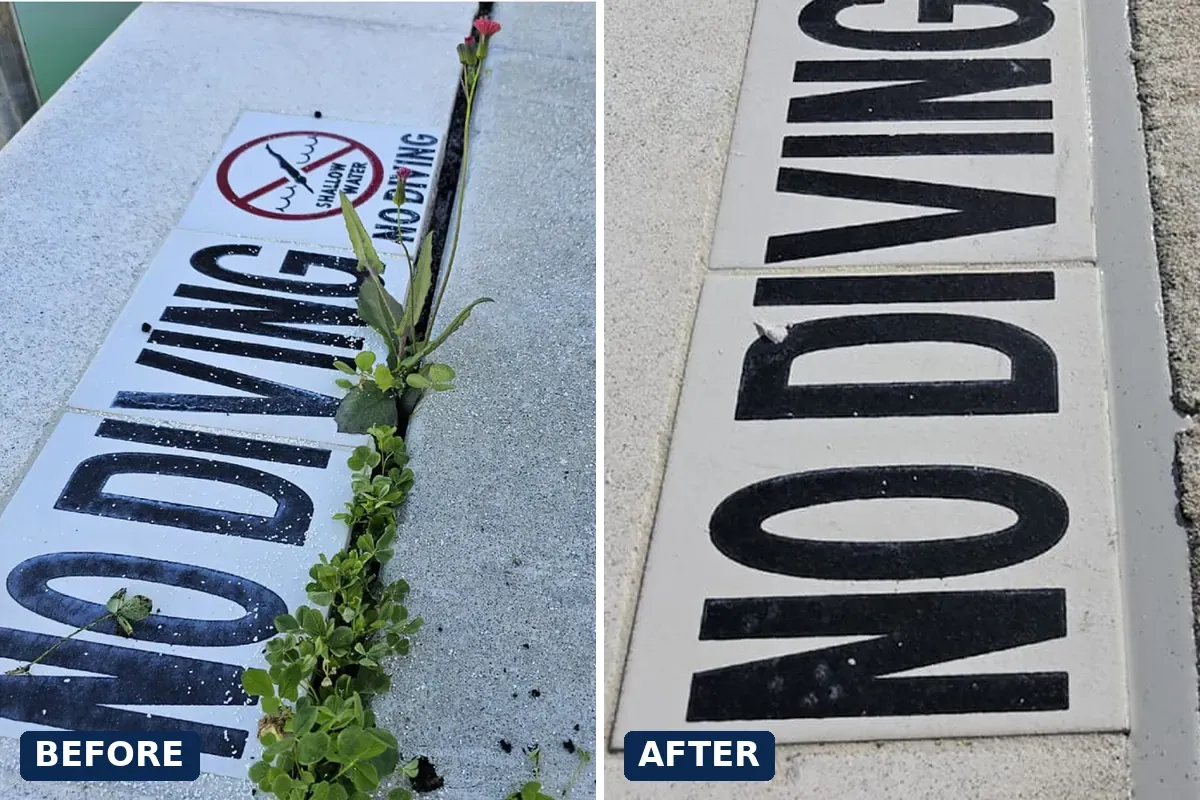
Damaged expansion joints. Cracked or missing mastic between the pool and deck lets water into the structure. (This is one of the repairs we completed at Eglin Air Force Base.)
Why Do Leaks on Commercial Pools Go Unnoticed?
Automatic fill devices are the biggest reason. They keep the water level steady by replacing whatever is lost, so the pool never looks like it’s dropping, even if it’s losing hundreds of gallons a day.
The fix is simple: install a water meter on the auto-fill line if you don’t have one, and log the reading weekly. A steady baseline makes it easy to spot a change. If your facility uses remote monitoring, like 24/7 remote pool monitoring, unusual water levels or equipment changes can be flagged even sooner.
How Do You Tell Evaporation From a Real Leak?
Evaporation changes with the weather. Hot, dry, windy days pull more water out of a pool than cool, humid, or calm ones, and a busy pool also loses water to splash-out and swimmers carrying it out. That’s why a single day’s drop doesn’t prove much. The bucket test compares your pool against a container sitting in the same conditions, so evaporation cancels out.
How to Run a Bucket Test
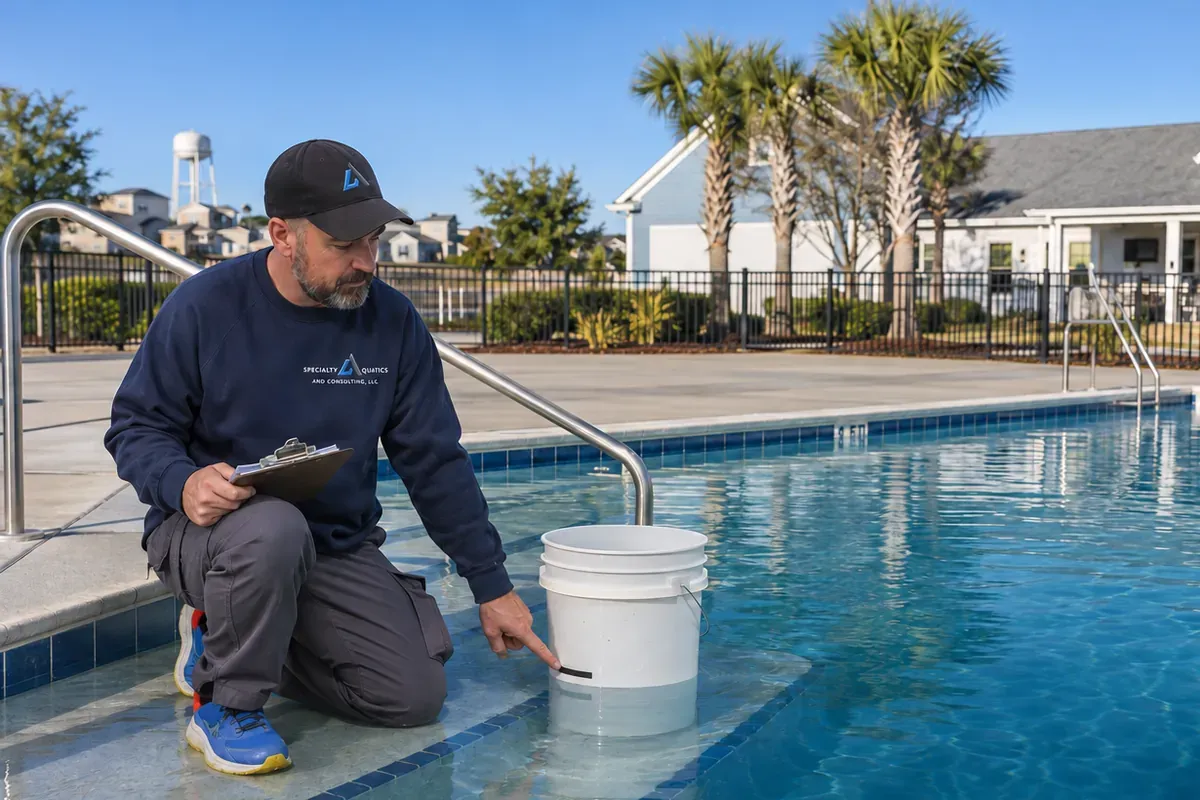
- Turn off the auto-fill so it can’t replace lost water during the test.
- Set a bucket on the pool steps or a bench, and fill it with pool water to the same level as the pool.
- Mark both water levels: the waterline inside the bucket, and the pool’s waterline on the outside of the bucket or on the tile.
- Run the pump normally for 24 hours, then compare the two drops.
- Refill, re-mark, and repeat for 24 hours with the pump off.
How to read the results:
The pool and bucket drop about the same: you’re seeing evaporation, not a leak.
The pool drops more with the pump running: the leak is likely in the pressure-side plumbing, such as the return lines.
The pool drops more with the pump off: the leak may be on the suction side, such as the skimmer or main drain lines.
The pool drops more by about the same amount either way: the leak is likely in the pool structure itself, such as the shell, a light niche, or a fitting.
On a large commercial pool, close the pool to swimmers during the test, since bather activity and splash-out skew the results.
Check the Equipment Room First
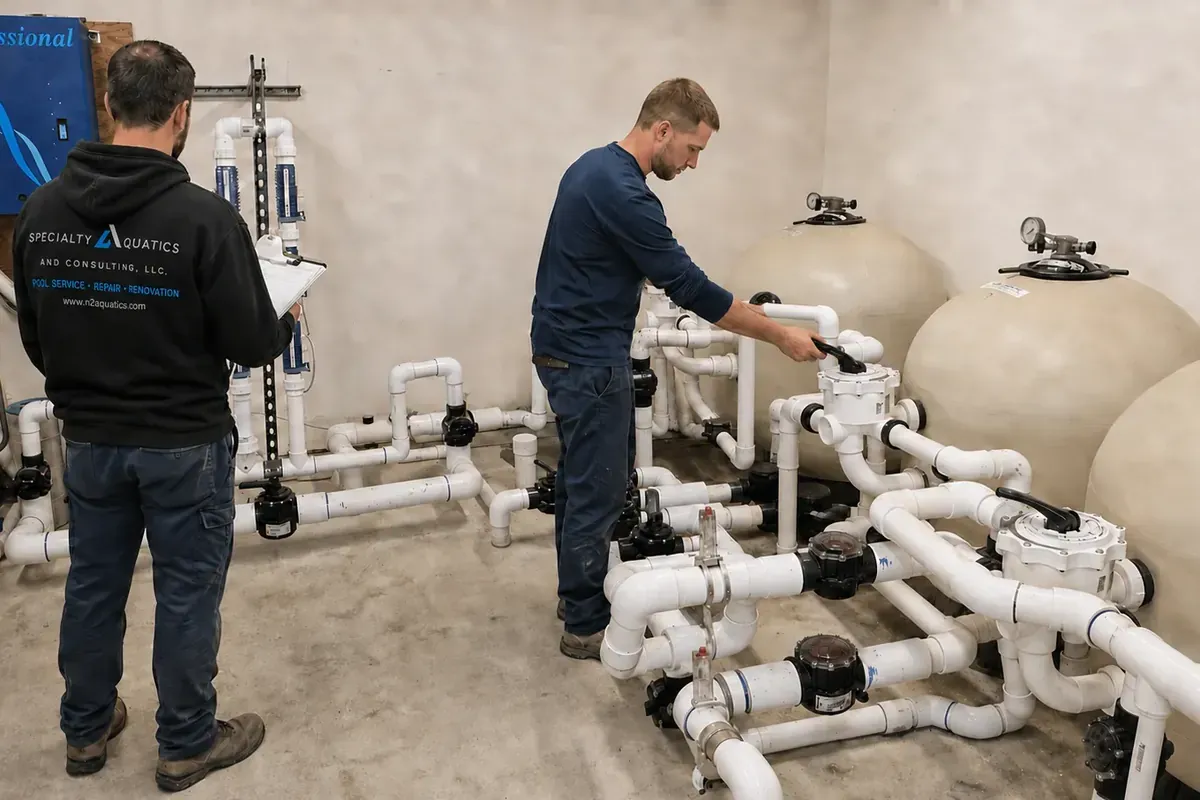
Before testing the pool itself, walk the equipment room and plumbing you can see. Many leaks are in the mechanical system, not the pool, and they’re the easiest to find and fix.
Look for:
Water on the floor, or damp spots under pumps, filters, and heaters
Drips at pump seals, unions, valves, and pipe fittings
Leaks at filter tank lids, multiport valves, and backwash lines
Corrosion, white scale, or rust stains, which often mark a slow leak
A backwash valve that isn’t sealing and keeps sending water to waste
If something looks off, our commercial pool equipment specification guide covers when a component should be repaired and when it should be replaced.
How to Use a Dye Test
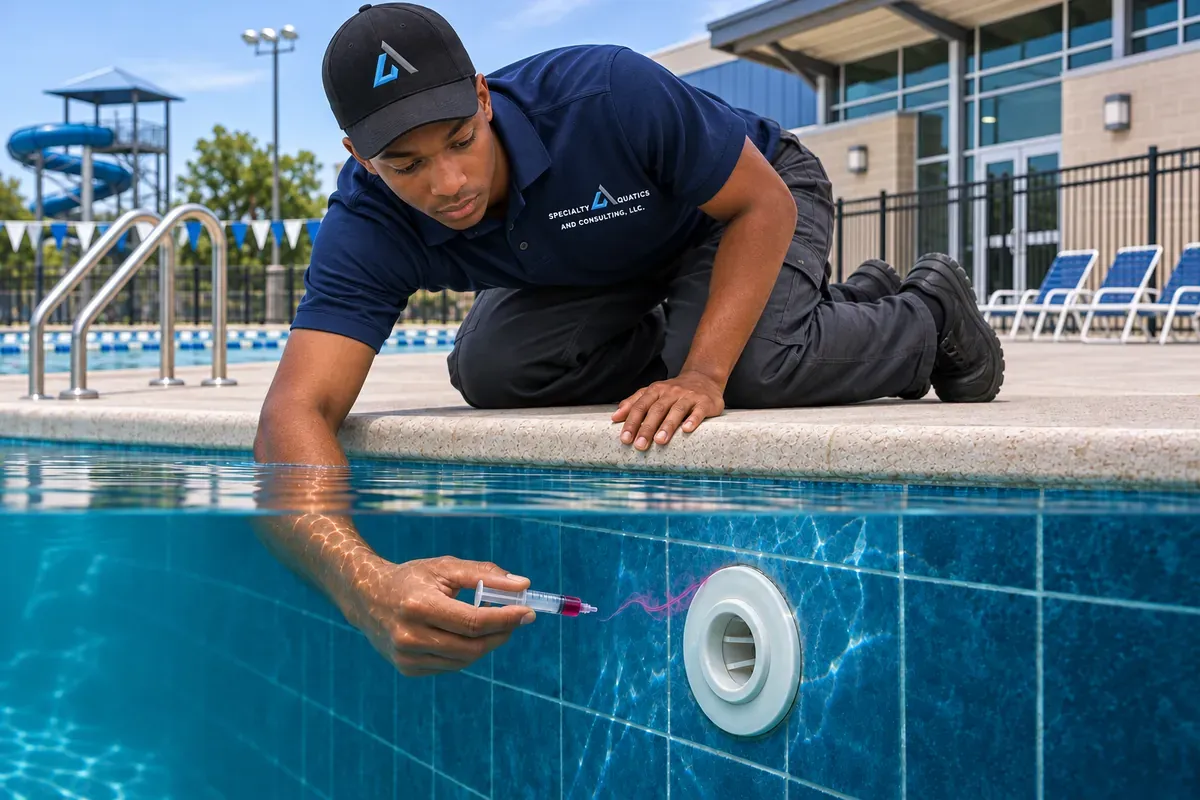
Once the equipment checks out, a dye test can pinpoint a leak in the pool itself. Leak-detection dye is placed in the water next to a suspected spot, and if there’s a leak, the water flow pulls the dye toward it.
Turn the pump off and let the water go completely still. Any current will scatter the dye and hide the result.
Test the most common leak points first: skimmer throats, return fittings, light niches, main drains, steps, and any visible cracks.
Release a small amount of dye right next to the suspected spot and watch whether it drifts into the spot or stays put.
Testing deep-water fittings, like main drains and wall lights, often means getting in the water. On a commercial pool, that’s a job for a trained technician.
How Professionals Find Hidden Leaks
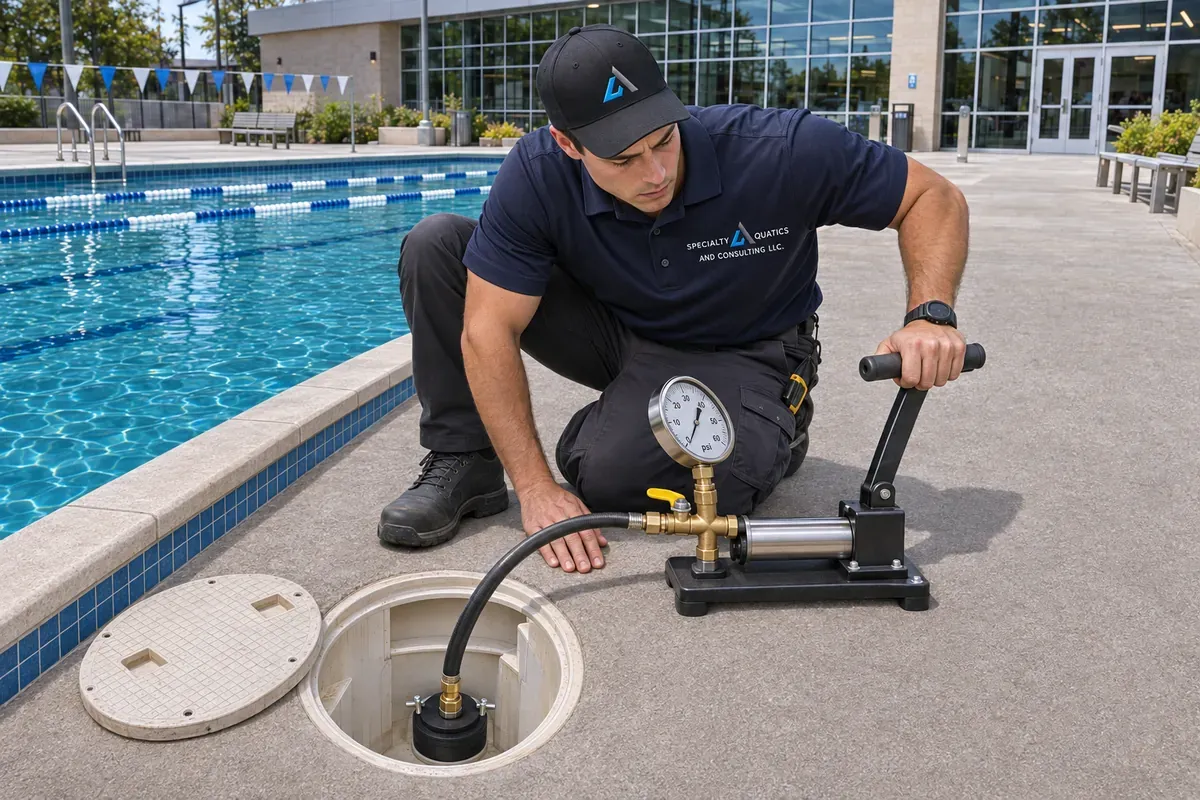
When the bucket test confirms a leak but the equipment and dye tests don’t find it, the source is usually underground or inside the structure. Professional leak detection builds on the basic tests with specialized equipment:
Pressure testing. Each plumbing line is isolated, plugged, and pressurized. A line that won’t hold pressure has a leak somewhere along its run.
Acoustic leak detection. Listening equipment, such as hydrophones and ground microphones, picks up the sound of water escaping from a pipe or crack, so technicians can pinpoint it without tearing up the deck.
Line tracing. Locating the exact path of underground plumbing so a repair can be made with as little excavation as possible.
Finding the exact location first means the repair is targeted, rather than opening up large sections of deck to search.
Why Leaks Matter More for Commercial Pools
A small leak on a commercial pool adds up quickly:
Water and chemical costs. Every gallon lost has to be replaced and treated, and constant fresh water makes it harder to keep chemistry stable.
Water quality and compliance. Unstable chemistry makes it harder to stay within health code requirements. Our guide to MAHC compliance covers the standards many health departments follow.
Structural damage. Escaping water can wash out the soil under the pool and deck, leading to settling, cracks, and much bigger repairs.
Equipment strain. Suction-side leaks pull air into the system, which can make pumps lose prime, run hot, and wear out sooner.
Safety. A leak around a main drain or suction outlet needs prompt attention, since drain covers and fittings are part of your entrapment protection.
When Is the Best Time to Find and Fix a Leak?
Leak testing needs the pool at its normal operating level, so the best time to test is while the pool is still running. If you noticed water loss this season, note it in your closing records and your post-season assessment, then plan to test before closing or at spring startup.
Repairs, on the other hand, are best done in the off-season, when they won’t disrupt swimmers and contractors have more availability. Getting a leak repair into your 2027 budget now keeps it from becoming a surprise in April. Year-round pools, like many in the Florida Panhandle and indoor facilities, can be tested any time.
When Should You Call a Professional?
Call a professional when:
The bucket test shows consistent water loss beyond evaporation
The equipment room checks out, but water loss continues
The bucket test points to the plumbing lines, which usually run underground
You see wet soil, deck settling, or cracks near the pool
The leak may involve a main drain, suction outlet, or light niche
Water loss returns after a previous repair
Before the visit, write down your test results, water meter readings, and anything you’ve noticed, like when the loss started or where the ground is wet. That information speeds up the diagnosis.
How Specialty Aquatics and Consulting Helps
Specialty Aquatics and Consulting handles leak detection for HOAs, multi-family properties, hotels, resorts, municipalities, and military housing across the Atlanta Metro area and the Florida Panhandle. Our team performs dye testing and leak detection in-house, and for larger or underground leaks, we bring in specialized leak detection equipment and partners while managing the job from start to finish. You’ll have one point of contact from diagnosis through repair.
If your pool is losing water, contact Specialty Aquatics and Consulting, and we’ll take care of your leak detection and repair. Get in touch to schedule an inspection.
Frequently Asked Questions
How much water loss is normal for a commercial pool?
It depends on weather, sun exposure, wind, and how heavily the pool is used. As a rule of thumb, a drop of more than about a quarter inch per day beyond evaporation is worth investigating. A bucket test is the most reliable way to tell the difference.
Can an automatic fill device hide a leak?
Yes. An auto-fill replaces lost water automatically, so the pool level never visibly drops. Tracking water meter readings on the fill line is the best way to catch a hidden leak.
What is a pool dye test?
A dye test uses leak-detection dye released next to a suspected leak point while the water is still. If there’s a leak, the dye is pulled toward it, showing the exact location.
Can leaks be repaired during the off-season?
Yes. The off-season is often the best time for repairs, since they won’t disrupt swimmers. Testing, however, works best while the pool is at its normal operating level, so plan to test before closing or at spring startup.
About the author: Michael Scheetz is President and Owner of Specialty Aquatics and Consulting, LLC, with more than 28 years in commercial aquatics. He is a Certified Pool Operator (CPO), Certified Pool Inspector, Certified Service Technician, and PHTA Instructor, and he serves on the PHTA Service Council. Learn more about Michael and our team.