
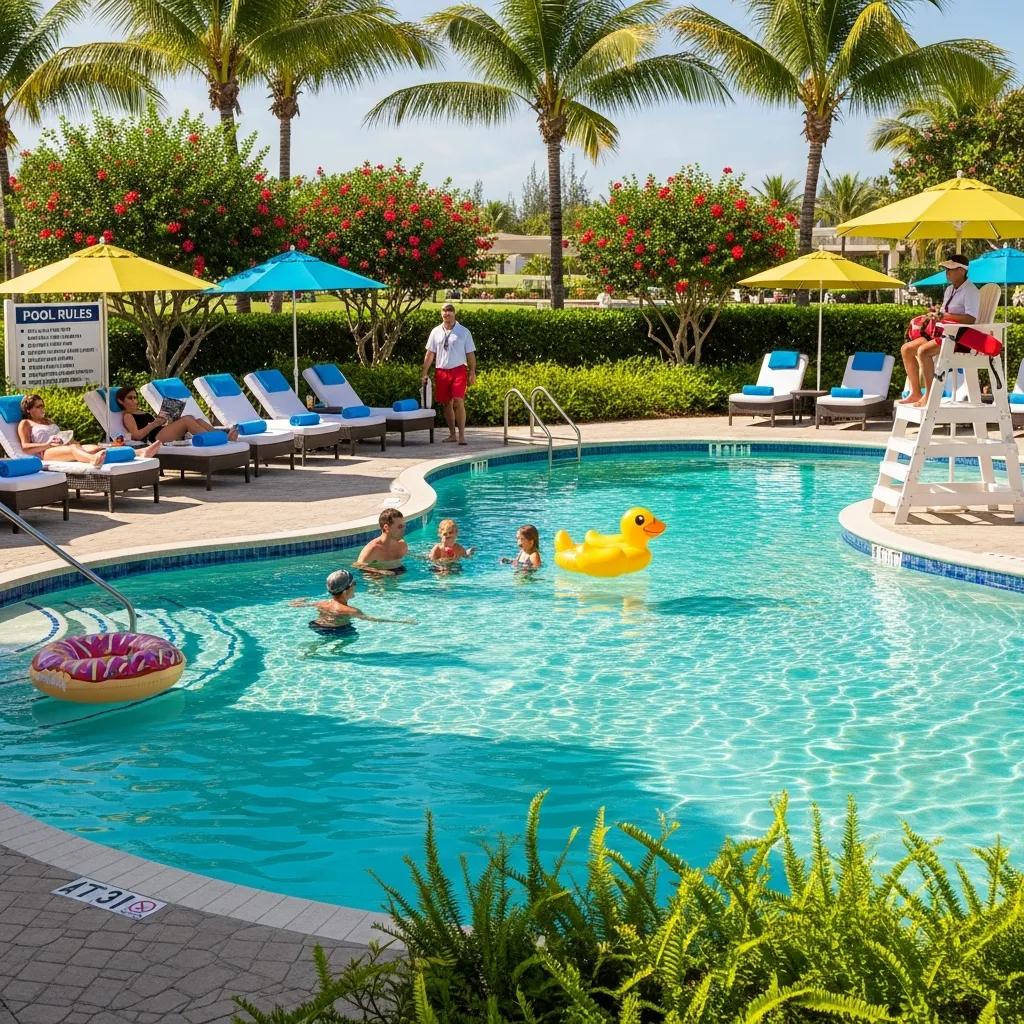
Modern swimming pool area with lounge chairs, surrounded by palm trees and white buildings, emphasizing aquatic facility maintenance and safety.

Hotel & Resort Pool Management: Best Practices for Guest Safety and Compliance

Effective pool management is crucial for ensuring guest safety and compliance in hotel and resort settings. This article delves into best practices for pool management, focusing on safety guidelines, regulatory compliance, maintenance, and the role of certified professionals. Readers will learn how to implement effective safety measures, understand regulatory requirements, and maintain high water quality standards. With the increasing importance of guest safety, this guide provides actionable insights to help hotel and resort operators create a safe aquatic environment. By addressing common challenges and offering practical solutions, this article aims to enhance the overall guest experience while minimizing liability risks.

What Are the Essential Hotel Pool Safety Guidelines?

Hotel pool safety guidelines are designed to protect guests from accidents and injuries while using the pool facilities. These guidelines encompass various safety measures, including proper signage, emergency equipment, and staff training. Implementing these measures not only enhances guest safety but also helps hotels comply with legal requirements.

How Do Guest Safety Measures Prevent Drowning and Injuries?

Guest safety measures play a vital role in preventing drowning and injuries in hotel pools. Key safety measures include:

  1. Lifeguard Presence: Having trained lifeguards on duty can significantly reduce the risk of drowning incidents, though not all hotel pools require lifeguards depending on local regulations.
  2. Safety Equipment: Providing life rings, reaching poles, and first aid kits ensures immediate assistance in emergencies.
  3. Staff Training: Regular training for staff on emergency response and CPR can save lives during critical situations.

Statistics indicate that proper safety measures, including lifeguard presence and emergency preparedness, can reduce drowning incidents by approximately 50%, highlighting their importance in pool management.

What Are the Key Pool Signage and Emergency Equipment Requirements?

Effective pool signage and emergency equipment are essential components of hotel pool safety. Required signage includes:

  • Warning Signs: Indicating pool depth, no diving areas, and slippery surfaces.
  • Emergency Instructions: Clear instructions on how to respond in case of an emergency.
  • Pool Rules: Guidelines for safe behavior, such as no running or horseplay.

Emergency equipment must be easily accessible and include items like:

  • Life Rings: For quick rescue attempts.
  • First Aid Kits: To address minor injuries promptly.
  • Automated External Defibrillators (AEDs): For cardiac emergencies.

Ensuring compliance with these requirements not only enhances guest safety but also fulfills legal obligations.

Specialty Aquatics and Consulting LLC focuses on providing expert aquatic facility management, renovation, and consulting services. Their primary goal is to educate clients on safety and financial success, while generating leads for their services.

How to Ensure Regulatory Compliance for Hotel and Resort Pools?

Regulatory compliance is critical for hotel and resort pools to ensure guest safety and avoid legal repercussions. Understanding the key regulations and implementing necessary measures is essential for pool operators.

What Are the Requirements of the Virginia Graeme Baker Pool and Spa Safety Act?

The Virginia Graeme Baker Pool and Spa Safety Act mandates specific safety requirements for public pools and spas. Key provisions include:

  • Drain Covers: All pools must have compliant drain covers to prevent entrapment.
  • Safety Equipment: Pools must be equipped with life-saving devices and emergency communication systems.
  • Staff Training: Personnel must be trained in safety protocols and emergency response.

Compliance with this act not only protects guests but also minimizes liability for hotel operators.

How Do MAHC Guidelines and ADA Accessibility Apply to Commercial Pools?

The Model Aquatic Health Code (MAHC) provides comprehensive guidelines for the design, operation, and maintenance of aquatic facilities. Key aspects include:

  • Water Quality Standards: Regular testing and maintenance of water quality to ensure safety.
  • Accessibility Requirements: Compliance with the Americans with Disabilities Act (ADA) to ensure all guests can access pool facilities.

Implementing MAHC guidelines and ADA requirements enhances guest safety and ensures inclusivity for all visitors.

What Are Best Practices for Hotel Pool Maintenance and Water Quality?

Maintaining high water quality and proper pool maintenance is essential for guest safety and satisfaction. Regular maintenance practices help prevent health hazards and ensure a pleasant swimming experience.

How to Manage Pool Chemicals Safely and Effectively?

Proper management of pool chemicals is crucial for maintaining water quality. Best practices include:

  1. Regular Testing: Frequent testing of pH, chlorine, and alkalinity levels to ensure safe swimming conditions.
  2. Safe Storage: Chemicals should be stored in a cool, dry place, away from direct sunlight and out of reach of guests.
  3. Proper Handling: Staff should be trained in safe handling procedures to prevent accidents and chemical exposure.

By following these practices, hotels can maintain a safe and enjoyable swimming environment for guests.

A comprehensive maintenance checklist is essential for ensuring pool safety and cleanliness. Recommended daily and weekly tasks include:

  • Daily Tasks:Skim the pool surface to remove debris.Check and adjust chemical levels.Inspect pool equipment for proper functioning.
  • Weekly Tasks:Vacuum the pool floor to remove sediment.Clean pool tiles and walls to prevent algae growth.Conduct a thorough inspection of safety equipment.

Implementing this checklist helps maintain high water quality and ensures compliance with safety regulations.

How Can Certified Professionals Enhance Hotel Pool Safety?

Certified professionals play a vital role in enhancing pool safety through their expertise and training. Their knowledge of safety protocols and maintenance practices is essential for effective pool management.

What Is the Role of Certified Pool Operators and Lifeguards?

Certified Pool Operators (CPOs) and lifeguards are crucial for maintaining pool safety. Their responsibilities include:

  • Monitoring Pool Activities: Ensuring guest safety by observing pool activities and enforcing rules.
  • Conducting Safety Drills: Regularly practicing emergency response procedures to prepare for potential incidents.
  • Maintaining Equipment: Ensuring that all safety equipment is in good working condition and readily available.

The presence of trained professionals significantly enhances the safety of hotel pools.

Research further supports the positive impact of certified professionals on maintaining optimal pool conditions and compliance.

Certified Pool Operators: Water Chemistry & Compliance Impact

The results indicate that the POOL certification program does provide some significant results related to the proper care of pools and spas at YMCAs. Significant differences (p < .05) were found between certified and noncertified operators in the level of pH, the level of combined chlorine, and compliance with combined-chlorine standards.

Certified operators: Does certification provide significant results in real-world pool & spa chemistry?, 2007

How to Implement Staff Training Programs for Emergency Response?

Implementing effective staff training programs is essential for preparing employees to respond to emergencies. Key components of a successful training program include:

  1. Regular Training Sessions: Conducting frequent training sessions to keep staff updated on safety protocols.
  2. Emergency Drills: Practicing emergency scenarios to ensure staff can respond quickly and effectively.
  3. Certification Programs: Encouraging staff to obtain certifications in CPR, first aid, and lifeguarding.

These training initiatives empower staff to act confidently in emergencies, enhancing overall guest safety.

What Risk Management Strategies Reduce Liability in Hotel Pool Operations?

Implementing risk management strategies is essential for minimizing liability in hotel pool operations. By proactively addressing potential risks, hotels can protect themselves and their guests.

How to Develop a Comprehensive Emergency Action Plan?

A comprehensive Emergency Action Plan (EAP) outlines procedures for responding to emergencies. Key elements of an effective EAP include:

  • Clear Roles and Responsibilities: Assigning specific roles to staff members during emergencies.
  • Communication Protocols: Establishing clear communication channels for reporting incidents and coordinating responses.
  • Regular Review and Updates: Periodically reviewing and updating the EAP to reflect changes in staff or procedures.

Having a well-defined EAP ensures that staff can respond effectively to emergencies, reducing liability risks.

What Are Effective Incident Reporting and Response Procedures?

Establishing effective incident reporting and response procedures is crucial for managing pool-related incidents. Key steps include:

  1. Immediate Reporting: Staff should report incidents to management as soon as they occur.
  2. Documentation: Keeping detailed records of incidents, including time, location, and actions taken.
  3. Follow-Up Actions: Conducting follow-up investigations to identify causes and prevent future occurrences.

These procedures help hotels manage incidents effectively and demonstrate a commitment to guest safety.

How Do Renovation and Technology Improve Resort Pool Safety and Efficiency?

Renovation and technology play a significant role in enhancing pool safety and operational efficiency. By investing in modern solutions, hotels can create safer and more enjoyable environments for guests.

What Are Best Practices for Safe and Compliant Pool Design and Renovation?

When designing or renovating pools, adhering to best practices is essential for safety and compliance. Key considerations include:

  • Safety Features: Incorporating features such as non-slip surfaces, proper lighting, and accessible entry points.
  • Compliance with Regulations: Ensuring that designs meet local and national safety regulations.
  • Sustainable Practices: Implementing eco-friendly practices, such as energy-efficient heating and water-saving technologies.

These practices contribute to a safe and environmentally responsible pool environment.

How Can Smart Pool Technology Automate Safety Monitoring?

Smart pool technology offers innovative solutions for enhancing safety monitoring. Key benefits include:

  • Automated Chemical Monitoring: Real-time monitoring of water chemistry to ensure optimal conditions.
  • Surveillance Systems: Advanced camera systems that monitor pool areas for safety compliance.
  • Alert Systems: Automated alerts for staff in case of emergencies or equipment malfunctions.

By leveraging technology, hotels can enhance safety measures and streamline pool management processes.